


Perhaps the greatest honor and privilege of the Tajiks is that their children are fighting with the wildest creatures of the 21st century for freedom, justice, and the pride of the Afghan people with empty hands and hungry stomachs in the cold autumn and winter of the Hindu Kush Mountains.
Author: Haroon Amirzadeh
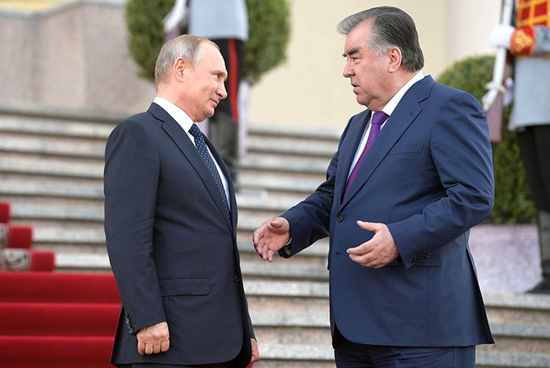
Recently, Presidents Emamali Rahman and Vladimir Putin announced new figures for the Tajik population in Afghanistan during a regional debate on the country that surprised many. But recently Imran Khan, the president of Pakistan, announced the number of Pashtuns in Afghanistan at 65 percent. Imran Khan, meanwhile, said in an interview in Pakistan before the Taliban victory that Afghanistan's Pashtun population was 44 percent.
The increase in the Pashtun population in one month from 44% to 65% is not surprising. Because a large army of Pakistanis, especially the violent armed militants under the name of Kandahari, Helmandi, and Haqqani talibs, have taken over the lives, property, and honor of Afghanistan and taken the country and people hostage as war booty. If Tajikistan's Kulabi and Badakhshanis join the Tajik resistance in Afghanistan tomorrow, the Tajik population will undoubtedly increase from 47 to 67 percent.
We recall that a few years ago, Parviz Musharraf introduced the Pashtun population as 95% and the Tajik population as 5% Panjshiri.
The fact is that no one knows the true population of Afghanistan and its ethnic groups. Different figures are published in different circumstances. Afghanistan's totalitarian regimes in the last century have never tried to conduct a census for fear that the number of ethnic groups assigned to them was in the minority. On the contrary, they were able to publish false and fake figures to gain more power and privileges with the help of foreigners.
The first fake population statistics were published during the reign of Zahir Shah and then Dawood Khan and Hafizullah Amin.
Suleiman Layeq, who headed the Academy of Sciences during the rule of the People's Democratic Party of Afghanistan, gave fake figures to the Soviets, who put the Pashtun population at 55 percent. During Najib's rule, he published a controversial article in the "Haqiqate Enqelabe Sawr" newspaper of a horned figure of the Pashtun population, claiming that Pashtun naqeleen turned the backward north into a paradise but left their home - the south without progress. For example, he wrote: "Once they said go to Kunduz if you want to die, but the Pashtuns turned Kunduz into a northern hive with their efforts."
In the last 20 years, Khalilzad, Karzai, and Ghani have misled the world's minds with fake Afghan ethnic statistics in order to gain privileges for a particular ethnic group from the world. During this period, the Central Academy of Sciences and Statistics served as the main source of fake information for Western technocrats. According to fake population figures, lawyers from different provinces entered parliament. Based on the fake population, the Kouchies - nomads received the most privileges in the last two decades.
Almost the actual figures of the ethnic population could be seen in the elections in the last two decades, with Pashtuns making up no more than 30 percent of Afghanistan's population, but the president and parliamentarians were elected through falsification and coercion, which was patronized by the Americans.
The Tajiks played a key role in all elections, and if real elections were held, the Tajiks would have enough votes to win. Undoubtedly, the relative support of the Hazaras and Uzbeks had confirmed the victory of the Tajik candidate.
It should be said that non-Pashtuns have repeatedly protested against the falsification of ethnic population statistics. In the absence of real statistics, each ethnic group considers its population more than the others.
Tajiks are perhaps the only people in Afghanistan who are ashamed of more than two things: one is to present themselves as Tajiks in public. Because they think this is a kind of ethnocentrism and bigotry. While others proudly defend their ethnicity.
Second, they are ashamed to express the true population of their people. They are so instilled that Tajiks are less than Pashtuns.
When the Tajiks heard about figures of the Tajik population of Afghanistan from the presidents of Tajikistan and Russia, many of them not only did not welcome it but were surprised. If these figures were announced for Pashtuns or other ethnic groups in Afghanistan, they might have been dancing and celebrating for months.
One of the false pieces of information circulating in world opinion in the last century is that the Tajiks are an ethnic minority in northern Afghanistan. Meanwhile, a significant number of Afghan Tajiks live in the southern Hindu Kush, from Panjshir and Greater North to Nangarhar, Laghman, Paktia, Paktika, Ghazni, Logar, and Wardak.
If any ethnic group is interested in the partition of Afghanistan, then the Tajiks are not. Because the disintegration of Afghanistan means the fragmentation of the land, the identity, and the history of the Tajiks of Afghanistan.
They are the ancient heirs of Afghanistan or Khorasan, whose language, history, culture, and identity are alive and well and reflect this fact from Kandahar to Helmand and from Herat, Farah, and Ghor to Paktia, Nangarhar, Khost, Laghman, Balkh, Baghlan, Takhar, and Badakhshan... their physical or cultural presence is palpable.
If anyone doubts Putin's 47 and Emamali Rahman's 46 percent, it might be better to go to a scientific and standard census instead of worrying about how many there are and to cut off the hands of fake domestic and foreign figures.
Perhaps the greatest honor and privilege of the Tajiks is that their children are fighting with the wildest creatures of the 21st century for freedom, justice, and the pride of the Afghan people with empty hands and hungry stomachs in the cold autumn and winter of the Hindu Kush Mountains.
Source: afghanpaper. com


