


Driven by ethnonationalism, the Taliban are persecuting Tajiks who often find themselves at the sharp end of a knife or the barrel of a gun.
Author: Mohammad Naser Sidiqee
On August 15 last year, Ashraf Ghani, the then president of Afghanistan fled the country. Ironically, Ghani had promised that he would “die defending” his country only three months before he fled. By fleeing, Ghani facilitated the takeover of Afghanistan by the Taliban who are led by Pashtuns like him.
Foreign observers described the events of August 15 as “a bloodless coup.” However, for millions in Afghanistan, particularly Tajiks, Uzbeks, and Hazaras, the takeover by the Taliban has meant a return to “the darkest days.”
A Bloody and Brutal Regime
The Taliban is dominated by Pashtuns. This ethnic group is also referred to as Afghans and Pathans. The Taliban are an ethnic-nationalist and Islamo-fascist group that mix tribal and religious beliefs. In the 1990s, they ruled Afghanistan with brutality and barbarity.
For all their protestations in the media, the Taliban have not changed one bit. They continue to commit atrocities against women, vulnerable social groups, and non-Pashtun ethnic groups. Numerous reports have documented their many war crimes. The Taliban still impose cruel punishments such as lashing, amputation, stoning, beheading, and other forms of summary executions.
Videos and reports of savagely violent killings, particularly of Tajiks have come to the fore. The Taliban has been engaging in indiscriminate killing in northern Afghanistan, especially in Panjshir and Baghlan provinces.
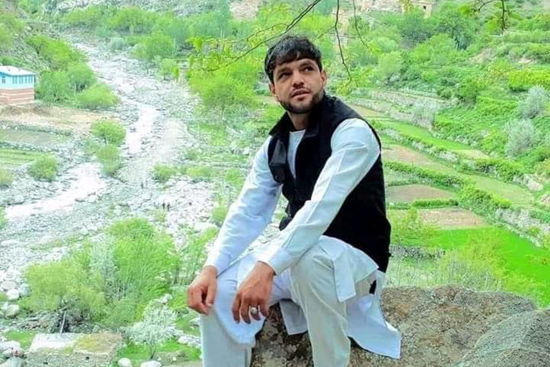 On March 11, a graphic video was circulated on social media showing the dreadful killing of the 27-year-old Bilal Ahmad (in the photo), a secondary school teacher in Hesarak district of Panjshir province, In the 66 seconds of video footage, the Taliban fighters appear to briefly interrogate Bilal, a Persian-speaking Tajik, in Pashto — a language not spoken in Panjshir — and then shoot him. Mohammad Rashed, Bilal’s younger brother, confirmed that the man in the video footage was his brother.
In another 32-second video footage, which went viral on March 13, a Taliban fighter seems to be interrogating a male civilian before shooting him at close range. The deceased was identified as Khairuddin. Observers noted that he was likely killed in Taala wa Barfak district of Baghlan province. Both Bilal and Khairuddin were the breadwinners of their families. Both have left behind their widows and young children.
Numerous other reports of brutal killings have emerged. The Tajiks are finding themselves at the sharp end of a knife or the smoking barrel of a gun.
Why do the Taliban Target the Tajiks?
Since the establishment of the client state of Afghanistan by Abdul Rahman Khan who ruled from 1880 to 1901, the Pashtun ruling class has not reconciled with the ethnic heterogeneity of Afghanistan. This class willfully considers Afghanistan’s ethnic diversity a threat to their exclusive rule. They assume that equal participation of non-Pashtuns in national and local political processes would defuse their grip on power. This underlying fear of fragmentation has been the raison d’etre for creating a highly centralized governance system that remains dominated by the Pashtuns.
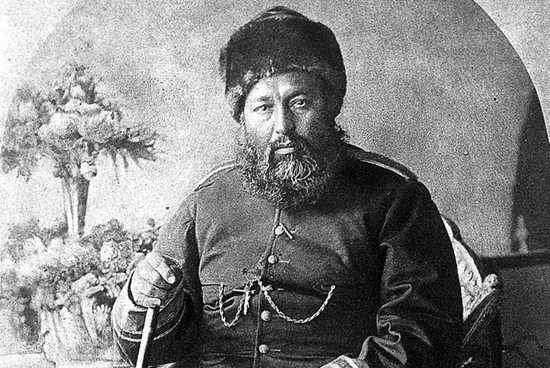 Before Abdul Rahman Khan’s reign, Pashtun history was steeped in tribal feuds and intra-ethnic conflicts. While Khan fought against fellow Shinwar Pashtun tribes in the east, he was able to unite Pashtuns to some degree and channel their aggression against Tajiks and Uzbeks in the north and Hazaras in central Afghanistan. Despite the repression, Persian-speaking communities have consistently resisted unilateral Pashtun rule. They have always favored a more decentralized governance system in Afghanistan.
After Khan’s death, the Pashtun ruling class continued its policy of repression. In 1929, Habibullah Kalakani, a Persian Tajik dissident leader – who was given the nickname “Bacha-e-Saqaw [Son of Water Carrier]” by Pashtuns to cast him to an inferior social standing at the time – briefly broke the chain of Pashtun domination by ousting Amanullah Khan, the grandson of Abdul Rahman Khan.
In 1992, Ahmad Shah Massoud, a Tajik military genius led his forces into Kabul. Massoud broke another cycle of Pashtun hegemonic domination by defeating the Soviet-backed Afghan communist government. Burhanuddin Rabbani, a Tajik, became president of Afghanistan. This regime was ousted by the Pashtun-led Taliban who later conspired with Al-Qaeda to assassinate Massoud two days before the 9/11 terrorist attacks. A number of Pashtuns are euphoric on the return of the Taliban. They belong to many ideological persuasions and political camps. Howerer, ethnic nationalism trumps other sentiments and has plunged Afghanistan into yet another cycle of violence.
Sourse: Fair Observer
The views expressed in this article are the author’s own and do not necessarily reflect Sangar’s editorial policy
 About the author: MOHAMMAD NASER SIDIQEE is a former government official and international development practitioner. He has held a number of positions in the former government of the Islamic Republic of Afghanistan. Sidiqee was General Director for Policies and Programs in the State Ministry of Peace and General Director for Coordination, Monitoring and Reporting as well as Acting Deputy Minister for Policy in the Ministry of Finance. During his term in the Ministry of Finance between mid-2019 and early 2021, he was the lead organizer of Afghanistan Conference 2020 in Geneva. Sidiqee is an observer of Afghanistan's political history and an independent writer and contributor to Fair Observer.


