


Islamabad cannot fight on two fronts, it must either change course or be destroyed.
Author: Abdunaser Nurzad, national security, and geopolitics researcher
An arc of fear and anxiety has surrounded the circle of Pakistan's strategies in Afghanistan and has caused the country's politics to face many problems, the only result of which is a tense political atmosphere, a bankrupt economy, and security confusion.
This time, Pakistan will have to decide whether to save itself from destruction or drown in the quagmire of its homemade bloody games. Similarly, it appears that the bloody depths of the bloody strategy, the nightmares of which have darkened Afghanistan's tense political atmosphere for years, are now slowly taking their toll on Pakistan itself.
It appears that Pakistan is now stuck in the circle it has drawn for control of Afghanistan because this strategy is no longer compatible with the regional and global agenda and only moves in the direction of securing Pakistan's strategic interests and security and rivalry with India. From this point of view, neither the US, Britain, nor the Asian allies evaluate Pakistan's actions in this area, because they have come to understand the fact that only Pakistan wins in this game.
On the other hand, since Pakistan always surprises everyone with a two-sided game, it sometimes has problems with the US and sometimes with its Asian allies. Now it is no longer in anyone's interest to continue this policy, and the only path left for Pakistan is either to change strategy, which will mean its death or to keep pace with international agendas that are contrary to the vital strategy of Pakistan's survival and preservation.
Pakistan has been seen as leading the game since the fall of the republic and as a source of change in the region, but today's realities are more than such analyses. Pakistan is in a dangerous triangle, in the abyss of destruction, and it is possible that this triangle will suffocate it in the medium term. However, this country, with its militaristic policy, stubbornly continues to pursue its policy of confrontation in order to confront India in the region. And this is a hard and unbearable burden for the political system, security system, and economy of this country.
In this case, the country's only capital in the region is an instrument of terrorism and religious extremism, which served as a nuclear weapon in the field of regional competition. Now, this tool is out of Pakistan's control and Islamabad cannot fight on two fronts at the same time, given the internal problems that plague it in the political, economic, and security fields. This will cause the arc of instability in Pakistan's geography to expand and turn the game against its interests in the next equations of distribution of power and security.
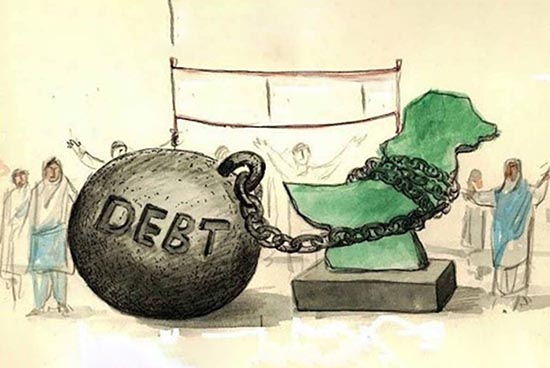 The strange trip of Pakistani Defense Minister Haji Mohammad Asif, General Nadeem Anjum, head of the ISI, and other Pakistani intelligence and security officials to Afghanistan did not happen under normal circumstances. At present, Pakistan is in an alarming situation and there are no signs of fundamental changes in the country's economic prospects. It's not just about foreign debt, but also about domestic debt, which has brought the country to the brink of bankruptcy. Pakistan is now among the most vulnerable countries. Inflation in this country has reached its peak, and the ability of the country to open letters of credit has seriously affected the production of the industry. Many production units are closed or partially operational. In the midst of political instability and economic crisis, the return of terrorism to Pakistan has exacerbated the country's security concerns. The latest wave of terrorism has swept through the capital and represents the resurgence of an illegal militant network operating from abroad.
If we analyze the trip of the security and intelligence personnel of this country to Afghanistan, we find that this trip was not an ordinary trip. This had to be done under special conditions and under the burden of immediate coercion. Because such trips take place in the presence of Pakistani security and intelligence officials at a time when this country is facing problems that threaten its national interests and security. Pakistan can no longer shirk its obligations and the consequences of the game it has played with other great powers over the past four decades. For example, the presence in the region of terrorist bases, drug trafficking and arms trafficking networks, autonomous tribal territories, and support for the massive growth of religious terrorism (thousands of schools in Pakistan) complicate the situation of the political and security system of this country and made it uncontrollable. Pakistan is unable to curb security concerns, and political and economic challenges, and cannot control and keep under its control the cross-border groups under its protection. A perfect example of this is the rise to power of the Taliban in Afghanistan, who do not obey Pakistan and have become an inspiration to other jihadist terrorist groups that have rebelled against the system and government of Pakistan.
But if we specifically consider aspects of the visit of Pakistani officials to Kabul, then this trip can be assessed as the result of several realities:
 First, Pakistan is deeply concerned about the increase in recent months of attacks on its military and civilian installations. Terrorism, which Pakistan itself has encouraged for years, is now out of control. These attacks are taking place at a time when their focus has shifted from Pakistan to Afghanistan. Pakistan now wants to influence the Afghan Taliban to force the Pakistani Taliban to make a deal and prevent the Pakistani Taliban or TTP and Baloch groups that are in a strategic alliance against Pakistan and its government from being used for the benefit of India. The trip could be a signal to the Taliban in Afghanistan, who should force the Pakistani Taliban and other affiliated groups to conclude a truce with the Pakistani army. Now the Afghan Taliban are at a crossroads and between two millstones. This is not the first time the Afghan Taliban have been in such a difficult situation, but in the past, they have also been in such a situation against Chinese demands that they should act against the Uyghurs who are opponents of the Chinese government. Now let's see if the result of this trip can be effective in maintaining stability and reducing attacks on Pakistan or not.
Secondly, the Taliban's lack of interest in the policies of the Pakistani leadership in the past few months has greatly disturbed Pakistan and indicates that Islamabad is afraid that India may establish its position in Afghanistan, which is under the control of the Taliban. Especially Taliban political groups such as Mullah Baradar-Mullah Yaqub's group are more inclined towards rapprochement with India, and as they are frustrated and tired of Pakistan's policy of supporting the Haqqani network in order to maintain wealth and power, they are looking for an alternative. The Pakistanis fear that in the event of a sharp change in the situation and rapprochement and involvement of India in interactions and issues related to Afghanistan, the exclusive role of Pakistan in the Afghan issue will decrease. This concern is heightened when Pakistan unhesitatingly supports one group and ignores other Taliban groups;
Thirdly, another very likely problem that may have brought the heads of the Pakistani security agencies to Afghanistan is the problem of growing disagreements among the Taliban. Dividing this group into three factions, such as the Haqqani network, the group of Mullah Yaqub Mullah Baradar, and the group of Mullah Haibatullah, the leader of the Taliban group, will make it easier for this group to break out of Pakistan's control and give India and other rivals time to compete with it in Talibani Afghanistan. Disagreements among the various Taliban factions have even resulted in this group being left at the crossroads of governing and maintaining power and unable to do anything to benefit Pakistan's regional plans. This issue is of great concern to the politics of Islamabad and the ISI and can destroy all the achievements of this country in Afghanistan;
Fourth, disagreements among the Taliban could lead to the collapse of the foundations of their rule. This is not Pakistan's desire and satisfaction, and in no way does it want the Taliban to be removed from power. Because the absence of the Afghan Taliban this time in power will mean their destruction in the political and military arena. Although there are no signs of a Taliban victory in the political arena, and the group has not been able to make progress in gaining international legitimacy and recognition of its regime, Pakistan's efforts and hopes are to use all possible means to achieve this. Since this is the result of 40 years of Pakistan's policy and putting them into practice is an important cause that leads to the revival of Pakistan;
Fifth, the border skirmishes between the Pakistani military and the Taliban over the past few months have been of concern to Pakistan. On the one hand, this calls into question the political and national prestige of Pakistan in the eyes of rivals in the field of regional competition, and on the other hand, it causes irreparable damage to the volume of Pakistani trade, the ultimate goal of which is Central Asia and the markets of Afghanistan itself.
Thus, this trip is considered necessary in the midst of this unprecedented and huge wave of political instability, security unrest, and economic bankruptcy that is sweeping through Pakistan. And the Pakistani authorities should recognize and express their concern to the Afghan Taliban, who should take action and help in solving their problems. From here they went to Kabul.
The results and details of this trip may be known later and its impact on the situation in Afghanistan can be observed in the future, and this is a hasty analysis that can be made from this trip and current events in the region, especially in Afghanistan and Pakistan.


