


The era of Pakistan in Afghanistan is coming to an end, we are only witnessing the rise of Iran's power.
Author: Farid Ahmad, editor-in-chief of "Sangar"
The news of the transfer of the Afghan embassy in Tehran to the Taliban, in particular, caused discontent and an uproar, especially among the Persian-speaking anti-Taliban domain. The emotional reactions, sometimes naive, are understandable. Still, they don't see that Iran, which has taken on the role of "chief master" and spread its influence in Lebanon, Yemen, Iraq, and Syria, is following the same path in Afghanistan. Iran is seeking to create its own security belt, if not saying it is on the way to building its new empire, or at least "exporting the Islamic revolution."
After Iran created Hezbollah in 1982 (three years after the Islamic Revolution), so to speak, not a single leaf moves in Lebanon without the permission of this movement. The influence of Hezbollah is such that in 2000, when, in accordance with a UN Security Council resolution, Israeli troops left South Lebanon, subject to the deployment of the Lebanese army in the region, the government of this country provided this opportunity to Hezbollah. Now the north of Israel is under the gunpoint of Hezbollah missiles, or rather Iran. Hezbollah is practically a Lebanese shield against Israel.
The March 8 Coalition, an alliance of pro-Syrian and anti-Israeli parties, holds 70 out of 128 seats in the Lebanese parliament. Of these, 37 seats are occupied by three pro-Iranian parties - Hezbollah, Amol, and Progressive Socialists. And it is unknown how many of the 19 parties in this country depend on Tehran. Michel Naim Aoun, the Lebanese Prime Minister, is also the leader of the March 8 Coalition.
Since 2015, Yemen has been ruled by the Houthis, or Ansarullah, backed by Iran and Hezbollah. Mahdi Mashat is the leader of Yemen, and Abdulmalik Husi's man is the leader of Ansarullah. These "barefoot fighters" Houthis are a headache for Saudi Arabia, Iran's main enemy.
The US aggression and the fall of Saddam Hussein's government in Iraq ended with Iranian dominance in that country. This is a long story, and it is enough for us to give just one example: the Iraqi government organization Hashd al-Shabi (People's Mobilization Committee), unites, according to various sources, from 30 to 67 Iraqi political and military parties and groups. The vast majority of them are Shiites. At one time, Haidar Ibadi, Prime Minister of Iraq (2014-2018), was the commander of Hashd al-Shabi. On July 25, 2022, Iraqi Shia parties and groups elected Mohammed Shia Sudani as prime minister.
Thus, although there is no political stability in the above three countries, Iran is the master of the situation and has the first word. Other actors present in the Middle East, such as the US, Turkey, the Gulf States, etc., do not have the influence that Iran has. The only thing they can do is not allow the region to be entirely under the control of Tehran.
Let's not talk about Hamas and Israel, the Kurds and Turkey, and Iran's dangerous games in the Caucasus and Central Asia, especially Tajikistan. Let's go back to Afghanistan.
Iran has three allies in this country - the Hazara Shiites, the Durrani Pashtuns, and the Tajik Ismailkhan, the most influential anti-Taliban leader in the Afghan West.
But this is what we see. It is not entirely clear how many Iranian proxy groups there are in Afghanistan because in this "godforsaken country" (Joe Biden) every party or group serves some kind of foreign intelligence service just to survive. Iran hosts about 2 million refugees. Afghan refugees have always been considered by both Iranian and Pakistani intelligence agencies to be a "forge of spies".
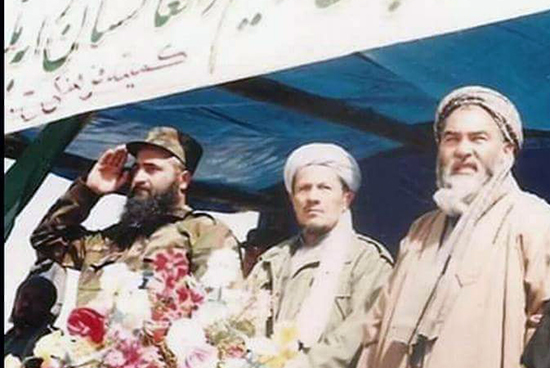 But first about the Hazaras.
Let me avoid the story of Shabab al-Khazar (which appeared in Iraqi Najaf in the 1960s) and Imam Khomeini, leader of the Islamic Revolution and founder of the Islamic Republic of Iran.
The actual presence of Iran in the affairs of Afghanistan dates back to the jihad against the Soviet Union (1979-1989), when the first Shiite party was created called the Revolutionary Council of Islamic Accord of Afghanistan (1979, headed by Syed Ali Bihishti), on the basis of which the "Shiite Eight" appeared. Just look at the names of these parties and summarize how dependent they were on Iran, its intelligence, and it's military: Nasr Party (Abdulali Mazari), Hezbollah (Kari Ahmad Yakdasta (One-armed)), Islamic Revolutionary Guard Corps Afghanistan (Sheikh Akbari), Islamic Movement of Afghanistan or Kandahar (Mohammed Asif Mohseni, Shia Pashtun), Islamic Revolution Movement (Nasrullah Mansour), Organization of Islamic Fighters (Sheikh Misbahzadeh), Raad Party (Syed Jafar Naderi).
All of them recognized “velayat faqih”* as a liberation idea, and Imam Khomeini as the leader of the Shiite world, and intended to spread the Iranian Islamic revolution to Afghanistan and the rest of the world. Today, this mission is carried out by the Lashkari Fatimiyun of the Hazaras in Iraq and Syria. Iran recognized and supported them as a group of "followers of the Imam".
* Vilayate faqih - “the power of the faqih” is the political and legal doctrine of the Twelver Shiites, which implies that in the era of the Great Concealment (ghaibat kubra) of the twelfth imam Muhammad al-Mahdi, the leadership of the Shiites passes to competent faqihs and mujtahids, who transmit sayings (hadiths) of the prophet Muhammad and Imams of Ahl al-Bayt - Wikipedia.
On the other hand, the "Shiite Eight" was a response to the Peshawar Seven (Jamiate Islami (Burhanuddin Rabbani), Hizbe Islami (Gulbuddin Hekmatyar), Ittihade Islami (Abdurab Rasul Sayyaf) and Hizbe Islami of Khalis (Younes Khalis), Muhozi Milli (Sayed Ahmed Gilani), Jabhae najate milli (Sibgatullah Mujadadi), Harakate inqilabe islami (Muhammadnabi Mohammadi), the native party of Mullah Omar, founder of the Taliban), Sunni parties of Afghanistan with headquarters in Pakistan.
Since that time, the struggle of Iran against Pakistan for dominance in Afghanistan began.
In 1989, the "Shiite Eight", with the exception of the Islamic Movement of Kandahar, with the help of Iran, united in the Hizbe Wahdate Islami of Afghanistan under the leadership of Abdulali Mazari. As a Hazara-Shia party, it was equated with Hizbi Islami (Pashtuns), Jamiati Islami (Tajiks), and Junbishi Milli (Uzbeks). And for Iran, it has become the Afghan Hezbollah, a powerful Shiite weapon.
In the beginning, Hizbi Wahdat, together with Jamiat and Junbish, took part in the creation of the government of the Islamic State of Afghanistan under the leadership of Burhanuddin Rabbani. But apparently (among other reasons) the presence of Sayyaf, the "Salafi agent" of Saudi Arabia, Iran's fierce rival in it, alienated it from Rabbani.
But I believe that Iran's attempts to turn the Rabbani government, or rather, the forces of its main guarantor, Ahmad Shah Massoud, into another Hezbollah failed. This was exactly what the Iranians wanted from Massoud, and what kept Massoud from approaching Persian-speaking Iran. His "operation for the sake of literature" had its own special character.
At the discretion of the Iranians, Mazar's forces joined with Rabbani's main rival, Hekmatyar. Turkey and Uzbekistan set the same task for Dostum.
As a result, an exclusive union was formed, which history did not know and common sense does not accept, called Shuroi Hamohangi (Coordinating Council) consisting of Hizb-i-Islami, Hizb-i-Wahdat and Junbishi Milli. In fact, it was an alliance between Pakistan (simultaneously the US, England, and the Gulf countries) and Iran and Turkey against the government of Rabbani, which they considered pro-Russian. According to the project of Shuroi Hamohangi, with the victory over the government of Rabbani-Masud, Hekmatyar would become the president, Mazari the prime minister, and Dostum the minister of defense of Afghanistan.
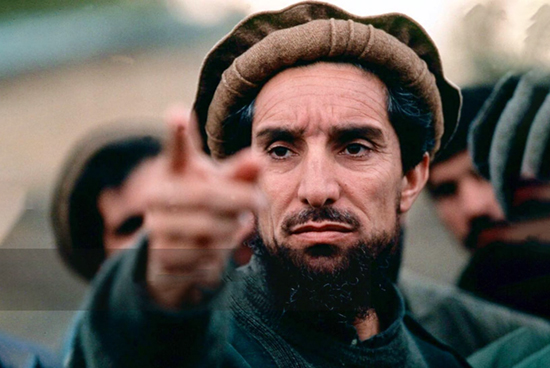 But the Minister of Defense of the Rabbani government, Ahmad Shah Massoud, ruined this plan. Pakistan, the main player on the Afghan field, was disappointed by Hekmatyar and brought the Taliban to the battlefield with the help of America, Britain, and the Gulf states.
This was Iran's first attempt to take the lead in Afghan affairs. After the emergence of the Taliban, Iran extended one hand to them and the other to the United Front of Ahmadshah Massoud in alliance with Russia, India, and the countries of Central Asia. The Iranian embassy worked in Kabul, and its consulates in Mazar-i-Sharif and Herat, on the other hand, the Iranians helped the anti-Taliban resistance forces.
During the period of the pro-American republic (2001-2022), Iran also pursues its dual policy. Hizbe Wahdat leaders - from Karim Khalili to Sarwar Danish - have always been present in Karzai and Ghani's entourage. On the other hand, Iran once again revived the Taliban with the assistance of Russia. Akhtar Mansour, the leader of the Taliban, was killed by American drones in Pakistan while returning from Iran. According to available information, Hekmatyar was expelled from Iran at the request of the Taliban, and not the pro-American government in Kabul. It should be noted that Iran transferred the first members of Al-Qaeda from Afghanistan to Iraq and organized resistance to the United States and ISIS with Shiite groups controlled by it.
The presence of the Hazaras in the governments of the Republic did not and could not meet Iran's expectations. Some of them even forgot their way to Tehran, falling under the spell of the "international community". For this reason, the priority was only the Taliban, who could do for Iran what was in its plans. And it happened.
Iran plays a key role in the history of Afghanistan. When England was in deep sleep, and there were still 200 years before the appearance of Pakistan, Nader Afshar, Shah of Iran, with the help of Afghan arbakis under the command of Ahmadshah Durrani, conquered India. After the death of Nader, this commander founded today's Afghanistan. Historically, the Durrani clan has been an ally of Iran and should be indebted to them for helping them create their own state.
I can’t say for sure how Mullah Haibatullah Durrani, the “amirulmuminin” of the Taliban, is connected with the Iranians. But its top commanders are "Iranian Taliban" such as Sadr Ibrahim and Qayyum Zakir. Dozens of Iranian Taliban commanders in western and southern Afghanistan have enjoyed Iranian support for years. Even the weapons of this region are mostly Iranian-made.
"Foreign Aggression": Mullah Haibatullah preparing for a new war
After the fall of Kabul, a protege of Iran and Russia was supposed to come to power in Afghanistan (one of the generals of the republic admitted that he did not allow Hamid Karzai to seize power) with the support of Sadr Ibrahim and Kayum Zakir (Minister of Defense), but Pakistan and the United States with the help of the generals of the republic, Qatari-Yaqub faction, and the Haqqani network took control of the situation. After that, power (governors, structures of the Ministry of Internal Affairs, the Ministry of Defense, the GUNB, etc.) was divided between the last two groups throughout Afghanistan.
The "Iranian Taliban" faded into the background. They were under pressure. For example, the homes of Sadr Ibrahim and Qayyum Zakir were ransacked and they themselves were interrogated by members of the Haqqani network. You can guess why.
Iran did not get confused. None of this was a danger to him, since the main power was in Kandahar, in the hands of the "amirulmuminin", to whom everyone swore allegiance (bayat). Mullah Khaibatullah established the Supreme Islamic Council and appointed his people in all counties and provinces, who had more power than the governor or heads of county administrations, and the heads of security and intelligence agencies were subordinate to him. This was the first effective step towards the centralization of his power in favor of Iran.
Today, Mullah Haibatullah is gradually taking control of all power in Afghanistan. It weakens rivals by limiting their power. The main threat to his power comes from the pro-Pakistani Haqqani Network and the Qatar-Yaqub group, which is negotiating with the US. Their indirect criticism of "amirulmuminin" on the issue of girls' education or words like "respect the will of the people" is nothing more than misleading public opinion. The main question is, will they violate their “bayat” (but this is a great sin in Islam equal to blasphemy) and rise up against the “amirulmuminin”?
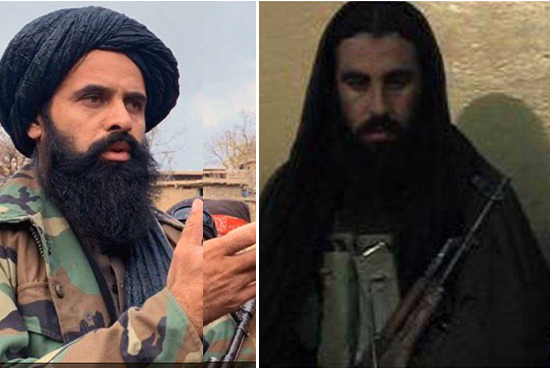 But Iran would not be Iran, and it would be a great shame for its intelligence services if they did not remove Sadr Ibrahim (right in the photo) and Qayyum Zakir from the situation and transfer power to them. Today, Haqqani and Yaqub are being psychologically tortured.
Hibatullah's "soft coup" against the Haqqanis and the Kandaharis
At the moment, the transfer of the Afghan embassy to the Taliban is a logical step for Iran toward its goal, and sending Kazemi Qomi, "Iranian Khalilzad" or "Iranian Kabulov" is an even more important decision. Qumi is closer to the Taliban than his American and Russian counterparts.
If the power of Mullah Haibatullah is strengthened in Afghanistan, then the same government will arise as in Lebanon, Syria, Yemen, and Iraq. If Tehrik-e-Taliban Pakistan, apparently backed by Kandahar and India, also wins in Pakistan, the Islamic Republic will automatically gain control of the territory from the Mediterranean to the borders of India and become the most powerful player in this geography.
At one time, because of respect for Russia and China, it may not turn toward the northern part of the Amu Darya, but this is not in the nature of a country that bears imperial ambitions.
The National Resistance Front of Afghanistan, led by Ahmad Masoud, has an official office in the city of Mashhad. Thousands of commanders and fighters of the Front and other anti-Taliban groups took refuge in Iran after the fall of the republic. This means that Iran also has plans for anti-Taliban forces, but so far only within this framework.
Mullah Qayyum Zakir was the "Iranian Taliban" who attacked the Resistance Front forces in Panjshir and shot about 80 resistance fighters in one fell swoop. The Haqqani network wouldn't do that. But it was Iran that helped withdraw the commanders and fighters of the front from Afghanistan and place them on its territory. Ismailkhan was not imprisoned in Kandahar, as in the first period of the Taliban, but was respectfully sent to Iran. And dozens of other cases of "double play", which we will not talk about yet.
Hazara leaders watch the suffering and hardships of the Hazaras and the destroyed statue of Shahid Mazar, remind of the Afshar incident, but do not talk about the massacre of Yakawlang and Mazar-i-Sharif, because Iran does not allow it. It is Iran that determines what to say and what not to say. But the Hazaras may also have questions about how and on whose advice Abdul Ali Mazari fell into the hands of the Taliban and how Mahdi Balhab, the “American agent”, got to Herat from Iran.
Last December, Muhammad Ismailkhan, a jihadist leader with great influence in Afghanistan's western provinces bordering Iran, announced the formation of the Islamic Council of Coherence of Resistance against the Taliban in Mashhad. There is no more news from him. Perhaps this was also at the behest of the Iranian special services and something like mental pressure on the Taliban. To be more specific, Iran has done everything to quell the resistance and elevate Mullah Haibatullah to strengthen his power.
In my opinion, by strengthening the power of Mullah Haibatullah, Iran intends to involve the National Resistance Front in peace negotiations with him and create an inclusive government. The Hazara and part of the Tajik leaders can join the process. Ismailkhan is one of them. This is a counterbalance to the American plan for an inclusive government involving the Haqqani network, the Qatar-Yakub group from the Taliban, and parties and organizations in exile and pro-American anti-Taliban forces.
In Lebanon and Iraq, the plan for an inclusive government has failed, and in Afghanistan, it is unlikely to be realized. Afghanistan is something else, and something else needs to be done here. However, in any case, Iran will be the winner in the Afghan field and the most influential player. An inclusive government is another scam following a democratic republic or an Islamic emirate.
One thing is clear, without a doubt, the era of Pakistan as a major player in the Afghan field has come to an end. He himself needs to get out of the economic hole in which he fell today. If we are talking about the occupation of Afghanistan, then the eyes should be directed toward the western neighbor.
Iran today is playing the same role in Afghanistan that Pakistan held from the time of Davudkhan until August 15, 2021. Those who sweeten their mouths with "Persian sugar" and "shared cultural values" with Iran must finally understand that any power must be like this and must do the same thing that Iran does. Hafez and Saadi have nothing to do with it.


