


What will happen after March 17 - the Russian presidential elections?
Author: Fayaz Bahraman Najimi, Regional and International Affairs Analyst, Member of the Sangar Advisory Council
After the Russian elections, Vladimir Putin may make many changes to Russian state institutions, which, in particular, will include the economic team and the foreign policy apparatus.
Not long ago, in his speech, he criticized the economic work of the liberals on the axis of the Ministry of Finance and the Central Bank.
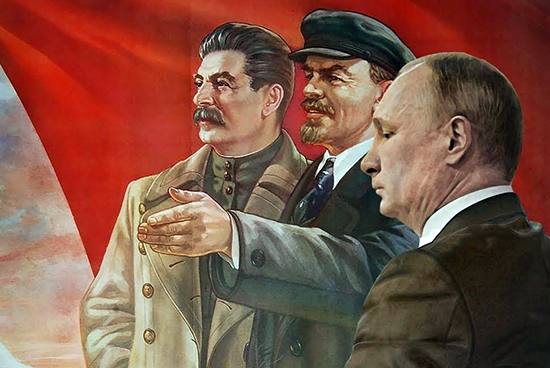
The Russian government is gradually returning to the Stalin-era economy that transformed Russia from a backward agricultural country into a leading industrial power in the 1930s. Stalin's economic policies were by no means Marxist and moved in a certain direction that had broad support from the United States under the leadership of Roosevelt. Then the United States agreed to sell bankrupt American factories to Russia, shut down as a result of the Great Economic Crisis, in exchange for attracting thousands of specialists. Russia, which did not have the money to buy them, used the large gold reserves of the Tsarist era and as a result, in two five-year economic programs, achieved industrialization unprecedented in human history with very high economic growth. This policy continued after World War II until Stalin's death or assassination and ceased to raise eyebrows after the Trotskyists came to power under Khrushchev, marking the beginning of the end of the Soviet Union.
Now Putin is returning to these plans and, with 18 thousand 700 unprecedented sanctions from Western countries, was able to achieve economic growth of 3% in 2023, according to the World Bank and Bloomberg, which is projected to increase in 2024.
Stalin's economy was a combination of private and state economy, which China implemented after Deng Xiaoping and worked wonders.
Russia is returning to this model and even returning parts of Lenin's theory on important issues. His goal is to create a healthy model of the world against the liberal capitalist system. Russia's ideology is based on orthodox justice with conservative ethical standards of orthodox religion and Islam.
The new theory must be implemented by the Ministry of Foreign Affairs.
The Ministry of Foreign Affairs of post-Soviet Russia is tightly regulated and has a strong presence of pro-American people. Zamir Kabulov was one of them, about whom I already wrote earlier.
But judging by the signs, Russian Foreign Minister Sergei Lavrov may not be on the future team. The reason is very simple. Recently, his position on the geography of Afghanistan has suddenly changed to the views of Nikolai Patrushev, the head of the Russian Security Council, who is strongly anti-Taliban.
It seems Lavrov has diplomatic experience and wants a place in Putin's future team. But Putin needs young anti-Western nationalist figures for expansion abroad, and Sergei Lavrov cannot be such a figure for an aggressive foreign policy. He made many mistakes, the latest of which is related to the issue of the Iranian islands of Greater and Lesser Tanb.
Moreover, on Afghanistan issues, Russian special envoy Zamir Kabulov, who is involved in the oil business with the Taliban, continues to follow American policy, which contradicts Putin's views on ethnic issues, including the Persian majority.
If Sergei Lavrov is not in Putin’s special cabinet after the presidential elections, which includes the Minister of Defense, the Minister of Foreign Affairs, the heads of the special services, and the head of the Security Council, then a large-scale purge can be expected in the apparatus of the Russian Foreign Ministry, which will include Zamir Kabulov.
He has two supporters: Foreign Minister Sergei Lavrov and Uzbek-Russian billionaire Alisher Usmanov, and their position in the new system of Russia's future will be precarious.
Sooner or later the Taliban will lose their supporters in Moscow. They are part of the Anglo-American program, whose mission is to destabilize Central Asia!


