


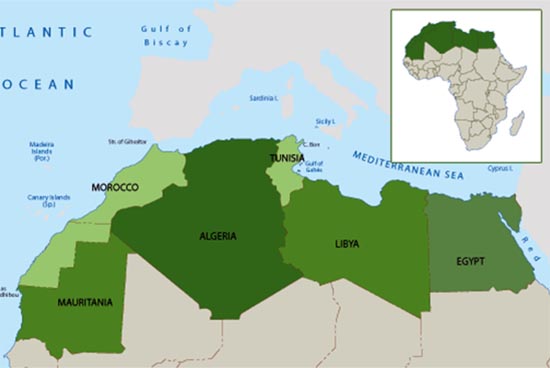
Against the backdrop of the Russian-Ukrainian crisis, other problematic regions have faded into the background of world politics, including North Africa, which includes Morocco, Algeria, Tunisia, Libya, Egypt, Sudan, and formally West Africa. The processes that negatively affect international security and the world economy do not stop there.
Authors: Nikolay PLOTNIKOV, Head of the Center for Scientific and Analytical Information of the Institute of Oriental Studies of the Russian Academy of Sciences, Doctor of Political Sciences, Christopher THORNTON, Program Director of the international non-governmental organization Center for Humanitarian Dialogue (Switzerland), source: zvezdaweekly.ru
North Africa is rich in natural resources. Suffice it to note that Algeria and Libya possess significant reserves of oil and natural gas, one of the most demanded hydrocarbons on the world market today. Morocco has the same strategic resource on which food security on the planet depends. We are talking about phosphates used for the production of agricultural fertilizers. Tunisia also has reserves of phosphates, in smaller volumes.
Egypt controls one of the main transport arteries of the world - the Suez Canal. It delivers oil (about one million barrels of oil and oil products per day) and other goods from the Middle East to Europe. It accounts for 12% of all world trade and up to 10% of world oil supplies.
Virtually all countries in the region are experiencing significant domestic political, economic, and security problems. The COVID-19 pandemic has exacerbated the situation. First of all, in the socio-economic sphere. There is no unity between the countries of the region, which is used by external forces to achieve their selfish interests, provoking unhealthy competition between the countries of the region.
DESERT OF CRISIS
 In Morocco, the internal political situation is generally stable. King Mohammed VI enjoys authority in society, and the government, in principle, performs its functions. Interest in Moroccan phosphate reserves, which is 70% of the world's (about 50 billion tons), is increasing due to a sharp increase in the threat of world hunger and the rapid increase in global food inflation. In this regard, the role of Rabat in the international food system will increase.
However, the country has serious socio-economic problems. Negative trends have affected the energy and food sectors. The kingdom has a high level of inflation and a slowdown in GDP growth, corruption. A significant number of residents live below the poverty line, and the unemployment rate is high, especially among young people (at the end of 2022 it rose to 31.7%, although in 2021 it was at the level of 31%). A third of the population cannot read and write. Problems in the country are pushing young people to illegal migration to Europe.
Algeria faced an unprecedented period of popular protests in 2019 following President Abdelaziz Bouteflika's announcement of his intention to run for a fifth term despite poor health preventing him from serving fully as head of state. The protests led to Bouteflika's removal from power and the imprisonment of much of the Algerian political and military leadership. After the election of Abdelmadjid Tebboune as President in December 2019, the situation has somewhat stabilized.
In 2022, the Algerian economy began to recover, thanks to the return of oil production to pre-pandemic levels, the restoration of the service sector, and active agricultural activity, according to the World Bank. Recovery is expected to continue into 2023. In terms of economic growth, Algeria overtook all countries in the region, with the exception of Egypt. At the same time, inflation in the country remains at a high level - 9.4%, primarily due to rising food prices. They grew by 13.6%.
The situation is complicated by the ongoing tension between Morocco and Algeria for influence in the Maghreb zone. The matter came to a break in diplomatic relations on August 24, 2021. So far they have not been restored.
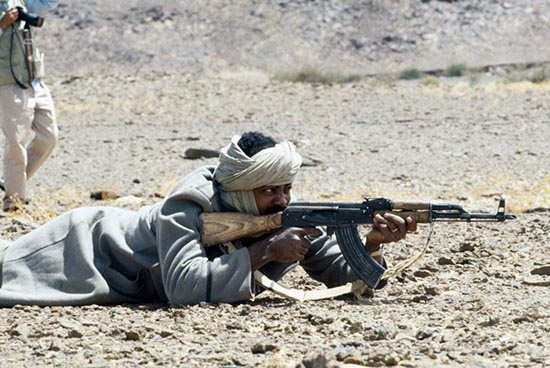 The reasons for the rupture of relations between the two largest and most well-armed countries in the region are manifold and complex. First of all, there is a long-standing dispute over Western Sahara - a disputed desert rich in phosphate reserves, vast offshore oil fields, and coastal fishing grounds.
Algeria defends the right of this region to independence. In November 2020, the Western Saharan armed group Polisario Front announced that it was ending the 29-year-old truce with Morocco and resuming military operations to establish control over the disputed territory.
Another source of tension is the rapprochement between Israel and Morocco. The Kingdom normalized relations with Israel on December 22, 2020, hosted the Israeli Foreign Minister on August 11, 2021, and carried out a large-scale purchase of Israeli weapons, which it placed on the border with Algeria, which became a serious source of concern for the neighbor.
In July 2021, Omar Hilale, Morocco's ambassador to the UN, raised the issue of the right of self-determination for the Algerian region of Kabylie as an act of retaliation for Algeria's position in Western Sahara. In December 2021, when the FIFA Arab Cup was held, Algerian football fans flew the Palestinian flag during a match against Morocco to protest the normalization of relations between Morocco and Israel.
Deep suspicion and mutual distrust can lead to a wider fire. A sharp escalation of the situation could occur after the accidental killing of three Algerian truckers by a Moroccan drone on November 1, 2021, on the National Day of Algeria. The clarification of relations between these two key countries has a negative impact on the situation of the neighbors in the region, who are forced to balance between them. Maintaining tension is not beneficial to either Algeria or Morocco. Algeria is one of Russia's main allies in the region. At the same time, Moscow maintains good relations with Rabat (the kingdom is among the largest trading partners of the Russian Federation in Africa). Russia can use this to encourage de-escalation between the two states. The current level of military mobilization and deployment of weapons along the Moroccan-Algerian border should be reduced so that a large fire does not start due to an accidental spark.
LONG-TERM INSTABILITY
Tunisia is in a serious economic and political crisis. The situation in this country is close to disaster. Tunisia's debts account for almost 100% of the gross domestic product. High unemployment - an average of 18%, among women - 25%, and young people under the age of 25 - 37%. The poor is about 20% of the country's population. The higher education system was once the pride of the country. Now 280,000 university graduates cannot find work.
Tunisians are frustrated by the failure of their political elites to deliver on the socio-economic promises of the 2011 Jasmine Revolution. At the moment, Tunisia is experiencing a catastrophic shortage of food products (milk, sugar, poultry, cereals, and vegetable oils), medicines, and fuel. Few people believe the promises of President Qais Said, who was elected in October 2019, to radically change the situation in the country.
 Every fifth Tunisian dreams of leaving the country. This means that the country may not have a future. It is possible that if the authorities do not take urgent measures to bring the economy out of the crisis in 2023, Tunisia will face another social unrest and revolutionary upheavals.
The political and security crisis continues in Libya. The parliamentary and presidential elections planned for December 2021 were canceled, and their date has not yet been determined. In fact, there are two governments - the House of Representatives, headed by former Interior Minister Fathi Bashagha, and Abdul Hamid Dbeibah. Dual power and instability are used by various groups to divide spheres of influence. The country, as well as the entire region, has a high unemployment rate of about 19%, especially among young people. Inflation rates and food prices are rising. The poverty rate in Libya exceeds 40%.
In addition to oil and gas, Libya also has other natural resources: iron ore, uranium, and gold. But for the exploration of deposits and their production, stability in the state is necessary. Without this, investments in the country will not go.
Of all the countries of North Africa, Egypt is in a better position, but even there the crisis is growing. The adverse effects of the coronavirus pandemic have revealed long-standing problems in the Egyptian economy - low non-oil exports and foreign direct investment, high public debt to GDP ratio, inflation has been rising rapidly for the past five years, and the non-oil private sector is shrinking. The exchange rate of the national currency, the Egyptian pound, is falling.
Egyptian authorities report a decrease in the unemployment rate. However, there is so-called hidden unemployment in the country. According to expert estimates, it exceeds 25%. By the end of 2022, the country's population reached 108.1 million people, natural growth averages about 2.18% (2.3 million people). According to forecasts for 2023, the population of Egypt will increase by another 2.35 million people.
There are growing negative trends in the agro-industrial sector. This is happening against the backdrop of Egypt's agricultural dependence on the water resources of the Nile River, the filling of which is negatively affected by the Renaissance dam built by Ethiopia. One of the important characteristics that testify to the weakening of the Egyptian economy is the volume of its international foreign exchange reserves, which are estimated at $33.3 billion (in February 2022, their size was $40.9 billion). The reduction of Egypt's gold and foreign exchange reserves complicates the process of servicing the country's external debt. There are many problems in Egypt, but the authorities have enough room for maneuvering.
AT THE CROSSROADS
Thus, the North African region is experiencing a period of protracted instability and interstate tension on a scale not seen since the end of the Algerian civil war. The countries of the region themselves are apparently unable to solve the problems that are accumulating like a snowball. The main reason is the unwillingness to look for mutually acceptable compromises.
The collective West, split by the Ukrainian crisis, is currently unable to help Africa, although it claims to have full control of resources and the situation, claiming that Africa has been and will be controlled by the West.
At the same time, in recent years there has been an increase in Russian activity in North Africa, both in the economic and political fields. Moscow, not without success, pays increased attention to the African continent as a whole. At the moment, preparations are underway for the second Russia-Africa summit, which is scheduled for July this year. The overwhelming majority of the countries of the Black Continent, including North African ones, are ready to increase cooperation with Russia on a wide range of issues of mutual interest.


