


The Russians are trying to gradually shorten the US hand from any leadership in the future of the region, especially in the case of Afghanistan.
Author: Abdul Naser Noorzad, security and geopolitics researcher, especially for Sangar
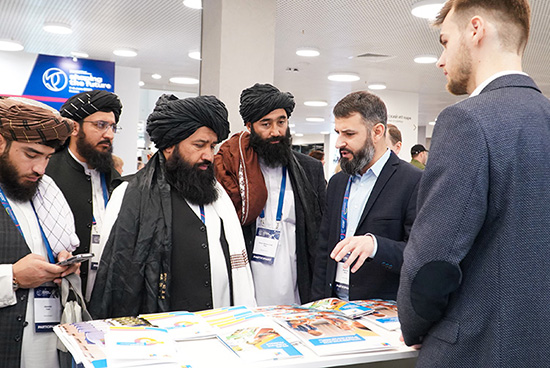
On September 29, the next round of talks on Afghanistan's political future will be held under the name of the Moscow format meeting in Kazan, Russia. Representatives of Russia, Iran, Kazakhstan, Kyrgyzstan, Tajikistan, Turkmenistan, Uzbekistan, China, India and Pakistan will participate in this meeting.
It seems that Russia is tired of the ambiguous and closed situation of Afghanistan, and this country, with increasing concerns about the expansion of the influence of extremists and global groups in the north of Afghanistan and the issue of forming an acceptable government in the region, is trying to It is a regional initiative that guarantees its security and political interests.
Moscow's attempt to lead regional interactions is formed within the framework of security and economic doctrine, along with political components. Moscow will defend its security interests against any threat. Central and Middle Asia is considered as the life of this country's strategic wilderness, while the increasing challenges from Afghanistan have marked the security of this region, and this is unacceptable for Moscow.
While Russia is busy fighting the West on the European front and the current situation shows a military and historical stalemate, it is trying to limit the possibility of any security threat on the southern front. Russians, by intensifying the growing concerns of the understanding of the strengthening of terrorism in the north of Afghanistan, have initially managed to turn the main nature, source and speed of the spread of terrorism into a general theory at the regional level, and on the other hand, they are trying to avoid this. Make optimal use of the security opportunity and complete the process of de-Americanization of the region.
In this regard, in addition to the invitation of the foreign minister of the Taliban, Moscow had recently arranged meetings with the leader of the National Resistance Front, Ahmad Masood, in order to establish a balance in security and political relations and interactions in the future of Afghanistan and its political, security and economic interests. continue to maintain For this reason, Russia's diplomatic activism, in the form of Moscow, is an attempt to take hold of the political and diplomatic pulse, which is thought of separately from the inclusion of extra-regional countries, and the ruling logic is "the only region for the region".
Of course, these efforts of Moscow are defined in the framework of realistic perceptions of Moscow's vital interests and national security; but this country has been able to create a great consensus in the region regarding its leading role among the countries of the region, to some extent, which is considered a success. On the other hand, Moscow is well aware that it can never move in the same boat with Iran and China as in the case of Ukraine, but in the case of Afghanistan, it can, in several ways; focus on Moscow's common security and political-economic interests of the countries in the region. tie a knot With a deep understanding of the history of Afghanistan and the pulse of the political ruler in the region and the spread of security concerns from the understanding of the growing circle of terrorist groups that have taken root in the north of Afghanistan, the Russians are trying to remove America's hand from any leadership in the future.
The region, especially in the case of Afghanistan, is slowly being shortened. Although, the conventional understanding of organizing such meetings based on past experiences shows that one cannot rely on the declarations and resolutions that come from it; But at the very least, Russia's diplomatic activity shows the importance of the Afghanistan issue and the demands raised for it, such as the formation of a comprehensive government, the restoration of the existing political process in which the absolute rule of the Taliban is a big part of its problem. Because in the previous meetings, it was emphasized on the formation of an inclusive government and the return of a suitable political environment for Afghanistan, which has become an active element of security and political interactions and dynamics at the regional and global levels, but so far, no promising and practical measures have been taken in this direction. It has not been done by the Taliban.
According to the Russians, this work is caused by the intervention of the West in the issue of Afghanistan under the rule of the Taliban. Zamir Kabulov, the special representative of the Russian President for Afghanistan, said in his opening speech: "We met almost a year ago in the framework of this structure. We issued a joint statement, and one of its points was requested from the Afghan authorities in Kabul to take practical measures to form an inclusive ethno-political government. Unfortunately, this did not happen. That's why we decided to invite only other countries in the region to this meeting to create a common approach within the framework of the format". These words show Moscow's serious effort to lead and direct regional interactions and show that Russians do not want Western interference in regional affairs and want to take the initiative of any kind of development with them.
Probably, the Moscow format aims at three goals:
- Completing Moscow's direction for the Taliban and declaring a clear issue regarding changing the existing situation, which is moving towards regression. In this case, Moscow will warn the Taliban to reconsider the absolute rule of the Taliban in view of the current situation in Afghanistan and the impasse. Otherwise, alternative options will be waiting for them;
- Another very important issue is the concern of Central Asian countries and Russia regarding the activities of terrorist groups in Afghanistan and the increase in drug trafficking. These issues will definitely be discussed at the Moscow format meeting. After the Taliban came to power, the amount of drug cultivation and smuggling from Afghanistan has threatened the security of the entire region and has become a good source of money for terrorist movements. This discussion is known as one of the three threatening components regarding the definition of Moscow's national security;
- Creating a regular diplomatic format at the regional level that can resolve security, political and economic issues with the principle of unanimous vote, like the United Nations Security Council, without the interference of the US and its allies. This could fulfill the desire of the Russians to lead such processes. But do Indians and Chinese agree with this view or not? It is another issue.
But will these meetings be fruitful?
As mentioned earlier, the Taliban and their supporters do not welcome any security component that benefits the Russians, so as a result of such meetings, it will only be a statement and an opinion. Because the Taliban and the establishment of this group for other terrorist groups in Afghanistan is indicative of a complex security puzzle with wide ranges of war and violence. Since in the past years, the formation of a continuous "inclusive" government has been seen as the main request in the final statement issued by the Moscow meeting in the past two years, but there is no desire on the part of the Taliban for this, and this shows It is a fact that Afghanistan is strongly moving towards security rather than the formation of a government accepted by all. Therefore, as a political effort along with security efforts and an effort to influence and be a partner in Afghanistan, the Russians are trying not to be left behind and similar to America and their allies regarding important issues such as Afghanistan, which is an important source of instability in the region. It becomes disguised, have symbolic movements. As it turns out, the issue of Afghanistan requires a military approach rather than a political initiative. Besides military options, the Russians have also spent initiatives such as providing communication with Taliban opposition groups that are active in the framework of resistance movements.


