


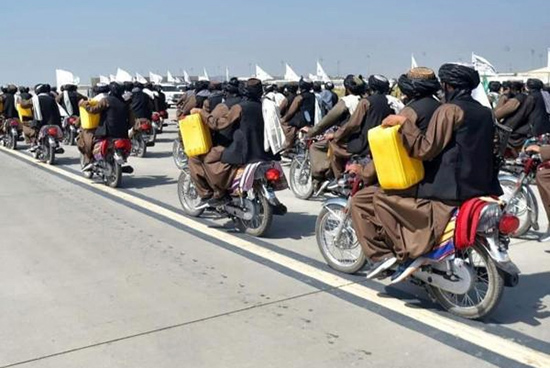
While regional countries engage in a temporary tactical game with the Taliban, extra-regional powers use it as part of a long-term destabilization strategy.
By Abdul Naser Noorzad, security and geopolitics researcher, exclusively for “Sangar”
Original article: طالبان در بازی بزرگ: مهره یا بازیگر؟
After the withdrawal of the United States and NATO and the cessation of support for the republican government, the Taliban took power in Afghanistan with little resistance and virtually no fighting. Currently, regional countries, including Russia, China, Iran, and the Central Asian states are establishing active and multilayered relations with the Taliban. Russia was the first to recognize the Taliban; China is active in economic, political, and even military spheres in Afghanistan; Iran has established unprecedented religious and intelligence influence within the Taliban; and Central Asian countries, for security and economic reasons, also interact with the Taliban Emirate.
This situation has created a geopolitical paradox: how can the Taliban, a product of behind-the-scenes agreements and the engineering of great powers, simultaneously align with the United States and its regional adversaries, act as an independent force, and conclude serious deals with these powers?
In fact, the Taliban has been formed and developed within the framework of the interests of major powers and oil/regional companies from the very beginning. Undeniably, evidence indicates that the Taliban’s rise to power resulted from decisions made by great powers, and the U.S. withdrawal from Afghanistan was less a defeat than a tactical redeployment aimed at focusing on containing China, Russia, and Iran. This is part of the U.S. "rebalancing" doctrine, focused on key global hotspots. Thanks to its destructive potential and terrorist capabilities, the Taliban was involved in the axis of regional and extra-regional games.
Due to its destructive nature and origins in terrorist uprisings, the Taliban is considered an ideal tool for destabilizing the borders of China, Russia, and Iran. With the transfer of power to the Taliban through the Doha Agreement, the U.S. managed to maintain the regional security balance even in its absence. Hosting more than twenty transnational terrorist groups, enforcing harsh laws, and creating artificial stability through repression, the Taliban effectively acts in the interests of the West and its allies.
In this context, regional powers see the Taliban not as a genuine partner but as a managed threat, having no better option to fill the security vacuum left by the U.S. Economic and political relations with the Taliban are driven more by necessity and concern than trust or sympathy. Even Russia’s recognition of the Taliban is more a tactical move to buy time and manage the crisis than a long-term strategic step.
The Taliban lack sustainable internal and international legitimacy and have no legal recognition. Due to the multilayered external influences on intelligence and security, the group has become a vulnerable and multifaceted figure — an intelligence project that operates more on tactics than strategy. Thus, the Taliban is neither fully independent nor fully dependent; rather, it is caught in a complex, multilayered geopolitical game where each regional and extra-regional power seeks to exploit it.
The future of the Taliban and Afghanistan is more tied to external competition than to internal will and capability. The absence of legitimacy, internal repression, and an imposed political system all signal fragility and the possibility of a sudden collapse. Any stability in Afghanistan will be temporary and dependent on the interests of major powers.
But why does the West, despite supporting and fostering the Taliban, now push it into the arms of Russia, China, and Iran? The logic behind the Taliban’s rapprochement with the region has several dimensions:
Closer ties with Asian powers reduce the risk of direct intervention and support for rival groups.
This rapprochement creates a false sense of control over terrorism in Afghanistan.
Regional countries, driven by economic and security needs, are forced to pay tribute to the Taliban, which aids its survival.
Internal disputes within the Taliban over economic and administrative interests are exacerbated by this rapprochement, creating opportunities for a “divide and rule” strategy through which the West spreads instability in the spheres of influence of Asian powers.
Meanwhile, Russia, while involved in the game, remains vulnerable at the margins. The main goal is to contain China and prevent its economic and geopolitical expansion. Iran, after Middle Eastern conflicts and tensions with Israel, faces new threats: weakening the resistance axis and encirclement through the Caucasus. Turkey and NATO, supporting Azerbaijan, pursue Pan-Turkic goals and exert pressure on Russia and Iran. Pressure on Central Asia and creating instability there is part of the strategy to contain China, where Afghanistan remains a key route for the U.S.
In conclusion, the Taliban, leveraging regional and extra-regional security concerns and agendas, has managed to ensure its survival. The regional game with the Taliban is tactical and temporary, while the extra-regional game is part of a destabilization strategy and the rebalancing doctrine aimed at containing Asian powers.


