


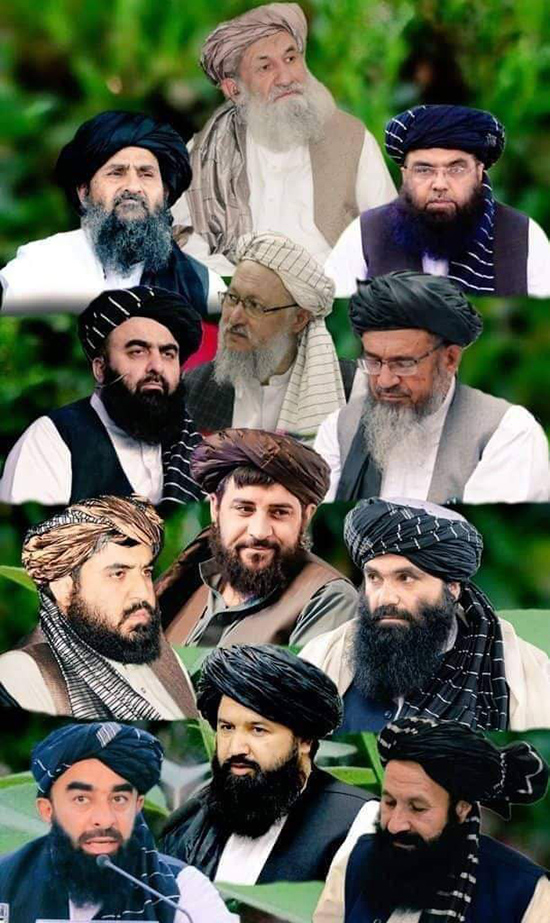
The Taliban arrived at the trade of power and wealth through jihad.
Author: Abdul Naser Noorzad, security and geopolitics researcher, especially for "Sangar"
Original article: الیگارشی جهادی-تروریستی
Have the Taliban turned into a political and economic oligarchy?
The answer to this question should be sought in the Taliban’s performance over the past four years. Today, more than ever, Taliban leaders, instead of being symbols of asceticism and jihad, have turned to comfort-seeking, greed for money, and capitalism. Political power in today’s Afghanistan is concentrated in the hands of a small and limited circle of Taliban leaders; a circle whose members do not exceed thirty people and who control all the country’s financial and political resources.
An examination of the Taliban’s budget structure and the significant increase in the leader’s office budget shows that the Taliban are indeed a true example of a political and economic oligarchy. Oligarchy is a structure in which power and wealth are concentrated in the hands of a small group, and this group uses public resources for personal gain and to consolidate its own power.
The Transformation of the Taliban: From Ideological Group to Security Contractor
The Taliban leaders have transformed the group from an ideological militant movement into a security contractor and ruler. Today, the Taliban are no different from groups like Wagner in Russia, Blackwater in the US, or regional proxy groups. The thirst for power and wealth has distanced Taliban leaders from their jihadist ideals and set them on a path of absolute greed and power-seeking.
Taliban Ranks: Unaware Victims of the Oligarchy
One of the fundamental questions is: what have the Taliban oligarch leaders done with their unaware and emotional ranks? How did these leaders, by exploiting the feelings and sacrifices of their ranks, seize power, and now the blood and lives of thousands of Taliban fighters are spent consolidating the power and wealth of this minority? Taliban leaders, who are now among the capitalists of Afghanistan and the region, have gradually retreated from their ideological interests, calling this retreat “political pragmatism” to preserve their windfall power and wealth.
Structural Corruption and Mafia Economy
By concentrating financial and political resources, Taliban leaders have turned jihadist thinking into a political and opportunistic maneuver. The wealth of these oligarchs has reached millions of dollars, and in corruption, bribery, and deal-making, they have even surpassed the corrupt leaders of the previous republic. The Taliban budget is not only a record of income and expenditure but also reflects the political and economic priorities of the group. Budget transparency has reached an all-time low, and all international standards of transparency and accountability have been compromised. More than 70% of the budget is allocated to security institutions, the Taliban leader’s office, and the prime minister’s office, while the decision-making minority wastes money that should go to the people and the ranks.
A 400% increase in the Taliban leader’s office budget over three years, reaching more than 12 billion Afghanis, in a country whose economy has collapsed and poverty is rampant, shows the peak of economic and political oligarchy. These resources are mainly used to consolidate personal power and strengthen the military structure loyal to the leader.
Underground Economy and Mafia Networks
In addition to official revenues, the Taliban control illegal financial sources such as drug and mineral smuggling, earning huge sums annually. These opaque resources have turned the Taliban’s political economy into a mafia economy, where networks of power and wealth are highly concentrated and unaccountable.
Resource Allocation for Suppression and Propaganda
A large part of the country’s budget, instead of public services and development, is directly allocated to the Taliban leader’s offices and his close circle. The prison budget has increased by more than 200%, and billions of Afghanis have been allocated to propaganda and religious institutions to consolidate the power of the leader and his close followers. In contrast, the share of the Taliban ranks from this huge income is negligible, and many of them, due to poverty, have left the group and joined other groups.
Oligarchic Lifestyle and Unprecedented Corruption
With illegal incomes, Taliban leaders have built luxurious houses, armored vehicles, and a lavish oligarchic lifestyle for themselves. Incomes from drug trafficking, customs revenues, import contracts, and arms sales have made them millionaires of their time, while the unaware ranks continue to blindly follow these leaders.
Taliban: Jihad for Oligarchy, Not Freedom
Taliban leaders, especially Mullah Hibatullah and his close circle, with unprecedented concentration of financial resources and political power, have turned Afghanistan into a full-fledged oligarchy. This structure not only hinders development and public welfare but also perpetuates corruption, repression, and crisis. There is no longer any doubt that the Taliban Emirate project was not for religion and freedom, but for power, wealth, and the imposition of a primitive culture, with the help of foreign countries and intelligence agencies, on the people of Afghanistan.
While thousands of Taliban fighters and innocent Afghans have fallen victim to this project, Taliban leaders today enjoy their windfall wealth in luxurious homes and million-dollar bank accounts. Their investments in Pakistan, Dubai, Qatar, and even Europe testify to this bitter reality: the Taliban’s jihad was a jihad for establishing an oligarchy; a jihad whose profits went into the pockets of deal-making leaders, and whose losses fell on the people and the unaware ranks.


