


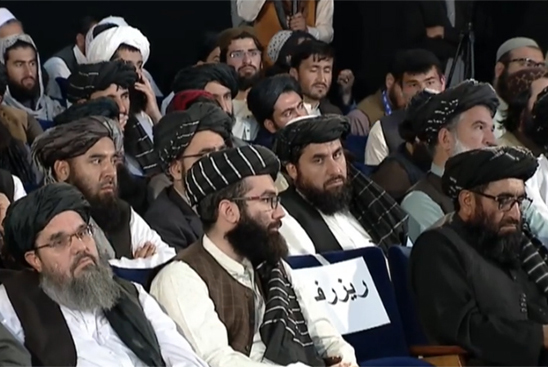
Most of the Taliban* in the north are establishing ties with the National Resistance Front of Afghanistan and are waiting in the wings.
Author: Hafiz Mansour, former Minister of Culture and Chairman of the Afghanistan Radio and Television Committee
The Taliban emirate is on the verge of collapse.
The Taliban emirate faces four major challenges. And these problems are getting worse every day.
1 - Lack of international recognition of the Taliban emirate as a legitimate government;
2 - The inability of the Taliban to form an effective and inclusive government that could satisfy the Afghan people, political factions, and civil institutions;
3 - Financial and economic problems, due to which the presence of the Taliban in Kabul interrupted world aid to Afghanistan;
4 - Internal divisions of the Taliban, which are widening over time.
The Taliban received the consent of the United States and the countries of the region with a number of obligations to replace Ashraf Ghani;
They promised the US and its allies that there would be no threat to their interests from Afghanistan. Neighboring countries were also convinced that Afghanistan would not become the base of threat for them in the future, so they silently watched the arrival of the Taliban in major cities, especially in Kabul. The Taliban promised that they were no longer that hardline, anti-human rights group and would treat women, political parties, civil society, and civil servants in accordance with international law and standards, but in practice, they were again consistent, there was no change in their words and behavior.
Afghanistan's neighbors, who believed that a Taliban-controlled Afghanistan could restore peace and stability to the country, witnessed attacks on Pakistan and repeated tensions on the borders between Iran and Afghanistan. Iran has had to deploy more troops to its eastern border. Rocket attacks on Uzbekistan have been unprecedented in at least the past three decades.
Neighboring countries that see ISIS* as a major threat to regional security have relied on Taliban promises that it will be contained by the Taliban, but ISIS has been seen carrying out bloody attacks in several Afghan cities. This greatly called into question the ability of the Taliban to provide security in Afghanistan. In addition, there was evidence that the Taliban, in order to put pressure on Afghanistan's neighbors, created ISIS themselves and organized attacks on them in order to get more privileges.
All in all, if there had been any optimism about the Emirate of the Taliban eight months ago, that optimism has since waned and it appears the Taliban are powerless to restore it.
20 years ago, the Taliban also ruled much of Afghanistan for a number of years. They were expected to form a government and hire decent personnel, but again, they followed the same path they had followed in the past, appointing qaris and mawlavis to technical and professional positions in the government, which led to the recession and paralysis state institutions. The Taliban pretended to be professionals but pursued a policy that had no precedent not only in Afghanistan but also in the world. They abolished political parties, left no room for civilian institutions, destroyed the army and police, and hired uneducated people in their place. The result of the work of such a government is general poverty and unemployment, suffering and torture of the people, chaos and lawlessness, discontent and flight from the country, which can never provide this group with the right to exist and international legitimacy.
The Taliban, like the jihadist groups, have been brutally deceived by the bountiful promises of neighboring countries, believing that billions of dollars in aid from China, Russia, Iran, and Pakistan will flow into Afghanistan after the US withdrawal and the group will rule the country without any problems, unaware that the Taliban was never considered a candidate for power and were used as a tool. When the Taliban entered Kabul, they had high hopes for outside help, but their main backer, China, reinforced the Taliban emirate only with 1000 mattresses, and there was no news from others. Today, state institutions are paralyzed, and doctors and teachers are paid by international organizations. Many of their military units have returned to their homes due to severe famine, and in some provinces, to alleviate poverty and starvation, there are bloody clashes between their forces over the collection of taxes and tithes.
Afghanistan's money is frozen in the World Bank and is not available to the Taliban. To compensate, the Taliban are doing their best to extract funds from small mines such as coal, and crude oil, and collecting taxes from shopkeepers who can never meet the needs of the government. They encouraged and expanded opium cultivation to cover their financial needs for the rest of the season, meanwhile sowing poison for the region and the world, spreading pain and suffering.
There are reports that the Taliban forces have not been paid their salaries for months, and they have lost motivation in the fighting, so they have an acute shortage of troops.
The discriminatory behavior of the Taliban emirate at the first stage caused dissatisfaction among the Talibs from among the Tajiks, Uzbeks, and Turkmens. In practice, they cannot be considered Taliban-affiliated forces. A number of their leaders have been disarmed, and some have been assigned minor posts. The northeastern and northern parts of Afghanistan are ruled and led by Pashtun Taliban commanders. It is not unreasonable that most of yesterday's Taliban in the northern regions of Afghanistan are establishing ties with the National Resistance Front of Afghanistan and are waiting in the wings. There are no good relations between the Taliban in the south and southwest of Afghanistan.
From the very beginning, this group was not a cohesive and centralized force but was led and supported by different countries. Mullah Baradar's faction, mainly based in Kandahar and Helmand, was supported by Iran, and their most important commander, Mullah Abdul Qayyum Zakir, resigned as deputy defense minister. According to the reports, Mullah Haybatullah's bodyguards ransacked his private home and confiscated all of his weapons.
If the Kandaharis call Mullah Haibatullah "amir al-mu'minin", then the Paktia Taliban have their own group, calling Sirajuddin Haqqani "Khalifa sahib". The rivalry between these two factions may be similar to the rivalry between the (Communist factions) Khalq and Parcham, (Jihadist parties) Hizbi Islami and Jamiati Islami. The Haqqani faction is said to have close ties to Pakistan, but some reports suggest the group is more inclined to form an inclusive government, while Mullah Baradar's faction intends to govern alone. These differences are very clearly visible in the messages sent to the National Resistance Front. The divisions between the factions have reached such a point that the Haqqani faction is not present at the ceremony marking the anniversary of the death of Mullah Omar, but instead pretends to be more influential, celebrating the anniversary of the victory of the Afghan Mujahideen (in jihad against Shuravi) without the presence of the leaders of the Mullah Baradar faction in the hall of the Afghan radio and television.
From all this, it is not difficult to conclude that the Emirate of the Taliban will face popular military resistance, which was laid in northern Afghanistan by the National Resistance Front, and such a move could cause the mobilization of all anti-Taliban forces throughout the country and turn into a popular uprising. The neutral stance of neighboring countries on the Afghan issue will become more serious as with the arrival of Shahbaz Sharif in Pakistan, the Taliban are more under pressure from Islamabad than ever before, further isolating the Taliban. And at the global level, the issue of Afghanistan, which was forgotten after the Ukrainian war, will again arise.
One cannot speak of an end to the suffering and misery of the Afghan people, but there is no doubt that Taliban rule will come to an end, dramatic and unexpected.
* The organization is under UN sanctions or banned due to terrorist activities.


