


If non-Pashtuns do not fight, they will lose not only their culture, language, and historical identity, but their lives will also be in danger.
Author: Nurulla Valizade, writer and political analyst, especially for Sangar.
Analysis of the motives and causes of the war with the Taliban
The war against the Taliban* has different motives and reasons. Various social, political, cultural, and religious groups are at odds with the Taliban.
The fact is that since the Taliban is a militant group, the method of dealing with it can be summed up in one word: “war”. This means that if you are against the Taliban for any reason, you have no other choice but to fight them.
Before turning to the motives and reasons for the war with the Taliban, it is necessary to give a brief definition of the Taliban in order to explain the motives and reasons for the war with this group.
What is the Taliban?
The Taliban are an ethnic and religious group. The ethnic group to which the Taliban belong is the Pashtuns. Many believe that ethnicity is at the core of the Taliban's mindset and agenda, but because Afghan society is a religious community, the Taliban use religion as a front. Of course, this is something the Taliban disagree with.
Another point that is important to identify the Taliban as a proxy group or is heavily dependent on foreign intelligence services, in particular Pakistan's military intelligence - ISI. This made it difficult to identify the Taliban. The leaders of the Pakistan-led group are always hidden from the public eye so as not to reveal the group's obscure identity.
The Taliban emerged in Pakistan in the last decade of the twentieth century (1994) when various jihadist factions were at war with the government of Burhanuddin Rabbani. Thus, the prevailing analysis is that the Taliban are a product of the ISI and are working to further Pakistan's expansionist goals.
Below we consider the motives and reasons for the war with the Taliban. First, we turn to social or ethnic motives.
Socio-ethnic motives and reasons
According to definition of the Taliban, this group is an ethnic Pashtun group. This group originated in a Pashtun social context. All key and competent leaders and officials of this group were/are Pashtuns. Most Taliban supporters are Pashtuns. The policy of the Taliban is Pashtunistic. In non-Pashtun areas, the Taliban behave differently than in Pashtun areas. The vast majority of anti-Taliban forces are non-Pashtun. That's why the Taliban are Pashtuns. The Taliban in their rhetoric deny that they are a Pashtun group, but the group's actions are ethnic in nature.
The role of ethnicity in political events in Afghanistan
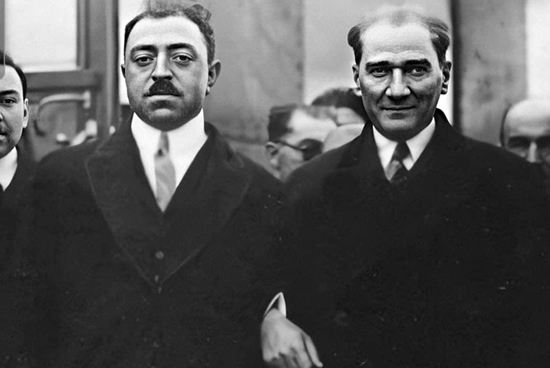 Those who are familiar with the modern history of Afghanistan know that ethnicity has been a major and decisive factor in politics. Although many refer to the emergence of the role of ethnicity in Afghan politics 280 years ago, when all the rulers of Afghanistan were Pashtuns, the fact is that ethnicity has become a determining factor in politics over the past hundred years. In the past, although the rulers of Afghanistan were Pashtuns, Pashtunism as an idea did not form the basis of their rule.
Since the time of Shah Amanullah (1919-1929), the power of the Pashtuns has been replaced by the power of Pashtunism. From then on, the Pashtun rulers were not content with power but sought to make the state a means to achieve ethnic goals, which was interpreted as Pashtunism/fascism.
Many political scientists in Afghanistan and the region, studying the events in the country, consciously and unconsciously analyze the ethnic conflict in an analytical context as "inter-ethnic political rivalry for political power." This analytical framework is in fact a copy of the analytical framework that analyzes the competition between political parties for power in societies with multi-party democracies. Of course, this analysis is not incorrect, but its drawback is that it is not deep and does not touch the roots of the ethnic conflict.
It is said that the Pashtuns want to be in power and that the Tajiks, Hazaras, and Uzbeks are hindering them, and that they too are resorting to arms in the struggle for power. It only talks about multi-ethnic competition for political power but does not say why the Pashtuns want to hold power and why others oppose it. The answer to these reasons is not political and economic, but cultural and historical.
Tajiks, Hazaras, and Uzbeks say that if Pashtuns do not intend to threaten the ethnic and linguistic identity of others using the ruling state apparatus, they have no problem with the Pashtun rule. In fact, the root of the problem lies in Pashtunism.
After Shah Amanullah, the implementation of Pashtunism was interrupted for a short time (9 months of Khabibulla Kalakani's reign), but soon resumed and was carried out for sixty years.
Although the Davudkhan coup (the early 1970s) disrupted the implementation of fascism due to the emergence of political currents of constitutionalism, communism, and then Islamism, in fact, none of these political currents was able to remove the politics of Afghanistan from the ethnic context.
It was expected that the communist movement would be able to push the politics of Afghanistan beyond ethnic boundaries, but this did not happen. The same was expected of political Islam, but this political current could not succeed in this respect. Although Islamism (jihad) brought the Tajiks back to power, this did not put an end to ethnocentrism, and the Pashtuns, not recognizing Tajik rule, continued to insist on ethnicity, and the Taliban arose in the same context.
What is Pashtunism?
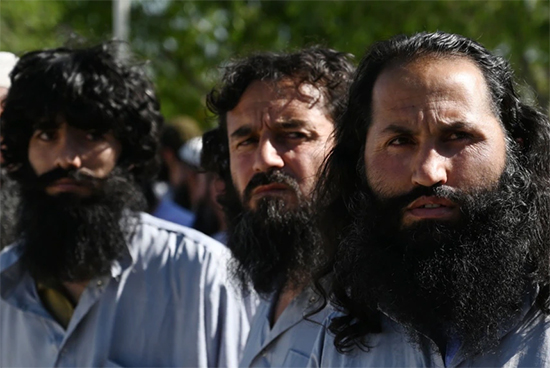 Pashtunism as a program for the Pashtunization of Afghanistan dates back to the time of Amanullakhan. Mahmud Tarzi and the circle of the Pashtun elite during the time of Amanullakhan, inspired by the pan-Turkic ideas they learned from Turkey, sought to make the hitherto little-known Pashto language and culture the official language and culture of the country, in other words, they were to replace the Persian language and culture. The program developed seriously in social, cultural, linguistic, and even administrative, economic, and geographical dimensions and became an unwritten manifesto for later Pashtun politicians, who considered themselves indebted to its implementation.
The Pashtuns claim is formulated as follows:
Afghanistan is the original land of the Pashtuns. Sovereignty and governance of the country is an inherited right of the Pashtuns, not others. Pashtuns constitute the majority of the population of Afghanistan, and this should be taken into account in all affairs, and the share of Pashtuns in the government of the country, in the distribution of wealth and power, should be sixty percent. Pashto should be the national and official language of the country and everyone should learn and speak it. Pashtun culture (customs and traditions) should be promoted into the general culture of the country, and all other ethnic groups should respect it and replace with it their own culture and historical traditions. National symbols (national anthem, coin, flag, etc.) must come from the Pashto language and Pashtun culture. Non-Pashtun tribes are migrants who migrated to Afghanistan as a result of the wars and must maintain their status as migrants, not interfere in the affairs of the country and claim ownership of the lands they occupy. Pashtuns can settle in any part of the country and claim ownership of the land they occupy. The history written (albeit fake) by the Pashtuns should be the official history of the country and should be taught in schools.
It can be said that all Pashtun political and military movements from all walks of life tried to fulfill the above requirement. The Taliban is considered one of the most extremist ethnic groups in terms of ethnic politics.
The transfer of power by Ashraf Ghani to the Taliban is connected with the intellectual community of the Taliban and Ghani. Ghani was a fanatical Pashtunist, and because he considered his ability to carry out ethnic plans insufficient, he secretly handed over power to the Taliban so that the group could carry them out vigorously. This is an interpretation of recent political events in Afghanistan by non-Pashtun political currents.
Given the above, we can say that one of the main reasons for the war with the Taliban is social or ethnic in nature. In 1995, when the Taliban took control of Afghanistan, all non-Pashtun political and military leaders who had previously fought against each other united and formed the Northern United Front, a powerful political and military force opposed to the Taliban, under the leadership of Ahmad Shah Massoud.
Over the past 20 years, Karzai and Ghani have worked hard to dismantle the Northern United Front, and they have succeeded. Karzai and Ghani actually took revenge on the Northern Alliance for the Taliban. The leaders of the Northern United Front were either killed, drowned in entertainment and wealth accumulation, or isolated from politics.
The purpose of mentioning the political events of the last twenty years here was to emphasize that Karzai and Ghani continued the path of the Taliban, and the Taliban continue their path, and this path is nothing but Pashtunism, what has been known as the political infrastructure in Afghanistan since the time of Amanullah Khan.
Even now, with the Taliban in power, all non-Pashtun political and military leaders have fled the country and are seeking to create military mechanisms to fight the Taliban. The Taliban have taken over their homes, and a number of prominent non-Pashtuns who have not been able to leave the country are on the run and will be killed if the Taliban find them.
In the ethnic strategy that the Pashtuns have defined for themselves, the Tajiks have been identified as the main obstacle. In fact, the Pashtuns politically consider the Tajiks their number one enemy, and then the Hazaras and Uzbeks are ranked among the enemies. Let me remind you that Pashtuns here do not mean all representatives of the Pashtun people, but Pashtun politicians or Pashtunists. They play a crucial role in Pashtun society. There are few non-Pashtun Pashtuns, and their role in politics and militarism is insignificant.
But why Tajiks?
 The Tajiks have taken power from the Pashtuns two or three times in the last hundred years as Pashtunism has grown. This has led Pashtuns to classify Tajiks as class enemies in power-oriented political discourse.
Tajik Khabibullah Kalakani overthrew Amanullah's government at the height of inter-ethnic strife under King Amanullah, which caused a deep shock in the Pashtun-Pashtunist political and intellectual community. Kalakani took power from Amanullah when Mahmud Tarzi and his associates were developing the mainstream of Pashtunism/fascism.
Mahmoud Tarzi, who considered himself an intellectual leader at the time and was also a relative of the Shah, had learned Pashtunist "lessons" from Turkey and wanted to set up a Pashtun think tank with the support of Amanullakhan. It was at this time that Habibullah Kalakani overthrew Amanullah's government. Therefore, it was natural for all members of the think tank of the royal system, headed by Mahmoud Tarzi, to take revenge on Khabibullah Kalakani and attack him in various ways. These verbal attacks, which are actually mixed with insults and swearing, later became part of Afghan school history lessons and are still taught to students in schools today.
Approximately seventy years after Kalakani (1990), the Tajik Burhanuddin Rabbani came to power. During these seventy years, the Pashtuns worked hard to eliminate the idea of Tajik political domination. Brutal repression and oppression took place in areas inhabited by Tajiks. Many people in the northern part of Kabul (Parvan, Kapisa, and areas north of Kabul, the place of social origin of Khabibullah Kalakani) were massacred. Many of their property was confiscated and they themselves were driven out, and many people in the region were forced to remain silent and accept Pashtun rule as a result of constant pressure and psychological torture. But the rise to power of Burhanuddin Rabbani once again exposed the Pashtuns to the threat of the Tajiks, who saw it as the result of seventy years of repression and pressure.
Although Babrak Karmal is considered by some to be a Tajik who for a time (during the communist regimes of the 1980s) was able to seize power through the party system, since Karmal came to power as part of a party program, he did not reveal his Tajik identity. He did nothing tangible for the Tajiks, hence, many do not consider his reign to be a period of Tajik rule.
However, as we have said, seventy years later, the Tajiks, oppressed for two generations, returned to power and, of course, by force of arms.
Wrong conclusion of Pashtuns from the return of Tajiks
 The Pashtunists, instead of being guided by the “ineffectiveness of 70 years of oppression of the Tajiks”, and realizing that they could no longer prevent the rise to power of non-Pashtuns and Tajiks through pressure, repression, war, and violence, on the contrary, decided that they should resume and pursue more vigorously the path pressure and repression over the people of Shimali (bases of resistance). The Taliban were brought in for this purpose, so the group is conducting intensified repressions against the Tajiks.
The Pashtun Taliban ousted the Rabbani government from Kabul, but Ahmad Shah Massoud fortified himself in the north of Kabul and resisted for about five years, preventing the Taliban from capturing all Tajik territory north of Kabul and northeast. Massoud's resistance did not allow all Pashtunists’ claims and malice to be unleashed. Over the past 25 years, they have made the suppression of resistance in various military, political and intellectual dimensions a top priority of their goals.
Right now, Karzai and Ghani and all Pashtun political currents inside and outside the country are trying to neutralize the Second Front of Resistance, which is being formed under the leadership of the son of Ahmad Shah Massoud, and help the Taliban stabilize their system and goals.
At the same time, the Pashtuns consider it their duty to crush any resistance in the Tajik regions, which will now inadvertently be associated with their historical and Tajik roots. To do this, the Pashtuns use various tactics and strategies.
One way to weaken the Tajiks is to create divisions between the Tajiks, Hazaras, and Uzbeks on the one hand, and between the Tajiks themselves on the other. That is why in recent days we have witnessed discussions on social networks on the topic of distinguishing between Tajiks, Uzbeks, and Hazaras. Among the Tajiks themselves, there are also various political factions that can widen the gap between them and prevent the formation of the unity desired to win the war.
Karzai is trying to convene a Loya Jirga (Assembly of Elders) to secure the Taliban's internal legitimacy. A number of Tajik political leaders, Hazaras, and Uzbeks, should be urged to join the Taliban regime and then claim that the Taliban regime is trans-ethnic and ensure internal legitimacy. Now they are sharing this experience with the Taliban in various ways to strengthen the Taliban and weaken the resistance.
Therefore, the social and ethnic motivation for the war against the Taliban is the most important, the main, the most serious, and the most indelible motivation. In a simplistic approach, many people think that by combining several ethnic figures of non-Pashtun tribes into a Pashtun structure, one can eliminate the ethnic motivation for war, but experience has shown that this view is erroneous.
With these superficial and demonstrative methods, one can create an idea of a trans-ethnic structure in the short term, but it is not a solution in the long term. When you talk about deep-rooted ethnic conflict in a volatile, war-torn area, you can't rely on short-term, superficial solutions.
Today there may be a number of Tajiks, Hazaras, and Uzbeks who, as political and ethnic leaders, are united in a demonstrative structure, renouncing the identity and cultural values of their peoples and giving priority to personal and family interests. However, if government policies continue to be ethnic and discriminatory, the next generation of Tajiks, Uzbeks, and Hazaras will resist and the wheel of war will turn again.
It should be noted that the Taliban are generally incapable of building inter-ethnic trust, which means that over time, social and ethnic motives for fighting this group increase.
Why did the implementation of Pashtunism face serious obstacles?
 Before turning to the above question, it is important to note that the Pashtuns, when thinking and planning the introduction of Pashtunism, are considering models of ethnic sovereignty in the region. For example, Uzbekistan, Tajikistan, Iran, Turkmenistan, etc., from the point of view of the Pashtuns, were able to form mono-ethnic governments and create a society of one ethnic color and forced other ethnic groups to recognize their political and cultural dominance, hence the Pashtuns can do the same. This approach takes into account several important points or, in fact, some major differences, which are mentioned below:
1 - The Pashtuns base the country's Pashtunization program on false and baseless claims. Pashtuns, who make up no more than 30 percent of Afghanistan's population, claim to make up 60 percent of the country's population. This statement is not based on any scientific or logical principle. This is the basis of the country's Pashtunization program. That is why they cannot convince others.
2 - The Pashtun culture and Pashto language, which the Pashtunists are trying to impose and generalize on the entire heterogeneous population of the country, do not have the ability to absorb, integrate, harmonize and create the basis for coexistence, homogeneity, and a common language.
Despite the centuries-old efforts of the Pashtuns to nationalize and popularize the Pashtun language, the national, folk, and public language of Afghanistan is still Persian and Pashto is not known to others except Pashtuns. Even 90% of Pashtuns know Persian and speak it with non-Pashtuns. In other words, the program of Pashtunization of the culture and language of the country has failed in the cultural and program dimensions. This is also an important factor. Imposing innovation always creates opposition, but when what you impose does not attract, turn on, and be accepted, the challenge becomes more difficult and resistance becomes more necessary.
Now that the war with the Taliban as a Pashtun group is seen in the context of an ethnic struggle for power, it can be said that this war is not a war for power. This is a war for survival. If non-Pashtuns do not fight, not only will their culture, language, and historical identity be destroyed, but their lives will also be in danger.
In other words, even if the Tajiks stop fighting the Pashtuns and accept the rule of the group, this will not help save their lives from the Pashtunists plans. Ismail Yun and a number of well-known Pashtunist circles, who consider themselves the think tanks of the Pashtun rulers, in a book entitled “Second Sakawi” described the presence of Tajiks north of Kabul in this region as a great threat to Pashtun rule and pointed out to the Pashtun rulers the need to find a solution to eliminating this risk. This could be the forced relocation of Tajiks from the most important part of Afghanistan, which is the ancestral land of the Tajiks, or, in the most optimistic case, the revival of the “naderkhani” policy in the region, which means the gradual suppression, liquidation, and deportation of Tajiks.
The Taliban were created for this purpose and returned to power to implement the program as a violent force that cannot be implemented by non-violent civilian methods.
The Taliban's "scorched-land policy" in the north (during the first period of Taliban rule) makes up much of the black page of the group's ethnic crimes, which northerners remember as a repeat of the Mangal invasion during Naderkhan's rule.
After the assassination of Khabibullah Kalkani, Nadir Shah sent a ruthless army of Pashtun tribes into the northern lands to take revenge on these people for supporting Habibullah Kalakani. They brutally encroached on the property, life, and honor of the people. The inhabitants of the North tell their horrific stories from generation to generation.
Even the foreign support the Taliban is receiving is in line with the Pashtun agenda. The Pakistanis are pursuing their strategic plans in Afghanistan with the support of this aggressive and ethnocentric ethnic group. This program aims to intensify inter-ethnic hostility in Afghanistan. The Pashtuns are so insistent on the Pashtun agenda that they don't understand why Pakistan supports it. Pakistan wants to make the Pashtuns hostile to all other ethnic groups. In this program, the British are also considered allies of Pakistan. The British have been instrumental in fueling many of the ethnic and religious divisions in Afghanistan, Pakistan, and India, and over the past twenty years, when the country came to Afghanistan with the United States, it has sought to reopen many old dirty wounds. The political exploitation of discord is the most well-known component of English politics.
In the next article, we will discuss the political motives and reasons for the war with the Taliban.
* The organization is under UN sanctions or banned due to terrorist activities.


