


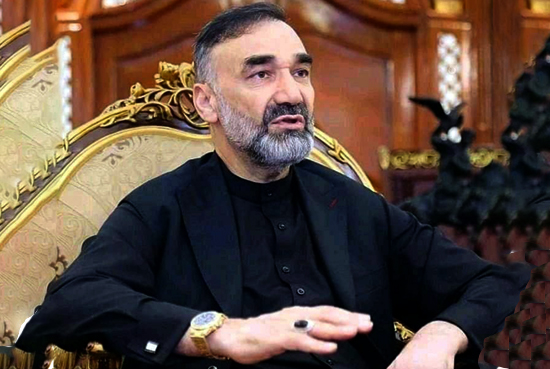
The head of the Islamic Jamiat of Afghanistan warned of the possibility of a Sunni-Shia war in his country
MAZARI-SHARIF, April 18 - Sangar, Qari Ahmad. He emphasized this in a statement released yesterday, April 19, on the occasion of two suicide attacks on Shiite Hazara educational institutions in Kabul, the capital of Afghanistan.
In a statement released by Jamiat Islami's press office, General Ata Mohammad Noor, known as Ustad Ata, described the act as a suicide attack on a Shia school and center in western Kabul, predominantly inhabited by Shiites - Hazaras, leaving "many children and teenagers were killed and wounded", the work of the "enemies of the Afghan people during the holy month of Ramadan."
Expressing sympathy for the victims of the tragic incident in western Kabul, he strongly condemned the attack, saying he wanted to emphasize the solidarity of Shiites and Sunnis, of all religions and nationalities in Afghanistan.
“Afghanistan is a country that has long been a brilliant example of the peaceful coexistence of Islamic movements. Takfiris, who incite sectarian hatred and kill Muslims, are in fact the enemies of Islam and humanity and the cause of division and violence in the Islamic world,” said the leader of Jamiat Islami.
There have been interpretations and assessments about the Shia-Sunni war in Afghanistan before. But why is the prominent politician Ustad Ata considering yesterday's incident from this angle, namely, the Shia-Sunni war?
Shiite and Sunni
 Ustad Ata rightly emphasizes religious differences and the intensification of takfiri activity in Afghanistan, the best example of which is ISIS-Khorasan. Yesterday, April 19, this terrorist group carried out attacks on Shiite schools and fired missiles at the territory of Uzbekistan, two high-profile incidents of the last two days.
ISIS-Khorasan has always been sensitive to the presence of the Hazaras in Afghanistan, which is their main homeland. The roots of the organization go back to the Salafi-Takfirist ideology. The Hazaras profess Shia Islam, and this terrorist group does not consider Shiites to be real Muslims.
This view is shared by most of the Taliban, who, although they call themselves Hanafi, is actually inspired by the ideology of Deobandi and Salafism. They believe that the Shiites are "Rafidah", people of denial. Having come to power, the Taliban deprived Jafari mazhab of Shiism of the official status recognized under previous governments.
There have been many attempts to provoke Sunni-Shia disagreements in Afghanistan, but war under this pretext has never happened, because in practice the indigenous people of Afghanistan have never had a religious dispute, and attacks on Shiites are considered by most experts to be a product of confrontation between Saudi Arabia and Iran, and for the most part, are an order that ISIL and Taliban are implementing.
One story for many years
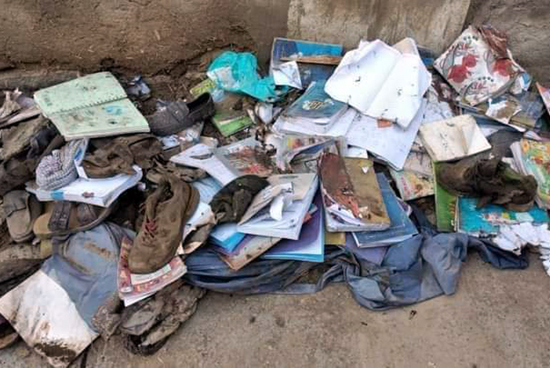
 On the morning of April 19, two suicide attacks took place in Dashti Barchi, a district in western Kabul, one at a school and the other at a Hazara training center, killing and injuring more than 100 people, mostly children.
This is the fourth high-profile killing of Hazaras in Afghanistan this year. On 8 May last year, terrorists attacked a Hazara girls' school called Sayed al-Shuhada in Kabul, killing 63 girls and injuring 150. All were between 10 and 18 years old.
After the capture of Afghanistan by the Taliban, three suicide attacks were carried out in the Shiite mosques of Afghanistan, as a result, more than 50 people were killed in the Sayedabad mosque in Kunduz city alone, and dozens of people were killed in two terrorist attacks in Kandahar.
According to Hazara sources, during the two periods of Taliban rule in Afghanistan, there were about 100 minor and major incidents, such as explosions, suicide attacks, and various killings, which occurred only on the basis of religious hatred towards the Hazaras.
However, the Hazara issue, as well as other crimes against non-Pashtuns, and even the very Pashtuns of Afghanistan, have never caused enough reaction in international human rights organizations.
But what is Ustad Ata concerned about?
“Vein of courage”
The experience of the Middle East showed that the aggravation of the war depended on how hard Shiites and Sunnis fought and killed each other. The countries that create these contradictions and invest heavily in them are Iran's rivals. It is clear what these countries are. First of all, Saudi Arabia and the United States. They evaluate the presence of Shiites in every corner of the world as the presence of Iran and every Shia as an Iranian factor. For this reason, the suppression of the Shiites is considered the suppression of Iran.
These religious contradictions are one of the reasons for the spread of the Wahhabi-Salafi ideology in the Sunni communities of the Islamic world since the late 1970s. in Afghanistan, as well as the countries of Central Asia, primarily Tajikistan. The West created the extremists of the Islamic world against the atheistic Soviet regime, and after the Islamic Revolution of Iran, with the help of Saudi Arabia, did everything to introduce Salafism into Muslim societies in order to prevent the spread of Iran's influence.
In Afghanistan, according to various estimates, almost 20% of the population are Shiites, who are mostly Hazaras, but there are also Pashtun and Tajik Shiites. Countries that have failed in past wars in the Middle East and Afghanistan, and are likely to fail in Ukraine, through horrific terrorist acts against the Hazaras, want to induce a “vein of courage” in Hazaras and start a Sunni-Shia war in Afghanistan. This is a plan to maintain a state of war in this country and region, which has been going on for 40 years.
In the past, attempts to foment a Shia-Sunni war in Afghanistan have failed. What are the initiators hoping for now? What details and documents does the prominent figure and politician Ustad Ata have on this issue? It is very interesting...
*The organization is under UN sanctions for terrorist activities.


