


What will the people of Afghanistan do with their future?!
Author: Rustam Rushangar, analyst
In this discussion, by people, we mean all those who are not Taliban, resisters and are not directly affiliated with any particular government or anti-government group. The so-called disinterested and neutral, do not consider themselves to belong to any political or military organization. It is clear that there are many. If we consider the population of Afghanistan to be 40 million, then the number of people who can be called people is 38 million. If 8 million out of 38 million people are included in the list of immigrants, then 30 million people will remain. What are their plans for their future and the future of their country? What is their analysis of the current situation and the country's direction in the future?
Some might say that people's thoughts and opinions are not important in authoritarian systems and therefore it is not important to know what they think. This belief is wrong. No government on earth is indifferent to the opinion of the people. The difference between governments is that some of them collect and analyze the voices and opinions of people using scientific and conventional methods and hold themselves responsible for them, while others use non-scientific methods and criteria and, mainly through behavioral inference, understand the desires and thoughts of people and adjust their policies accordingly.
The second category of governments does not make decisions based on the will of the people but does not ignore their will when making decisions. Even if they ignore the popular rules, they are aware of the consequences of this neglect and the price they will pay for it. The behavior of the people has an indirect effect on the behavior of such governments. Such governments have an idea about the people, their beliefs, and desires, and they build their policies with this in mind.
The same Taliban who shows themselves very indifferent to the will and opinion of the people, in many of their actions are influenced by what is considered the will of the people. In areas where they think people have more anti-Taliban spirit, they are considering more security measures, deploying more forces, and behaving differently. They do many things, including executions and field trials, with the aim of influencing people, to believe that the Taliban are the guardians of Islamic law. Or in other words, these actions, introduce fear and panic into people so that they do not dare to rebel. Because they are afraid of a popular uprising. All this can be analyzed within the framework of the relationship between the Taliban and the people. That is, although the Taliban lack the courage to directly accept the wishes of the people, they are indirectly concerned about what people think of their actions.
Our goal with this introduction was for people to be aware of their power and not ignore it. Now back to the main question of what people think about the Taliban and the future and what they want to do. We said that there is currently no means of learning public opinion in Afghanistan. As rulers, from a position of power, the Taliban can learn the thoughts and desires of the people. In fact, the Taliban's idea of the people is the same as that everyone knows. Because they have an administration and a government, they also have the ability to get to learn about people in many ways.
But if we want to have an external view of people, what are their desires and plans? If social media is the criterion, you can say that people hate the Taliban. We face many anti-Taliban views on social media. These media are full of texts and images showing people's growing hatred of the Taliban. But the majority of the people of Afghanistan do not have access to social media, and the Taliban have banned any criticism of themselves on social media and applied terrible field punishments to critics.
It seems that the Taliban, given the fact that they have already banned any proposal, in their confrontation with people and measuring their satisfaction and dissatisfaction, think of only two options, and that's it. The option of armed confrontation and war with the Taliban and the option of silence. In fact, when they see that people do not take up arms against them and go to war, they interpret this as silence and define silence as satisfaction. This means that whoever does not fight with us is satisfied with us. This group has repeatedly sent the demand of the people to God and the Messenger and stated that we are not responsible for them. So when this is the case, people should know that their silence in front of the Taliban means that when they are not fighting against this group, it means agreeing with their policies. According to people, this silence may be due to fear or necessity, but the Taliban interpretation is the same as we said: satisfaction. The perception of silence is actually the perception of the occupying power of silence. When the occupying forces occupy the territory, they only ask one question: Will the people fight us? If the answer is no, they will be confident that people are happy with them.
 Today, the people of Afghanistan are silent before the Taliban. Whatever the reason for this silence in the eyes of the people, it is seen as consent in the eyes of the Taliban. Taliban representatives abroad have repeatedly mentioned this. They say that we are in all parts of the country and no one is fighting against us, which means that the people are on our side. The Taliban reject armed resistance in some parts of the country or consider it a mutiny by a few individuals and small militant groups, which the Taliban believe each system has its share of opposition and dissatisfaction with. No matter how strong and large-scale the armed resistance is, the Taliban measure it separately from the people. It is the same. Popular protest and war are one thing, war of a military organization is another.
The people of Afghanistan had a different attitude towards the heavily armed Soviet army when, together with the powerful communist governments in Kabul, they jointly suppressed the opposition. The people of that time were not silent. People fought against the Soviet Union in many ways and with bare hands. This was at a time when the Soviets were putting a lot of emphasis on the economy of the Afghan people. They did not oppress the people, as the Taliban do. They respected women, children, and the elderly. They respected the culture, customs, and beliefs of the people. They had a big plan to develop Afghanistan and bring this country into the ranks of developed countries. At the same time, they had a lot of equipment and strength, and intelligence in identifying armed opponents and defeating them. But people were not afraid of them and fought with them.
It is true that part of the motivation for the Afghan people's war against the Soviets was religious. These people believed that the military presence of the Soviets endangered their religion and faith, and if they did not fight, their future generations would not be Muslims. We do not judge here the correctness of this opinion. But, of course, national motives were also involved. Many who fought against the Soviets believed that the occupation of their country was an obstacle to its progress and development, and if they liberated their country, they could be among the free and developed nations.
What happened to all that motivation for war? What common sense does not understand that the continued rule of the Taliban is worse than the continued military presence of the Soviets in Afghanistan, and the continuation of the rule of this terrorist group is much more dangerous and harmful to the economy, religion, culture and the unity of our people than the Soviet military presence?! In my opinion, those who do not know this must seriously doubt their intelligence.
Now someone can say that the people are not silent against the Taliban. There are no serious grounds for this statement. The protests that a number of brave women staged in defense of women's rights were not really a protest against Taliban rule. The protest was that they were deprived of their rights, and they wanted something from the Taliban, not that they do not want this group. Not accepting the Taliban also makes sense. This is what everyone needs to take a gun and destroy the Taliban to the best of their ability. This is the only meaning of the word "not want" in the vocabulary of the Taliban. The rest of the protests and hype do not harm the Taliban but simply provide some indirect legitimacy for this group. This means that you accept the basis of the Taliban power, but you want him to change something according to your desire. It is something like putting forward popular demands for legitimate and popular government in a democratic system. The fact that the Taliban lack the intelligence to the extent that they forbid people to make any demands is a separate issue.
Let's go back to the previous question. What do people want to do? Do they keep silent in front of the Taliban? Do they know the price of this silence?
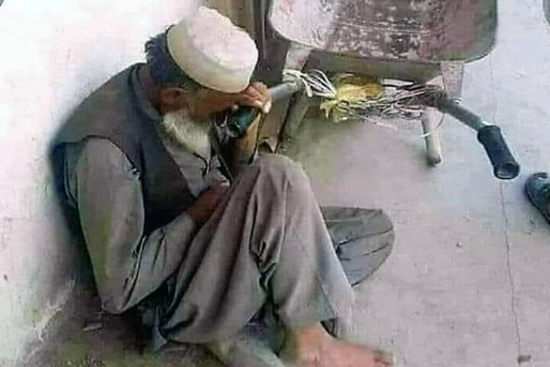 The silence of the Afghan people in front of the Taliban can be compared to the silence of a child in front of a cruel and despotic father. The silence, which is a combination of hatred and respect, arose from the dedication of the father. There may be hatred in the child's unconscious mind for the oppressor father, but this hatred will never lead the child to rise up against the father and send a bullet through his chest.
Most likely, when the readers of this article reach these lines, they will turn to the old and repetitive argument that the writer is writing a version of the war with the Taliban from a calm and peaceful place when the war with the Taliban requires the heart of a lion. Therefore, we must understand the needs, fears, and problems of people and avoid prescriptions. I must say that before writing, I had this argument in mind and, despite this, I wrote this text. I know that the war against the most brutal, inhuman, and non-Muslim faction on earth requires a lionheart, courage, understanding and intelligence, and much more. But I must say that there is no other way to a good, bright, and worthy future. Some people have to find the courage to do it.
People should not wait to see what the Resistance Front will do, what the Freedom Front will do, and what this front and that front will do. What will the US do, what will Russia, China, Iran, Pakistan, India, Qatar, etc. do? They are doing their job. Everyone will take into account their interests. But what the people will do and what they should do has nothing to do with what the aforementioned countries, institutions, and organizations are doing. We are talking about the people. Soon people should come to understand that their future with the Taliban is gloomy and terrible, and it is the individual, social, human, and even religious responsibility of a reasonable person to do something against the Taliban.
I hear and read that many people are busy day and night judging, for example, the activities of the Resistance Front, Russia, the USA, etc. Or they judge the past, present, and future of famous political and military figures. And here the behavior of people is contradictory. On the one hand, they are dissatisfied with all past military and political figures and leaders, mentally subject them to field trials every day, but at the same time, they are waiting for what they will do against the Taliban. It seems that people, on the basis of an agreement with these leaders, obliged them to fight against the Taliban, and now they themselves have become observers of their actions and are waiting for what they will do. Well, if the political and military figures of the past did not want or could not fight the Taliban for any reason, or if they exchanged the fruits of their war with the Taliban for dollars, does this reduce the ugliness of the Taliban and the responsibility of the people? No.
It is good for a responsible and knowledgeable person to know what others are doing, but this knowledge should not interfere with our own actions and be used to justify our own silence, passivity, and indifference. Necessity, fears, problems, etc. - all this is understandable. Not all women and men are going to work. If one person out of ten thousand people takes up arms against the Taliban, then it will be thirty thousand people out of thirty million, which is a large army. If this army takes just 30 armed actions against the Taliban every day (one action per thousand people), the decision-makers behind the closed doors of the Taliban will tremble. They may pretend to be able to put down any rebellion, but in the end, their fear and terror take over. This is what we say and this is what we expect from people who claim freedom, pride, and history. Anything other than this is unacceptable to the Taliban and can be seen as a sublingual insult. This historical responsibility of the people to the country and future generations cannot be removed for any justification or reason.
We are all responsible for the future generations of our country. We must not allow the scenarios written by the administrations of the Afghan branch of the world's intelligence organizations to be implemented in our country right and left, and we are busy insulting this and that and avoiding responsibility. Afghanistan is facing a great "negative revolution", and this revolution and revival must find its true and popular leaders and fighters in order to straighten the winding path of history!


