


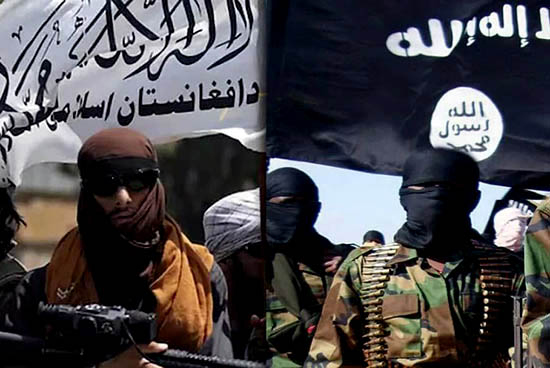
Afghanistan's neighboring countries, especially Tajikistan, must carefully study and analyze the history of the rise to power of this source of danger to their national security and make serious decisions.
Author: Farid Ahmadi, editor-in-chief of the Sangar website
"The complex and alarming situation in the region and the world, including the intensification of the process of world redistribution, rapid armament, the Cold War, modern threats and risks - terrorism and extremism, illegal arms trafficking, cybercrime and other transnational organized crime, compels us to ensure that additional measures are taken for the defense security of our country."
Emomali Rahmon, President of the Republic of Tajikistan
In international law, the concept of terrorism has no specific definition; on the contrary, there are debates on which actions are considered terrorist and which are considered legitimate resistance.
Terrorism is the purposeful use of violence to create a general atmosphere of fear among a population and thereby realize or achieve a particular political, religious or ideological goal. Terrorism can be practiced or directed by political organizations, national and religious groups, revolutionaries and even by some states’ government agencies such as the military, intelligence services and police.
Terrorist groups use violence and the threat of violence, that is terrorist acts, to advance and achieve their goals. Unfortunately, the victims of terrorist acts are often civilians. It is important to realize that victims of terrorism are not the main reason of terrorist acts, but only the means. For terrorists, it does not matter at all who the victims are, the main purpose of terrorists is to achieve their goals by intimidating citizens and state authorities and by these actions to attract public attention. The main reason for the brutality and cruelty in terrorists’ actions is that it does not matter to them who the victims are.
Terrorism and its consequences pose an extremely serious threat to the life of society, as it causes fear and disrupts the peaceful life of people and naturally imposes restrictions on the state's guarantee of human freedom, as the state must take the necessary measures to prevent and combat terrorism. The necessary measures that the state takes and implements in the fight against terrorism will not always be in accordance with the standards of the rule of law or the safeguarding of human rights and freedoms.
In this case, it is more important to ensure the safety of the population, because without the actions of public authorities, people's safety will not be ensured.
Terrorism can be carried out by political organizations, national and religious groups, revolutionaries and even state institutions such as the army, intelligence services and police, so civilians cannot be fully protected from this danger.
Terrorist groups usually become active in a country or region where the government or state administration is weak or where there is general lawlessness and instability. Such ungoverned territories or localities provide terrorists with opportunities to increase their ranks, train their recruits and develop sophisticated plans for terrorist actions.
In Afghanistan, which has a long border, historical, cultural, linguistic, religious and traditional community with Tajikistan, on August 15, 2021, political power was transferred to the Taliban terrorist movement as a result of a deal between the major players in the region and an unprecedented ethnic alliance. This situation cannot but cause concern for the Tajiks living in this country and for us Tajiks.
After twenty years of the presence of the armed forces of the United States and allied countries (North Atlantic Treaty Organization) in Afghanistan to fight Al Qaeda and the Taliban*, an agreement was finally signed between the USA and Taliban* in Qatar on February 29, 2020, the purpose of which was presented as the first step towards achieving peace among the people of Afghanistan. The agreement reportedly had two parts: an open and a secret one.
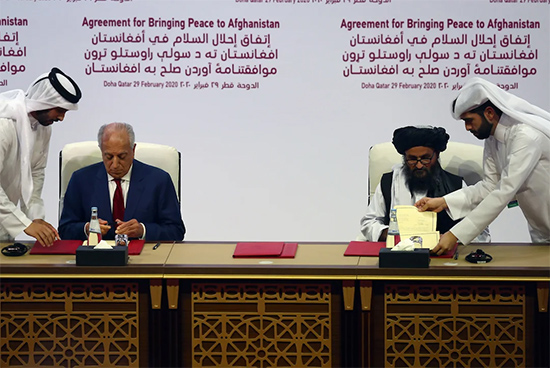 The important provisions in the agreement for the parties were as follows:
- Reduction of Violence. The parties agreed that violence would be temporarily reduced and that a cease-fire between the U.S., Taliban*, and Afghan forces would be a step toward beginning an agreement among the people of the country.
- Withdrawal of U.S. and foreign military from Afghanistan. The U.S. has agreed to reduce its military from 12,000 to 8,600 in 135 days. If the Taliban* are true to their commitments, the U.S. military and other foreign forces will completely withdraw from Afghanistan within 14 months.
Although experts warn that a hasty withdrawal of the military could destabilize the situation. The Taliban agreed to begin negotiations with the Afghan government in March 2020. However, in doing so, the Taliban* refused to negotiate directly with the Afghan government, calling the government a puppet or plaything of the Americans.
- Taliban* - The "Islamic Emirates of Afghanistan" will not allow the threat or menace of terrorism against the U.S. and allied countries from within Afghanistan. After September 11, 2001, the U.S. invaded Afghanistan to eliminate the threat of terrorism and terrorist activity, including from al Qaeda.
In this process, the decision to launch an inter-Afghan peace process was also supported to some extent by China and Russia.
Pakistan. The Taliban* was founded in the 1990s after the Soviet Union forces withdrew from Afghanistan, and most of its members were Pashtuns educated in Pakistani madrassas. After the U.S. occupation of Afghanistan, Pakistan provided a safe haven for the Taliban* and its intelligence service (Inter-Services Intelligence), which to some extent controlled and managed the Taliban*, provided them with military expertise and advice on fundraising. Pakistan favors a government in Afghanistan that includes the Taliban* and has friendlier relations with Pakistan than with India. Pakistani Prime Minister Imran Khan has flatly refused to assist the Taliban* and has facilitated negotiations between the U.S. and the Taliban*. Pakistani officials provided initial contacts for talks between the Americans and the Taliban.
India. New Delhi is considered a supporter of the Afghan government and has invested about three billion dollars in infrastructure and trade in that country since 2001. India's main goal in Afghanistan has been to reduce Pakistan's influence. The Indian government did not support the US decision to reach an agreement with the Taliban* as it did not want the Taliban* to be presented as a political player.
Iran. In Iran, since the majority of the population is Shiite, they considered the Taliban* (a Sunni sect) their enemy, especially when it was discovered that the Taliban* received aid from Iran's rivals Pakistan, Saudi Arabia, and the United Arab Emirates. Iran accepted the U.S. decision to remove the Taliban* from power in 2001 and expressed support for the Afghan government. At the same time, Iran recognized that the Taliban* has some power in Afghanistan and has been in contact with the Taliban* to improve relations.
Russia. Moscow hoped to develop relations with Afghanistan to reduce the influence of the United States and North Atlantic Treaty Organization (NATO) members in the country. After the Taliban* seized power in Afghanistan, Russia became more active in this direction.
China. China's interest in Afghanistan is purely economic, as it wants to include the country in the “One Belt, One Road” initiative. China is the largest investor in the country, and China's attention is mainly focused on the country's natural resources. At the same time, China is concerned about the infiltration of terrorism from Afghanistan into the autonomous region of China.
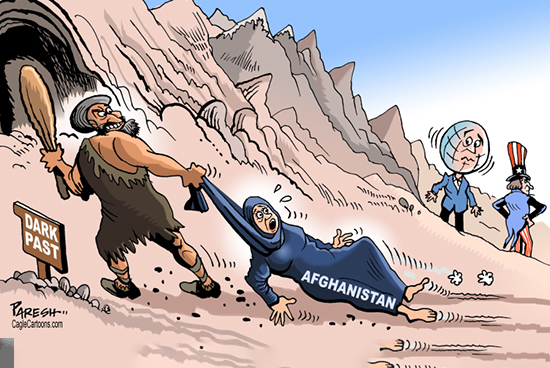 Tajikistan's position in connection with the occupation of Afghanistan by the Taliban* was known from the first days of this event, which was emphasized by the highest leadership of the country, and the Ministry of Foreign Affairs of the Republic of Tajikistan always recalls this position. It should be said that Tajikistan does not interfere in the internal affairs of a neighboring country, at the same time it has clearly expressed its concern about the growing threat to the security of the state from the territory of this neighboring country.
In the Central Asian region, the Republic of Tajikistan is the only country that, thanks to its president H.E. President Emomali Rahmon, took a firm, correct stand against what happened in Afghanistan in August [2021], that is, the occupation of that country by the Taliban* terrorist group and took what was appropriate and announced to the world that it “will not recognize any government formed through oppression, persecution and without taking into account the interests of all peoples and nations of Afghanistan.” The head of state clearly proposed the establishment of an inclusive government in Afghanistan with the participation of representatives of all ethnic groups and nationalities living there, including Tajiks, who make up more than 46%.
Indeed, the complexity of the international political situation, aggravation of the geopolitical and military situation, security threats, financial and economic crises, as well as the shortage of food and drinking water in the world and the region and their consequences force us to take necessary measures in promoting Tajikistan's foreign policy.
The long border with Afghanistan and the intensification of terrorist groups on the territory of that country force Tajikistan to take serious and at the same time costly measures to ensure its state security. History has proven that one can never rely on outside observers to ensure state security and protect national interests.
"Tajikistan is very concerned about the ongoing processes in Afghanistan and the Middle East, especially in Palestine", said the President of the Republic of Tajikistan. Of course, the expression of Tajikistan's concern by both the country's top leadership and experts in the field shows the seriousness of the topic.
"An Islamic system with a very radical ideology has been built in Tajikistan's neighborhood. The Taliban* adopted the radical interpretation of the Devband law school and mixed it with their tribal traditions, which is an unprecedented phenomenon in the Islamic world. "Afghan Taliban*" has become a stronghold of terrorist and extremist groups, one of the centers of power of extremism and poses a threat to the system of secularism and peace of all countries in the region.
There is also an opinion among some experts that the Taliban* is an Afghan movement and their goal is to revive the "Taliban* Islamic Emirate" and they do not pose any threat to neighboring countries, that is they do not participate in the so-called "global" jihad, etc. Although other experts refuted this idea with convincing evidence and analyzed the existing threats from the Taliban* to other countries, including Tajikistan. A previous speech by Taliban* leader Mawlavi Haibatullah Akhund to religious scholars in Kabul, who defined the Taliban* path as global jihad is a proof that the Taliban* is a radical movement that is not satisfied with the occupation of Afghanistan. He happily stated, "The jihad of its soldiers will not end only within Afghanistan, and the establishment of Sharia law in Afghanistan is only the first stage of the Taliban's successful jihad." In the future, he said, the Taliban* and the scholars of Afghanistan will be responsible for leading the whole world to the rule of Shariah.
 In this regard, it should be emphasized that Ashraf Ghani was brought to power by interested countries. A. Ghani had no other results except for the promotion of ethnic interests in Afghanistan, during his leadership. During his rule, the Taliban* (Pashtuns) became more active, occupied many territories and eventually conquered Afghanistan.
The usurpation of power in Afghanistan by this movement has significantly reduced the standard of living and quality of life of the people. In its October 2022 report, the UN Development Program emphasized that almost the entire population of Afghanistan lives in poverty, 90% of the population suffers from malnutrition.
In September 2017, Reuters news agency published information highlighting the decision of President Ashraf Ghani's office to prioritize the allocation of responsibilities to Pashtuns in the Afghan government. Ashraf Ghani's office systematically prioritized his ethnic group, the Pashtuns, in the distribution of government and administrative functions while limiting access to power for Tajik and Hazara ethnic groups. There's a reason that during the time of A. Ghani's rule the governors of Tajik and Hazara districts in this country were appointed only from Pashtuns.
The report of the UN's sanctions analysis and monitoring team imposed under resolution 2611 (2021) against the Taliban* and associated individuals and entities that pose a threat to the stability of the world and Afghanistan, says that Taliban* and al-Qaeda "have close contacts and relations".
Now everyone knows that this terrorist movement has come to power in Afghanistan with the help of foreign players and its goals are not limited to bringing the Islamic Emirates within the geographical areas of Afghanistan.
Amrullah Saleh, vice president of the Islamic Republic of Afghanistan and the country's intelligence chief, said once in an interview: "In the early 1980s, after the Soviet Union entered Afghanistan, Henry Kissinger, Zbigniew Brzezinski and other American strategists thought about what U.S. strategy should be implemented in that country. In their view, not a pluralistic government but an extremist government in Afghanistan would be in the security interests of the United States.
And then they wrote why there was a need to support the opposition to the mujahideen in Afghanistan: it was impossible to fight the Soviet Union directly, as there was a possibility of the outbreak of World War III. However, if the U.S. wanted to defeat the Soviet Union in Afghanistan, it should have taken the "homecoming route" to achieve this goal [the U.S. ended up using this way].
Americans have traditionally viewed Eurasia and Central Asia as Russia's “geopolitical backyard”. That is why the Americans chose this route in the 1980s and repeated the same route in 2020".
In this interview, he also emphasized that the Americans had asked the President of the Islamic Republic of Afghanistan to release five thousand Taliban* from the country's prisons. These five thousand Taliban* were in Afghan prisons for committing dangerous, barbaric crimes and terrorist acts.
There is no doubt that releasing terrorists in such numbers ultimately strengthened the forces of the Taliban and weakened the capabilities of the Afghan government at the time.
Afghanistan's neighboring countries, especially Tajikistan, should carefully study and analyze the history of the process of coming to power of this source of danger to their national security and take serious decisions.
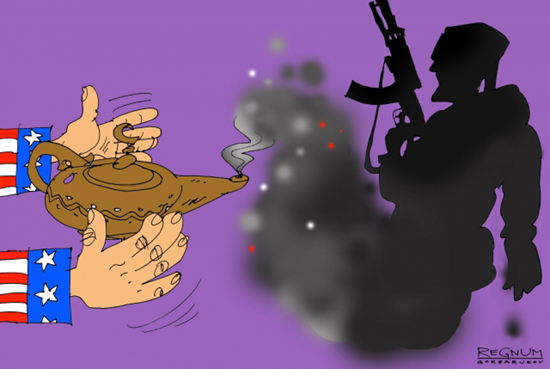 The agreement signed in 2020 between the U.S. and the Taliban in Qatar will to some extent ensure the security of the U.S. and allied countries from the actions of this terrorist movement. However, one should not lose sight of the fact that Afghanistan's neighboring countries are not considered U.S. allies, and most of them are known only as U.S. partners. A partner country is very different from an ally country, and this should not be underestimated. In other words, under the "Qatar Accord" the Taliban did not commit to the U.S. that they would not pose a threat to Afghanistan's neighboring countries because those countries are some enemies of the U.S. (Iran), some geostrategic rivals of the U.S. (China), and some U.S. partners (Tajikistan, Uzbekistan, and Turkmenistan).
The military capability of this movement in the region has become extremely strong with weapons worth over 80 billion dollars transferred to the Islamic Emirates of Afghanistan after the American withdrawal from Afghanistan. This fact should not be ignored or disregarded.
The Taliban* were brought to power by their sponsors to endanger the countries of the region, and not in vain. However, after the Taliban came to power, the position of the People's Republic of China and the Russian Federation, cautious and at the same time positive towards the Taliban, should be of concern to Tajikistan and Central Asian countries.
As we emphasized above, we should not rely on strategic or traditional partners to protect national interests, especially national security. Each country's attitude towards the Taliban* is based solely on their national interest, and should not be fooled by commercial and economic justifications.
Mohammad Hossein Jaafarian, a Senior Expert on Afghanistan and Iran issues, said on November 27, 2023 in Dushanbe during the 11th round of "Herat Security Talks" international conference that "The beginning of Afghanistan's security problem is the Doha (Qatar) agreement. " Who gave America the right to impute Afghanistan to the Taliban*? All friends used the interpretation that "Power was given to the Taliban." Who gave them that authority? Who was consulted? The truth is that the black hole is the same agreement that should be fundamentally invalidated and rewritten in full view of all parties".1
At the same time, it is worth noting that the international conference "Herat Security Talks" in Dushanbe was attended by about 150 experts from domestic and foreign countries and was held on the initiative of the Center for Afghanistan and the Region Studies and the Institute for Strategic Studies of Afghanistan.
According to Kosimshoh Iskandarov, head of the Center for Afghanistan and the Region Studies, "Although the Taliban* promises that there is no threat from Afghanistan to any country, especially its neighbors, but about 25-30-armed terrorist groups can cause concern and worry."
The Taliban* pose a serious threat to our national security. This danger may not be felt more strongly at this stage, but it is clear that having brought this extremist movement to power, their presence in our immediate neighborhoods will not be in vain. The superpower countries pursue their geostrategic interests through the Taliban*. The Taliban*, in turn, through various terrorist units can create problems for a sovereign, democratic, law-governed, secular and unitary Tajikistan.
*In Tajikistan and many countries of the world it is recognized as a terrorist organisation


