


Ethnic cleansing in the Islamic Emirate will make Russia look away from Ukraine
Andrey Serenko, own correspondent for Nezavisimaya Gazeta
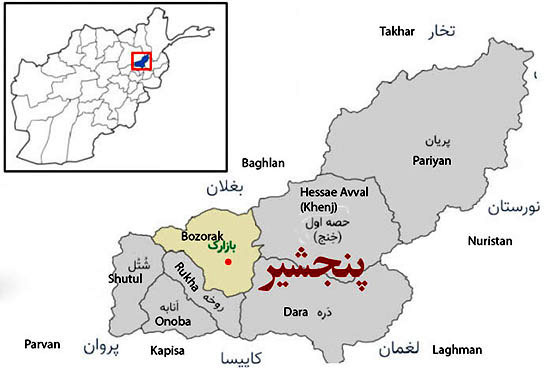
The leadership of the Afghan Taliban (an organization banned in the Russian Federation) plans to create a “reservation of terrorism” in the northern province of Panjshir, in which most of the foreign jihadist groups currently in Afghanistan will be concentrated. The implementation of this project involves preliminary large-scale ethnic cleansing, which should completely change the national landscape of the Panjshir region. The new "Panjshir jihadist project" of the Taliban will become another security threat to the countries of Central Asia and Russia's interests in the region.
“In the coming months, the Taliban leadership plans to prepare a special operation in the Panjshir region. Its goal will be the mass deportation of the local Tajik population,” sources close to the intelligence service of the National Resistance Front of Afghanistan (FNSA) told NG. According to them, thanks to their agents in the ranks of the Panjshir Taliban, the Front's intelligence has reliable data on the plans of the terrorists: “As part of the operation planned by the Taliban, a gradually forced eviction of the indigenous people of Panjshir is expected. With such punitive measures, the Taliban hope to put an end to the anti-Taliban National Resistance Front, which is based in the Panjshir region and enjoys the support of local Tajiks. Simultaneously with ethnic cleansing, people from Pakistani Waziristan, as well as families of foreign jihadist fighters, who are now in various provinces of Afghanistan, will be resettled in the homes of Panjshirs”. The operation to radically change the ethnic and demographic landscape of the Panjshir region is expected to take place in the first half of 2023.
The desire of the Taliban to carry out a radical ethnic cleansing in Panjshir is primarily due to the inability of the "furious mullahs" to destroy the National Resistance Front of Afghanistan, led by Ahmad Massoud. Despite all efforts, in 2022 the Taliban failed to eliminate the infrastructure of the FNSA in Panjshir, Andarab (Baghlan province), and Takhar: as a result, even despite the natural decrease in combat activity in the autumn-winter period, the FNSA fighters continue to carry out armed attacks on representatives of the Taliban.
The inability of the Taliban to put an end to the armed resistance in the north of the country has a negative impact on the political reputation of the “furious mullahs” regime, giving internal and external audiences reason to doubt the strength and legitimacy of the Taliban government. Therefore, the Taliban are beginning to rely on punitive measures against the civilian population, which in one way or another supports the resistance movement. And here the Panjshirs are the first to fall under the blow of terrorists.
According to NG sources, among the foreign fighters who are supposed to be resettled in Panjshir, there are not only Pakistanis but also people from the republics of Central Asia, Chechens, and Arabs: “They are supporters of the Taliban, Al-Qaeda” (the organization is banned in the Russian Federation) and other terrorist groups. In fact, we are talking about an attempt by the Taliban to create a kind of "reservation of terrorism", where foreign fighters would settle for permanent residence. Thus, the Taliban leaders hope to solve several problems at once. The main ones are to destroy the traditional ethnic balance in Panjshir and in northern Afghanistan as a whole through repressions against Tajiks, destroy the social base of anti-Taliban resistance and create a center of concentration for the main part of foreign jihadists who are already in the country and who may start arriving in Afghanistan in 2023.
According to a number of Afghan experts, the Taliban hope to strengthen control over foreign fighters who seek to resettle in Afghanistan from other countries: “A significant part of these migrants openly or secretly sympathize with the Islamic State (IS/ISIS, an organization banned in the Russian Federation). Some part of IS supporters is traditionally controlled by the Taliban leaders through the “Haqqani network” (banned in the Russian Federation). However, not all adherents of the “caliphate” can be controlled in this way. Already in 2023, the problem of controlling foreign fighters may become especially acute for the Taliban.”
The repressive plans of the Taliban against Panjshir directly threaten the security of the post-Soviet Central Asian republics and Russia's interests in the region. There is a danger that after the forced deportation of Panjshir Tajiks, similar methods will be used by the Taliban leaders against Afghan Tajiks and Uzbeks in other northern provinces of the country. Moreover, local ethnic cleansing of non-Pashtun citizens of Afghanistan has already taken place in the provinces of Takhar, Baghlan, Jowzjan, Faryab, and others. The Taliban’s forceful breaking of the traditional ethnic balance in Northern Afghanistan will inevitably lead to a sharp aggravation of interethnic conflicts, which, in Afghan conditions, will most likely provoke armed conflicts. The result of this may be the appearance of thousands of refugees from Afghanistan in Tajikistan and Uzbekistan, the intensification of hostilities along the perimeter of the borders with the post-Soviet republics, the attempts of militants from Central Asian states to transfer “jihad” to their historical homeland.
“Obviously, a sharp aggravation of the military-political situation in Northern Afghanistan and increased threats to the Central Asian republics will force Moscow to intervene in the situation. This will inevitably divert the attention and forces of Russia to the south from the western, Ukrainian direction. Perhaps the opening of a second front against Russia in the south is one of the goals of the Taliban operation to destroy the ethnic balance in the north of Afghanistan, in fact, on the borders of the Central Asian republics,” political analyst Sultan Ahmed Shoaib told NG.


