


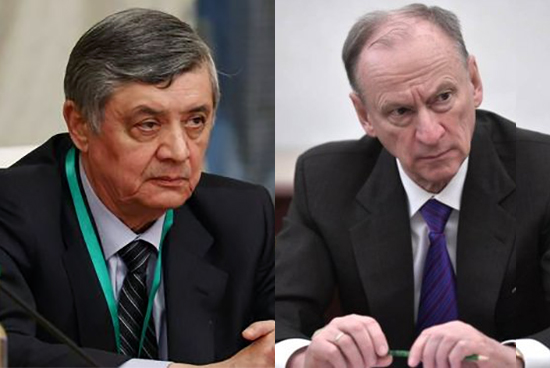
The Taliban turned away from Kabulov, and Moscow from the Taliban.
Author: Andrey Serenko, Head of the Analytical Center for Political Scientists of Russia
"Patrushev's Line" interrupted "Kabulov's Line": Moscow is finally starting to take a sober look at the Taliban junta in Kabul
Finally, it happened. The chief lawyer of the Taliban in Russia, (for the time being) the special representative of the President of the Russian Federation for Afghanistan, Zamir Kabulov, suddenly had an epiphany. In an interview with The Week, he not only expressed Moscow's disappointment with the Taliban regime, which has proved incapable of governing Afghanistan but also intimidated his apparently now former friends in Kabul with the prospect of a popular uprising.
Until now, Mr. Kabulov has been convincing everyone who wants to read and listen to him in the opposite way - that, they say, the Taliban are good, "adequate men" with whom you can talk and agree, that Moscow should rejoice at their coming to power, and now Afghanistan is opening up the most bright prospects. Along the way, Kabulov leaked as best he could any attempts of anti-Taliban Resistance in Afghanistan, denying the same National Resistance Front (NRFA) the right to exist.
And now this is such a sharp turn. The Taliban are no longer Moscow's best friends, their regime is no longer the subject of positive emotions in Russia, and the prospect of some kind of "people's uprising" against the Taliban does not seem not only fantastic but does not frighten Moscow either.
What happened? And apparently, as we have said before: "Kabulov's line" went bankrupt and now Moscow is beginning to rebuild his Afghan strategy in accordance with the "Patrushev line".
Recall that the Secretary of the Security Council of the Russian Federation Nikolai Patrushev, without entering into a public debate with Zamir Kabulov, nevertheless made it quite clear that his assessment of the perception of the Taliban and the situation in Afghanistan seriously differs from the enthusiastic emotions of the special representative of the President of the Russian Federation. Patrushev regularly referred to the Taliban as a terrorist organization like ISIS and al-Qaeda, emphasized the Taliban's connection to Washington, and spoke of the inability or unwillingness of the Taliban junta to fight drugs and terrorism in Afghanistan.
In other words, if Kabulov acted as a lobbyist for the idea of cooperation between the Kremlin and the Taliban, then Patrushev viewed the Taliban as an undoubted threat to Russia's interests, perhaps only postponed for some time. And Russia's cooperation with those who threaten it, to put it mildly, is unlikely.
Now we see that Zamir Kabulov began to try to fit into the rhetoric of Nikolai Patrushev. Obviously, this is due to several reasons.
1 - The Taliban actually disappointed Moscow by not fulfilling any of its wishes (inclusive government, a real fight against ISIS and Al-Qaeda and other terrorist organizations, as well as drugs).
2 - The Taliban (its conditionally moderate part, with whom Kabulov tried to flirt), lost interest in Russia and reoriented towards intensive contacts with the United States. The Taliban are now interested in Washington, not Moscow.
3 - The Taliban have lost their last interest in the person of Kabulov himself. During his disastrous January visit to Kabul, the special representative of the President of the Russian Federation did not receive an audience with any of the real leaders of the Taliban. Although, according to our sources, he tried very hard to get such audiences. In other words, the Taliban made it very cynically clear to Kabulov that they see no point in continuing the dialogue with him personally.
All this, in combination with other reasons (more about them some other time), led to the final bankruptcy of the "Kabulov line" in the Kremlin's Afghan policy.
Now, it seems, this policy will be determined by the "Patrushev line". This, by the way, is really supported by Russian President Vladimir Putin: at a meeting of representatives of the Security Councils of the countries of the region on the Afghan problem, which took place on February 8 in Moscow, Putin, and Patrushev gave very critical assessments of the state of affairs in Taliban Afghanistan.
Now we should obviously expect an increase in Moscow's interest in alternative political projects in Afghanistan. In particular, to the National Resistance Front (NRFA), but not only to it.


