


The intellectual slaves of the Pashtuns undermine the creation of the Tajik national discourse.
Author: Farid Ahmad, editor-in-chief of the Sangar website
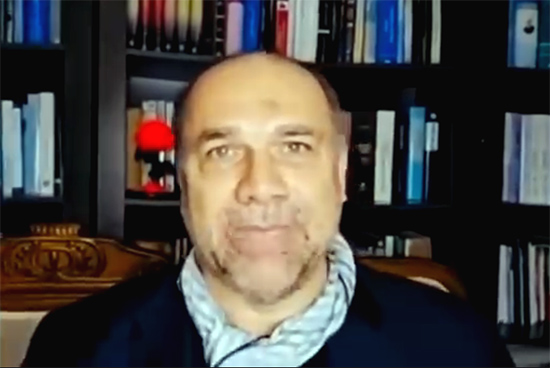
What Rashiduddin Mohammadi, the maternal uncle of Ahmad Massoud, the leader of the National Resistance Front, said about Afghanism and Islamism must be attributed to his ignorance.
During the twenty years of the republic, many Tajiks who worked in the government did not have a deep understanding of national, political, and ethnic issues. It can be said that many of them thought like Roshiduddin and acted based on such thinking, which is one of the main reasons for the decline of Tajiks' power during the twenty-year American republic.
Tajik political leaders had no understanding of historical, political, and ethnic issues, nor did they adhere to ethnic values and identity. As a result, they chose money and power over these values and lost all the military and political gains that the Great Massoud and the first round of resistance fighters brought to the Tajiks, and in the end, they all lost power, and wealth, and fled abroad.
Some friends claim that Ahmad Masoud's uncle is not an official member of the Resistance Front from an organizational point of view, and therefore his statements are his personal opinion and do not have any influence on the policies of the Resistance Front. This is true, but beyond the organizational debate, it is important to see whether the thoughts of people like Mohammadi have an impact on the behavior of the Front. This is an important question. It often happens that a person is not an official member of an organization, but his thoughts influence its activity.
Afghan Tajiks need to understand which path the Resistance Front is taking. Many Tajiks, disillusioned with their political leaders during the republican period and accusing them of betraying the values of their identity, weigh the behavior and actions of the Resistance Front and their new military and political leaders on the same scale as politicians of the republican period. So to speak, because Tajiks are afraid of long ropes after being bitten by snakes. They are afraid that Ahmad Masoud, the young leader of the Resistance Front, will fall under the influence of people like Roshiduddin and will follow the wrong path for 20 years, which is very dangerous for the Tajiks. The sensitivity shown to Mohammadi's statements is rooted in this fear, and this fear is real, and people have the right to be careful and demand.
In such cases, the Resistance Front must express its official position in some way and state that such statements are the personal opinions of individuals and that the Front is committed to the identity values of the people. But while the debate continues, it must be said that Tajiks are in a discursive vacuum, and this vacuum has forced many nationalist Tajiks to think in terms of Pashtun nationalism. One could say that what is called nationalism is rather Pashtunism/Afghanism.
During the time of Shah Amanullah, the Pashtuns laid the foundation of national thought and thinking in its modern sense. It became the definition of national values to which many express their loyalty in their inclination towards national and trans-ethnic values. In other words, understanding what Pashtunism is and what nationalism is is difficult for many who do not have political wisdom and do not have a deep and thoughtful view of political and ethnic issues. Such people fall into the trap of Afghanism and give out slogans of Afghanism and Islamism as a pretext for national unity. Tajik intellectuals call these people henchmen and intellectual slaves of the Pashtuns.
Mr. Mohammadi can be placed in the same category.
While Tajiks are mainly fighting for leadership in the country, they should also define the Tajik national discourse and define the so-called Tajik nationalism, or national values from the Tajik point of view, so that nationalist politicians can cling to them. In the absence of such thoughts, people like Roshiduddin, in the heyday of their national romantic imagination, talk about the need of the people for the madness of Ghani and the criminality of Haibatullah and call it nationalism and national unity.
Here we are faced with a kind of delusion that is rooted in misunderstanding. Tajik intellectuals must fill this void. The Resistance Front must listen to Tajik intellectuals and thinkers and distance itself from people with a very miserable political consciousness to win the trust of the new Tajik generation. As we saw on social media, many linked Roshiduddin's statements to Ahmad Masood's speech at a meeting in Vienna, in which he used the word “Afghan” several times and caused a wave of discontent. Meanwhile, when his uncle started talking about Afghanism, people connected it with Ahmad Massoud's statements and concluded that they were related and that Ahmad Massoud thought the same as his uncle.
The young leader of the Resistance Front must understand these points. He is the hope of the disappointed, deceived, and failed Tajik generation, and his every word is carefully and obsessively evaluated. It is true that Ahmad Massoud, as a national figure, is trying to make trans-ethnic statements and, so to speak, please the Pashtuns, but he must also be aware of the satisfaction and dissatisfaction of the Tajiks. In the end, it is the Tajiks who fight for him, call him leader, and stay by his side until the end, not the Pashtuns. Because politics in Afghanistan is ethnic and this is an objectively proven fact.


