


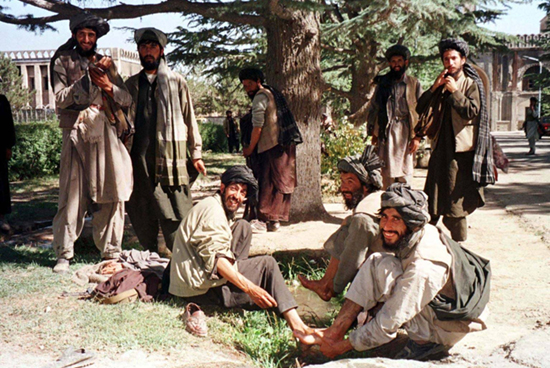
Except for the United States and Britain, the events that unfolded on August 15 related to the capture of Kabul by the Taliban* came as a surprise both for the citizens and part of the elite of Afghanistan, and for the international community
Authors: Sherali RIZOYON, Farrukh SALIMOV, Mahmud GIYOSOV
Source: research.kent.ac.uk
To analyze and assess the current situation in Afghanistan, outgoing challenges and threats to Central Asia, it is necessary to take into account the long-term nature of the conflict, examine the internal situation and understand the priorities and interests of the external states involved. The political culture in Afghanistan, considering the long-term internal conflict, was formed in such a way that key forces and influential individuals often change their positions, and this convention is both the result of external intervention and the ability to stay afloat in conditions of uncertainty (this was a key factor during Taliban offensive in May-August 2021, when the provinces and major cities such as Herat, Mazori Sharif, Kandahar, Jalalabad and the capital Kabul were surrendered). The surface side of the issue requires a clear understanding of the interests and priorities of the United States (in close coordination and constant partnership with Britain), which have played a crucial role over the past 40 years, especially since 2001.
Next, we need to understand the strategy of regional powers, mainly Pakistan, Iran, Russia, China and India. A long and more than forty-year internal conflict testifies to the fact that, on the one hand, there is a struggle of internal forces between various political parties, movements, political, military, and criminal groups, individuals for power; and, on the other hand, competition between external powers and neighbors. Both of these factors act as conditions for the preservation of the crisis situation, since they have the tools to influence the internal situation and international structures. Therefore, every year the crisis in this long-suffering land has been aggravating and complicating the process of achieving sustainable peace and stability. As the experience of conflict resolution in unstable states shows, it is impossible to achieve peace and stability without the coincidence of interests of internal elite groups and key international actors. In the long term, without such a "unity" of internal and external factors, stability in Afghanistan is unlikely to come. The psychological side of the issue is that several generations of Afghans have grown up in conditions of conflict and instability, and some of them are "used to" live in such an environment. Their return to a peaceful and normal life requires a lot of effort. Together, these conventions have contributed to the fact that Afghanistan has become an arena of confrontation between major powers and regional players.
Despite the unstable situation in the country and the uncertainty of its future, key powers, regional players and neighboring countries began to develop their own strategy of their relations towards the Afghan government, taking into account all aspects of the issue and potential areas of interaction. The current government of Afghanistan (as noted by representatives of the Taliban: an inclusive government in the form of an Islamic Emirate) will have to form its own foreign policy and establish relationships with global and regional powers, as well as neighboring countries in order to gain legitimacy and necessary political image in international arena.
It is obvious that after the events of 15 August 2021, and due to the flight of A. Ghani, the Taliban
leadership faced the following issues: gaining recognition of their legitimacy by the internal forces (1) and the international community (2). As the eastern wisdom says: you can seize power by force, but in order to keep it, you need other skills. In order to show themselves as a civilized force, the Taliban need to show that they have changed (1), they can fulfill all previously signed interstate treaties and agreements (2), they can ensure the responsibility of the government before international structures (3), respect and observe fundamental rights and human freedoms, especially the observance of women's rights and the right of girls to education (4), will not be a source of threats and challenges for key states and neighboring countries (5): the Taliban must resolve the issue of finding Al-Qaeda* (threaten the United States and its allies), IS* (can compete with them), the IMU*, ETIM*, Ansorulloh* and others (threaten China and the countries of Central Asia) on the territory of Afghanistan.
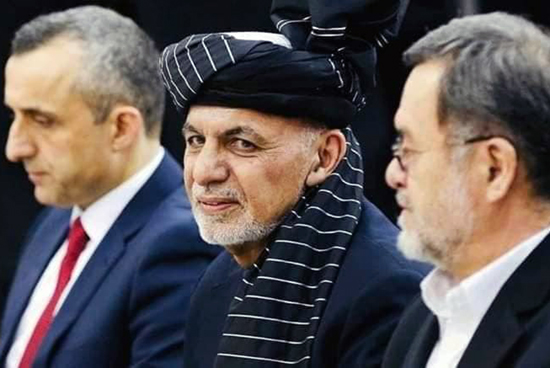 Today, there are three scenarios regarding the fate of the foreign fighters:
1) they may be incorporated into the special forces of the Taliban, and will work with the regime which could create an ideological group like IRGC of Iran, to protect their new achievements;
2) they are provided with a corridor for redeployment to other countries (this possible scenario needs special consideration);
3) they are disarmed (might be by force) and provided with the opportunity to live in Afghanistan as civilians (over the years of their stay in this country, some of them have their families).
According to the above points, and taking into account the historical experience of Afghanistan and the policy of the countries involved, the paper will carry out an analysis of the prospects for the development of these events on the background of the Taliban's coming to power, as well as the policy of neighboring Central Asian states in relation to Afghanistan and the real and potential challenges and threats arising from this country.
ANALYSIS OF THE ISSUE
- Retrospective analysis of developments in Afghanistan
Analysis of the situation in Afghanistan and forecasting future processes in this country, due to the duration and severity of the conflict, do not allow us to accurately determine the prospects for the development of events. Except for the United States and Britain, the events that unfolded on August 15 related to the capture of Kabul by the Taliban came as a surprise both for the citizens and part of the elite of Afghanistan, and for the international community. It is obvious that the top political leadership of the country, headed by A. Ghani and his inner circle, knew what would happen and did everything to prepare the ground for the transfer of power to the Taliban. This conclusion is confirmed by their action / inaction over the control of the situation and the attempt to build a necessary policy in the last three months before the capture of Kabul. Taking into account the existing historical experience (many of the events taking place with some changes are a repetition of the fate of the communist government of Afghanistan) and the precedents of other similar conflicts, it is possible to roughly predict the potential processes that may occur in Afghanistan. We briefly consider the prospects for the development of the situation from a political and military point of view, as well as from a security standpoint.
Evaluation of the political situation in Afghanistan The political situation in Afghanistan is sufficiently vulnerable and unpredictable and depends on several factors:
First, the weakness of the central government and rejection of its legitimacy by a large part of society.
The past 2019 presidential elections, with a voter turnout of almost 10 percent, demonstrated the political illegitimacy of the government in the eyes of citizens. The Taliban's victory confirms the thesis that none of the citizens, military and political leaders wanted to give their lives for a corrupt government.
Secondly, the biased ethnic and monopoly policy of the Presidential Administration.
 On this occasion, experts and political parties of Afghanistan have written dozens of analytical articles, materials, interviews, etc. The government's weakness stems from the unprofessional and monopolistic policies of the presidential administration, especially three key senior members, ex-President Muhammad Ashraf Ghani, Hamdullo Muhib and Fazl Mahmoud Fazli. This group, despite of considering the realities of Afghanistan, contributed to the aggravation of the crisis situation in the country, causing a feeling of mistrust among politicians and leaders of other ethnic groups, or purposefully pursued such a policy.
Third, the high level of corruption and its transposition into popular culture.
Afghanistan is considered to be a global "leader" in this area and this situation is a consequence of 40 years of conflict and other historical factors in this country.
Fourth, ministries and departments "without a minister" and their management by curators. In this vein, it is important to note that in just five years of the existence of the Government of National Unity, more than 110 ministers were appointed and removed from their posts, and some ministries and departments were headed by curators for a long time. Until the last moment A. Ghani was in power, this situation persisted. Example: A. Ghani appointed his brother-in-law as chairman of the National Bank of Afghanistan. Having not received parliamentary approval, he continued his activities as a curator.
Fifth, a lack of trust between influential political leaders and parties.
Due to historical reasons and the unique political culture of the Afghan elite, mistrust exists between the political elite and influencers.
Traditionally, influential political leaders and groups, during the election period or when the situation escalates, change their political positions based on the current situation. For example, many of the former government officials and supporters of anti-Taliban parties and movements have now changed their position and joined the Taliban.
An example is the former Senator Muhammad Asif Azimi, a representative of Samangan, who defected to the Taliban and played a key role in the surrender of the city of Oybek, the center of Samangan province, on August 9, 2021. The surrender or annexation of Baburi Eshchi, chairman of the Juzjan provincial council with his army, to the Taliban also played an important role in the capture of the provincial capital, Shebergan. It is also necessary to emphasize the surrender of large cities such as Herat, Kandahar, Mazori Sharif, Jalalabad and even the capital Kabul to the Taliban forces, which took place without a fight, on the basis of collusion or agreements reached. Or for example, the political compromise reached between Ashraf Ghani and Abdullah Abdullah after the 2019 elections, when most of the provisions of the agreement reached, including on the formation of a comprehensive government, were not implemented in practice.
The political problems of the Afghan government came from the personality of Ashraf Ghani and his inner circle. According to the analysis of the Afghan media and foreign experts, this trinity (Muhammad Ashraf Ghani, Hamdullo Muhiba and Fazl Mahmoud Fazli) and their entourage had a pronounced ethnic (Pashtun) point of view and spread a similar vision to all government institutions. This especially concerned the personality of Ashraf Ghani: the monopoly of power, arrogance and intolerance of the opinion of others, positioning himself as a scientist and the most knowledgeable among politicians – these and other factors alienated influential political figures, especially non-Pashtuns, as well as representatives of some Pashtun tribes (not Gilzai) from the central government, which deserves separate consideration.А) Создание условий для запуска межафганских переговоров. To achieve the desired result in the negotiations, it is necessary to have strong positions - namely, the possession of strong positions in the military, political, economic spheres, and, of course, in the sphere of ensuring security.
Proceeding from this, the parties to the conflict in Afghanistan, both the central government and the main opposition group, the Taliban, tried to defend their position in the military and security sectors, the financial and economic sector, and their status in front of influential internal and external factors. Based on the results of the events of August 15, the Taliban have shown their preparedness and determination, as well as the potential for a volitional solution to the problem. For more than forty years of conflict between the warring parties and their foreign patrons, negotiations for a sustainable peace have continued. This process continues today in a different form and with the participation of new players.
The administration of ex-President Ashraf Ghani made a lot of efforts to exclude the participation of Abdullo Abdullo, chairman of the Supreme Council for National Reconciliation, from the peace process and to conduct inter-Afghan negotiations themselves. We are confident that this factor is one of the most important reasons for the failure of the Doha peace process. The trajectory of future events in Afghanistan in the context of the Taliban's presence in Kabul, their control of the country's territory (except for most of the Panjshir province and the Andarob region in Baghlan province) will significantly change the result of the consensus. Since the Taliban will dictate their terms and will try to attract representatives of other ethnic groups to power, giving them secondary positions in ministries and government bodies. This is due to the fact that in this short period of time it is impossible to train your managers and middle-level staff.
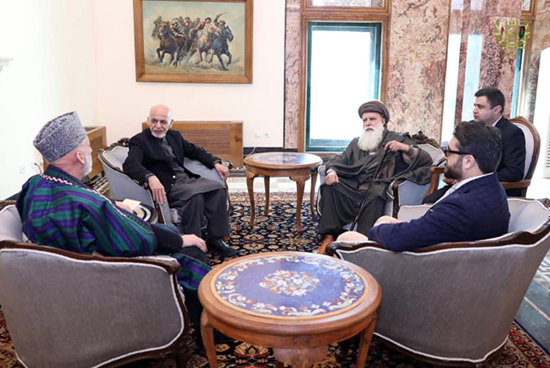 The efforts of Ashraf Ghani's government to attract the attention and trust of political and influential figures in order to strengthen their position. The absence of consensus between the central government and influential political parties and figures has been a major problem in post-Bonn Afghanistan, especially under Ashraf Ghani. The post-Bonne government from 2001 to the present day was very weak and vulnerable due to various factors of a political-ethnic and personal-group nature. During the administration of Hamid Karzai, the ethnic and political balance to some extent was maintained, and existing problems were solved in a closed manner. However, this problem under the government of Ashraf Ghani, due to his personal qualities, as well as the lack of a strong and legitimate central government that would emerge as a result of fair and recognized elections, was especially exacerbated.
The weakness of the Afghan government as a whole, and the fact that the central government is not on the same side with influential figures and political parties and groups, in particular, have weakened his position both politically in the course of peace negotiations and in the military sphere and in the field of ensuring security. For example, the actions of the Afghan government under US pressure to release more than 5,000 prisoners of war, and the different positions of the members of the negotiating group in Doha, demonstrated their weakness and lack of unity in the confrontation with the Taliban.
As a result, Ashraf Ghani and his entourage, having no interest in reaching a quick compromise with the Taliban and trying to extend their power in every possible way, lost their power in almost 70 days. This factor is directly related to the military-political situation after the withdrawal of a significant part of the armed contingent of the United States and its allies, as well as due to the lack of unity in the positions of political figures and elite groups in Afghanistan, each of which, pursuing its own personal interests, especially economic ones, first of all, tried to keep the capital accumulated during this time.
* The organization is under UN sanctions for terrorist activities


