


Analysis of Professor Jeffrey Sachs' Views
Author: Fayaz Bahraman Najimi, regional and international affairs analyst, member of the Sangar Advisory Council
Original article: خامنه ای قاطع و پوتین محافظه کار
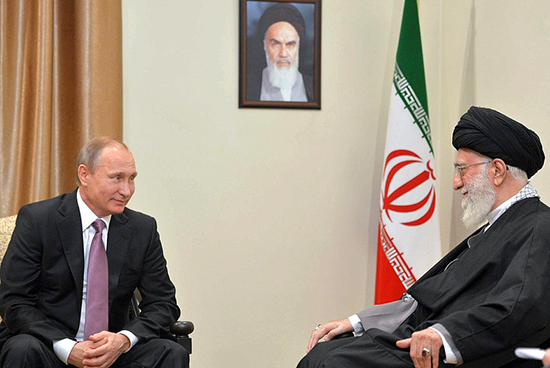
When comparing the leaders of the Islamic Republic of Iran and the Russian Federation — Ayatollah Khamenei and Vladimir Putin — there is a fundamental difference in their approaches to the international order and relations with Western powers. Although both countries are defined as opponents of American dominance, their reactions, level of determination, and understanding of the existing threat are fundamentally different.
The leader of the Islamic Republic of Iran, Ayatollah Khamenei, has long clearly understood the aggressive nature of the West and has repeatedly emphasized "distrust of America." Iran's policy is based not only on words but also on actions and involves reciprocal and deterrent measures, whether missile strikes on American bases after the assassination of Qassem Soleimani or recent responses to the killings of scientists, military commanders, and attacks on Iran’s nuclear facilities.
On the other hand, despite his authoritative image, Vladimir Putin behaves cautiously, sometimes neutrally, and even flatteringly toward Western powers, despite obvious attacks on Russia’s interests and vital infrastructure. Putin's hidden trust in global mechanisms, his psychological attachment to the Yalta order, and personal ties with figures like Trump prevent him from taking radical and defensive measures.
While Jeffrey Sachs rightly identifies direct and covert operations by Mossad, the CIA, and MI6 as the cause of the killings of key figures in Iran and attacks on Russian infrastructure, the Islamic Republic responds with attacks, threats, and revelations, whereas Russia has so far avoided even a direct response.
This indifference or strategic fear has not only weakened Russia’s geopolitical position but also brought it closer to collapse. The reality is: the destruction of Iran will mark the beginning of the end for Russia and then China. This balance is well understood by Tehran and Beijing, while Moscow continues to live in the illusion of a reliable Western world order.
Analysis of Jeffrey Sachs' Statements
Jeffrey Sachs is one of the world’s foremost economists and international political scientists, an American professor with a deep understanding of the essence of U.S. foreign policy. He views the power structure as an irresponsible war machine — a combination of the CIA, Pentagon, Mossad, and MI6, operating through assassinations, coups, and proxy wars in the Middle East, Eurasia, and Africa. He warns that this machine targets any state that declares its independence.
Sachs emphasizes the dangerous link between U.S. neoconservatives and the "New Middle East" project, which essentially reflects the policy "whoever is not with us will be destroyed." According to him, the attack on Iran is not just a military adventure but part of a strategic plan to expand the limitless American empire — a project that, if not met with serious resistance from the Eastern bloc and Global South countries, will lead to a global catastrophe.
In such a situation, only active resistance, rather than conservative appeasement, can stop this war machine.
Key Points of Professor Jeffrey Sachs’ Views (with Judge Napolitano):
Collapse of diplomacy, replaced by terror and threats
Sachs stresses that real diplomacy between the U.S. and Iran has been paralyzed due to a joint military attack by Israel and the U.S. He notes that this extreme bullying ("either surrender or die") repeats the same sinister path that led to World War II.
Expansion of the war network in the Middle East
Sachs describes how modern tools — drones, covert operations by Mossad, CIA, and U.S. military — have turned into a unified military strategy expanding wars in Palestine, Lebanon, Syria, Iraq, Yemen, and now Iran.
Undermining trust in diplomacy
He highlights the hypocrisy of American officials who officially deny involvement in attacks but continue militarization. Sachs quotes Donald Trump’s harsh words: "If you are not with us, we will destroy you."
Emergence of a reckless “war machine”
He warns that intelligence agencies like the CIA, Mossad, and MI6, along with military structures, have become an aggressive force preferring not diplomatic solutions.
Historical justification in neoconservative ideology
Sachs sees the roots of this situation in neoconservative ideology, including the "Clean Break" document aimed at reshaping the Middle East since the 1990s. These ideas continue in the current attacks on Iran.
Warning about the risk of World War III and nuclear threat
He states that war with Iran could lead to a third world war and significantly increase the risk of nuclear weapon use or a large-scale conflict. Sachs notes:
"If we go to war with Iran, we are effectively expanding the conflict toward Russia and facing the risk of nuclear war."
Military-imperialist structure and portrayal of the U.S. as unchallenged
Sachs sees this trend as a natural continuation of U.S. and Western policy after the Cold War. After the collapse of the USSR, the U.S. adopted the position "we run the world" and turned its security and military apparatus into an unbounded expansionist force.


