


Regime weakness in Kabul poses danger to Tajikistan, China, Iran, and Pakistan
Andrey Serenko, a correspondent for Nezavisimaya Gazeta, head of the Analytical Center of the Association of Political Scientists of Russia
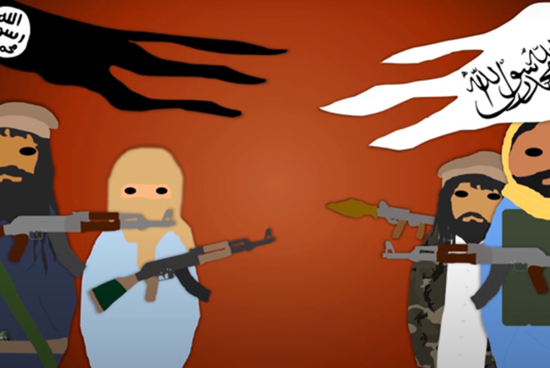
The Afghan branch of the Islamic State (IS, banned in the Russian Federation), also known as the Wilayat Khorasan, is confidently strengthening its position in Afghanistan. ISIS operatives infiltrate the key structures of the Taliban regime (the organization is banned in the Russian Federation), carry out terrorist acts in Kabul, and begin to threaten neighboring states - Tajikistan, China, as well as Iran, and Pakistan. Against the backdrop of the activation of IS groups, the Taliban regime demonstrates helplessness, inability, and possibly an unwillingness to stop the expansion of supporters of the project of building a "caliphate" in the region.
2023 could be a turning point in the political history of the Afghan branch of the Islamic State. In a year and a half of Taliban rule, ISIS has not only proved its viability but has also shown a strong desire for expansion, both inside and outside of Afghanistan. An analysis of the activity of the "wilayat Khorasan" in recent months allows us to record several important points.
First, the Afghan branch of ISIS is expanding its ability to infiltrate the ruling regime in Kabul. Sources in Afghanistan, including those close to the Taliban, report IS agents in various Taliban departments and administrations, from the district and provincial levels to the central offices in Kabul. In 2022, an IS spy was identified in the central office of the Taliban’s Main Intelligence Directorate (MID): ironically, he was one of the leaders of the Taliban intelligence unit, which was called upon to fight the Wilayat Khorasan. This year, it became known about successful attempts by ISIS operatives to infiltrate the regional departments of the Main Intelligence Directorate. In particular, we are talking about the directorates of the Taliban intelligence and security service in the provinces of Badakhshan and Takhar. The Taliban manage to identify some of the agents of Amniyat (ISIS intelligence), but observers are in no hurry to recognize the results of their efforts as successful.
According to NG sources from among the former Afghan intelligence officers, "the Taliban are now extremely concerned about the success of the intelligence of the Afghan branch of the IS, in particular in northern Afghanistan, and are trying to fight the penetration of IS operatives into the provincial organs of the MID."
Secondly, Wilayat Khorasan has a trained suicide bomber pool capable of carrying out Istishhad (suicide attacks) operations throughout virtually all of Afghanistan. It is indicative that the security services, both the Taliban and foreign missions, have never been able to prevent ISIS suicide bombers attacks.
Thirdly, the Wilayat Khorasan leadership has a clear and well-thought-out strategy for organizing targeted attacks in Afghanistan. ISIS terrorists don't just kill and blow up anyone - they always attack carefully selected, non-random targets. Of course, in order to maintain an atmosphere of fear around their jihadist brand and to demonstrate their own "value preferences", the militants periodically carry out attacks in order to organize the maximum number of human casualties (in particular, blowing up Shiite mosques or shooting Chinese citizens in a Kabul hotel). Recently, however, Amniyat operatives have been betting on killing specific individuals - as a rule, high-profile functionaries of the Taliban regime.
One of the highest achievements of the "murder factory" of the Afghan branch of the IS to date is the successful bombing of Balkh Governor Mohammad Daoud Muzzammil in early March. Mullah Muzzammil was one of the most trusted persons of the leader of the Taliban, Maulavi Haibatullah Akhund. His assassination was regarded by competent Afghan observers as a "black mark" of IS on the Taliban emir.
“Clearly, IS intelligence is targeting the inner circle of the Taliban emir, Maulavi Haibatullah,” one former Afghan intelligence officer commented. – It seems that Haibatulla, who leads an extremely reclusive lifestyle in Kandahar, is now becoming the super-target of the Amniyat terrorists. Of course, it will not be easy for professional IS killers to get to him, but they will make every effort to do so.”
By the way, in the last two months, the Taliban emir has made serious changes in the system of personal protection. The employees of the MID, who had provided his security during the first year after the return of the Taliban to power, were fired. Since December 2022, a special detachment consisting of his fellow countrymen and tribesmen from the Nurzai Pashtun tribe has been guarding Maulavi Haibatullah. Observers have linked the radical reform of the Taliban emir's personal security system with internal conflicts in the leadership of the "furious mullahs". In particular, with the confrontation between the fundamentalist entourage of Maulavi Haibatullah in Kandahar and the “young Taliban” in the Kabul government, whose leaders are Defense Minister Mullah Yakub and Interior Minister Sirajuddin Haqqani.
However, it is now becoming clear that internal competition for power was not the only reason for the change in the Taliban emir's security service. He has to fear not only his associates but also ISIS suicide bombers, who are getting closer to the Kandahar recluse.
Given the peculiarities of the development of the ISIS project in Afghanistan, one cannot exclude the possibility of behind-the-scenes cooperation between the Wilayat Khorasan operatives and the Haqqani network, one of the main factions of the Afghan Taliban, banned in the Russian Federation. In 2015-2021, the Afghan branch of the IS successfully interacted with both the Pakistani intelligence services and the group of Sirajuddin Haqqani, who holds the post of interior minister in the Taliban government.
It is possible that such cooperation continues. In this case, this largely explains the effectiveness of terrorist attacks by ISIS, which are supported by friends in the Taliban's interior ministry. If this is true, then we can talk about the actual support of the Islamic State project in Afghanistan by one of the Taliban groups and, accordingly, the Taliban Interior Ministry.
Is the Taliban fighting the Afghan branch of ISIS, or, on the contrary, helping it to strengthen its position within the country and in the region? There is no clear answer to this question yet. And this means that Russia, China, and the countries of the region cannot count on a serious, real, and effective fight against the Wilayat Khorasan inside Afghanistan by the forces of the Taliban government.
Source: Nezavisimaya Gazeta


