


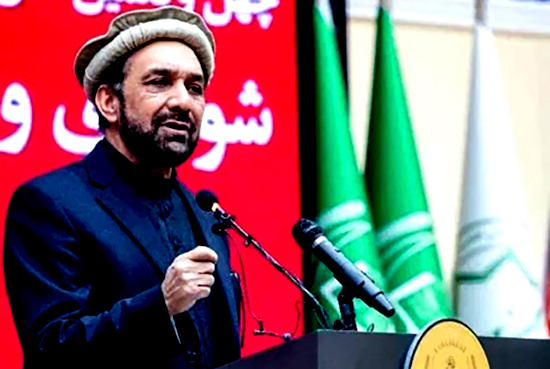
Why is the Taliban unable to rule Afghanistan and doomed to failure?
Author: Ahmad Zia Masood, Former Vice President of Afghanistan
The discourse of religion and politics in the minds of Muslims today requires an analysis of the fact, that is, the use of religion as an instrument in politics, overt or covert. To better understand this issue, it is necessary to distinguish between secularism and the presence of Islam, such as Sharia, and ethics in a society where Muslims are in the majority. Secularism in Islamic societies is an unfamiliar and alien phenomenon in the culture and life of people. Consequently, it is not connected with the realities of Islamic society and its social relations.
Most theorists of our time compare the Islamic world with medieval Europe and the dominance of the church over various spheres of people's lives. In Islamic societies, there are no religious organizations, as there were in Christian Europe, that would have specific duties or responsibilities for the propagation of religion and would compete in parallel with the government as a source of power, which would result in a "state within a state" or "government against the government". This experience in medieval Europe was such that both the church and the kings existed as two sources of power in constant and sometimes bloody competition with each other. The thinkers found a way out in the separation of religion from the state. This then led to a structured understanding that the two institutions could exist and operate in their specific areas without harming or interfering with each other's work. As a result, the church assumed the responsibility for religion and the government for political issues. However, Islamic societies did not have two centers of power. From the distant past to the present day, there is only one center of power, both religious and political. Therefore, we can say that this comparison cannot be fundamentally correct and the result will not be the same.
But the need of contemporary Islamic societies is to have religious authority and organization to prevent the politicization and instrumental use of religion. This is a role that the church has played well. As a belief, religion introduces something fixed, permanent, and absolute; And politics brings in that which is relative and changeable. Politics is concerned with the interests of a group or individual, while religion should operate outside the interests of individuals or groups. The meaning and spirit of religion are due to the unity and cohesion of various strata of society, and not to the creation of division and distance between people. Islam is a unifying religion. In terms of faith, that is faith in the one God, at the level of society of an individual people, and at the level of understanding and performance of religious rites. "Those who share their religion and share it at the sect level, at least you should not belong to that group or sect." (6th verse of Surah Al-Anam).
 But the need and the spirit of politics are based on division and distribution. Politics thrives in the absence of agreement and understanding anywhere. Therefore, politics is used to regulate and organize misunderstandings and agreements on everything else. Dispute management and resolution here are the concepts of settling disputes and creating a new space. Therefore, we can say that the connection of religion with politics at any level necessarily means introducing into religion the germs of disagreement and contradiction. And religion is based on intimacy and harmony. When disagreement in religion has a political basis, it inevitably leads religion to sectarianism, and then to confrontation and civil wars. The perception and interpretation of religion are inevitably created in accordance with political interests, and each group seeks to find a religious narrative to justify its political approach. Recent and past history bears witness to this assertion. For example, since the time of the Ottoman Empire, when religion was used as a political tool in the Islamic world, disagreements and contradictions began, and civil wars took place. These wars were only due to the fact that religion was used in various ways for political purposes. Since the use of religion to achieve political goals causes wars, this is contrary to the singularity and unification of religion. While logic suggests that religion, as a unifying and connecting factor, should cause unity and cohesion in politics and at least prevent civil wars and disagreements.
Another question that needs to be explored is what will happen and what will be the consequences if religion is used as a tool by groups like the Taliban, Al Qaeda, or ISIS? Usually, this approach takes place when the power group realizes that their socioeconomic programs are unacceptable in terms of politics and the usual methods of the modern world, and such programs cannot satisfy the people, they find religion as a tool as the shortest and cheapest way to consolidate their power. and continuation. Political and military groups that cannot provide acceptable services and plans to the people use religion for political purposes to hide their inadequacy.
The depressive, rigid, wrong, and unreasonable approach of these groups in the issue of governance exposes their mediocrity and proves to society that due to a lack of knowledge and weak management, these groups are unable to create a political system that can satisfy the needs of the people. The failure to promote social and economic programs that will bring prosperity and happiness to the people forces these groups to use religion and political beliefs to achieve their goals and hide their politics.
For example, the Taliban's track record clearly shows a lack of efficiency, a cover-up, and a lack of clear policies that meet the needs of the people. Over the past year and a half, the Taliban have failed to present their political structure. There is no constitution and the responsibilities of the governing body are not clear. There is no news about social, economic, and political policy. There is no successful model or example of similar groups in other countries that could serve as an example of the success of the Taliban. In this case, the use of religion acquires a sectarian-ideological aspect and causes a revival of conflicts. For this group to become religious, symbols and an adaptation of ideological content are necessary. Members of these groups are forced to cover up their incompetence and mediocrity with religious manifestations. For this reason, the Taliban want to write off every issue on religion and hide under its cover. One of the leaders of the Taliban group, before receiving weekly cash assistance from abroad, when this group failed to provide livelihoods for civil servants and saw that the country's economy was in danger of collapse after coming to power, clearly stated that the means to existence and sustenance will be given by God, and this group cannot take on the responsibility of giving people bread.
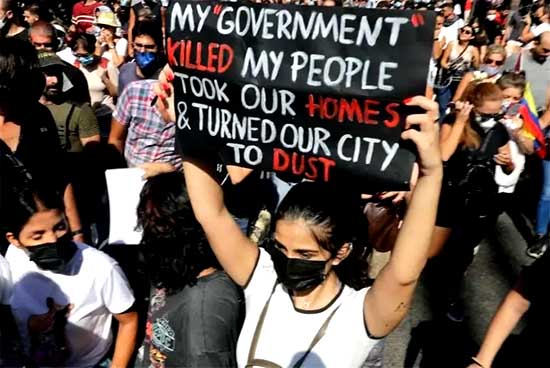
These groups introduce themselves into the content of a religious sect, separate from other social groups, and such sectarianism leads to the fact that this group does not arise as a social class, but remains at the level of a religious sect. Religious sectarianism is the worst and most destructive social phenomenon, giving grounds for civil war. For example, such examples can be seen in Lebanon. As a Christian tribe, the Maronites used religion as a tool in politics and turned to sectarianism. And with sectarianism, they divided all institutions and government officials among their own groups. They did not allow other groups as partners in determining the fate of their country.
That is what the Taliban are doing in Afghanistan. First, the Lebanese government was established on the basis of this sectarian policy, but it refused to officially announce it. While sectarian and totalitarian programs were implemented under the name of a religious system. This group did not see its interest in declaring a clear and precise policy based on the distribution of power and material wealth for its group, since politics acts as a power-forming factor in life processes and creates the prerequisites for strengthening, maintaining, and longevity of privileges and advantages for one group, the Christian sect of Maronites decided to politicize religion or link it to politics so that politics becomes a permanent and fundamental truth that can no longer be changed.
By this method, they wanted to give religion the right to find, as in politics, the nature of disagreements and contradictions. On the other hand, the dispossessed and poor classes of Lebanon suffered heavy blows from the political and economic monopoly of the Maronites. They did not have the opportunity to defend themselves in the political struggle; Because their social and economic life was not at the level where they could raise their demands as a social class. The main competitors of other Lebanese poor groups were the Christian Maronites, who enjoyed political and economic privileges and presented themselves as a religious sect rather than a social class. Over time, it was noticed that due to the economic exploitation and monopoly of the political power of the Maronite sect, as other Lebanese folk groups entered into the formation and creation of other religious sects, similar groups arose among the Shiites, Druze, and Sunnis in Lebanon. This rivalry and struggle, taking on a sectarian form, led Lebanon into a civil war. On the surface, this took the form of class struggle and confrontation between strata of society.


