


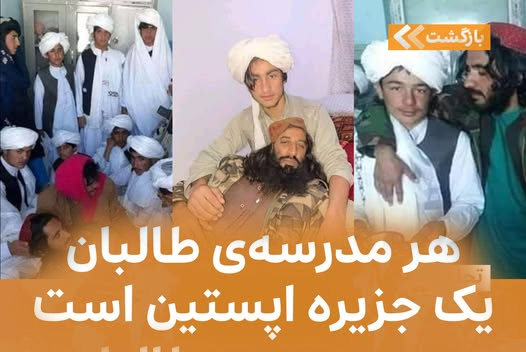
The Taliban have abducted dozens of handsome teenage boys.
Special report by the “Bozgasht” News Agency
The disappearance of underage boys in Afghanistan, particularly in the northern provinces of the country, has caused serious concern among families and human rights organizations. According to child protection groups, these tragic incidents are carried out by local members of the Taliban using force and exploiting poverty, hunger, and the destitution of families in impoverished rural areas.
The “Bozgasht” news agency, which examined cases of missing children and teenagers over the past four years, has obtained shocking and deeply disturbing data. According to families, these incidents are neither covered in the media nor given proper attention by human rights organizations, and no effective measures have been taken by the Taliban to locate the missing children.
According to the agency’s findings, at least 172 underage teenagers have been deliberately abducted by Taliban members over the past four years. The report states that most of the abducted teenagers were described as “handsome” and were transferred to southern provinces for sexual exploitation. Documented data indicate that most cases occurred in the northern provinces, including Takhar, Badakhshan, Balkh, Baghlan, Panjshir, and Faryab. Similar incidents were also recorded in Ghazni, Kunduz, and Parwan.
The investigation, based on interviews with affected families, social experts, and local sources, contains harrowing testimonies. Families and child rights activists state that recurring patterns — including the lack of response from responsible authorities and warnings to families to remain silent instead of searching for their missing children — have heightened concerns about serious violations of children’s rights and the continuation of this practice.
Families’ Accounts: Fear, Uncertainty, and Enforced Silence
Families of the missing teenagers say their children disappeared during ordinary daily activities and had no history of running away or family disputes. Some report that after repeated appeals to local Taliban security authorities, no transparent case was opened and no reliable information was provided.
Others state that attempts to publicize the issue were met with threats from local Taliban officials, including threats to kill the abducted teenager.
The father of one abducted child in Badakhshan says he has had no information about his 12-year-old son for months. According to him, “The only thing we hear is advice to be patient and remain silent.” Families say fear of public pursuit has become a factor contributing to the concealment of similar cases.
The brother of one abducted teenager in Panjshir reported that Taliban members repeatedly took his 14-year-old brother from their home under the pretext of questioning and brought him to a local post, later releasing him. He says he protested several times, but was not allowed to accompany his younger brother. He also stated that for the past two months, the family has had no information about his brother’s fate or whereabouts, and that Taliban members mocked and insulted them instead of helping.
Similar Incidents in the North: Allegations of a Targeted Program
Documented evidence indicates that most disappearances occurred in non-Pashtun areas, especially in the north of the country. According to experts, this suggests an organized, systematic, and targeted program to abduct young boys and transfer them from the north to the south for sexual exploitation.
Some university professors argue that since most Taliban members originate from southern Afghanistan and adhere to specific local cultural norms, they use either force or the exploitation of poverty and hunger to transfer “handsome” teenagers to their home regions to reproduce these practices and satisfy sexual demands.
They note that because discussing the disappearance of young boys is considered an extremely sensitive and honor-related issue, families are effectively forced into silence, allowing these incidents to remain hidden.
University professors have called on human rights organizations, particularly United Nations human rights bodies, to take urgent and serious action to prevent this trend.
Poverty and Insecurity as Factors of Sexual Exploitation
Rising poverty, unemployment, and food insecurity have placed Afghan children at significant risk. Families say children are forced to spend time in unsafe environments such as streets and markets to help support their households, creating opportunities for abuse by Taliban members.
They believe that exploiting family poverty through promises of jobs, financial assistance, or protection is one of the mechanisms used to lure teenagers into sexual exploitation.
A professor from the Faculty of Sociology at Balkh University stated, “When support networks collapse and independent oversight is absent, children become the first victims. Responsibility for prevention and accountability lies directly with the governing structure.”
International Reports and Legal Responsibility
International organizations, including UN child protection bodies, have repeatedly reported widespread violations of the rights of children and women in Afghanistan. These reports describe forced marriages, sexual violence, and child abductions as prevalent and increasing forms of abuse.
The documents emphasize legal obligations, including the Convention on the Rights of the Child, and the urgent need for immediate protection of children. Child rights activists state that a transparent international investigation is necessary to examine the chain of abductions of young boys. According to them, without transparency and holding the Taliban accountable, the crisis of missing young boys will worsen, and public distrust will deepen.
The protection of children, regarded as a social responsibility of every society and especially of governing authorities, is not only failing to be carried out but, according to critics, the governing structure itself is accused of being a primary violator of children’s rights — a process whose consequences will be irreversible and socially devastating.


