


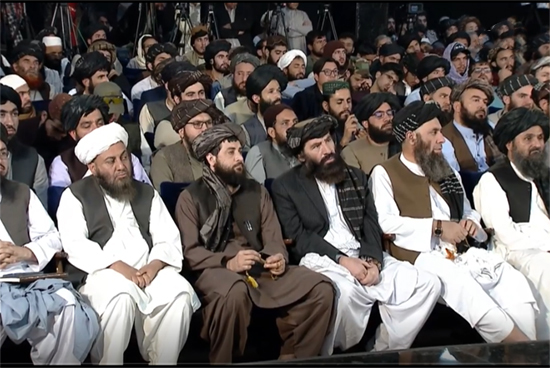
The Taliban cannot contain their internal divisions.
Author: Ahmad Saidi, Afghanistan and Regional Affairs Analyst (Germany), especially for "Sangar"
Yesterday I heard in the media that Farooq Azam, a senior adviser to the Taliban Ministry of Energy and Water Resources, complained about the movement's leadership and even called the actions of its leader un-Islamic.
However, Farooq Azam has been a courtier under every regime and considers himself a partner at the table of the powerful.
He was a minister during the Mujahideen regime and served as a senior adviser to Karzai and Ashraf Ghani, and now he is back in power.
In any case, in this article, I intend to share my views on the widespread internal divisions within the Taliban.
In my opinion, the internal opposition within the Taliban is caused by several factors related to ideological, ethnic, political, and power issues. These factors include:
1 - Ideological differences. The Taliban is a diverse movement, with members having different interpretations of Islamic ideology and political strategy. Some members may take a more rigid stance on the application of Sharia, while others may take softer or more conciliatory approaches.
2 - Ethnic diversity. The Taliban is made up of different ethnic groups, such as Pashtuns, Tajiks, and Uzbeks. Although the Pashtuns are the majority, ethnic differences and discrimination can lead to discontent and internal conflict.
3 - Issues of power and influence. Competition for power and division of important positions within the Taliban government and structure is another factor that causes friction. Different factions compete for greater impact in the government and the economy.
4 - International relations. The Taliban has complex relations with neighboring countries and regional powers such as Pakistan, Iran, and China. Some factions may be dissatisfied with some of these countries' influence or support, while others rely on this support.
5 - Internal discontent and leadership gaps. Following the death of Mullah Omar, the founder of the Taliban, and the assassination of Mullah Mansoor, his successor, there have been more leadership gaps within the group. This has led to different factions fighting among themselves for leadership and influence.
Taken together, these factors make the Taliban as a group of different factions and views face internal problems. I do not believe that the Taliban will be able to contain these internal divisions and maintain their unity and solidarity. It seems that these gaps will widen over time, and the internal crisis of the Taliban will lead to more serious problems.


