


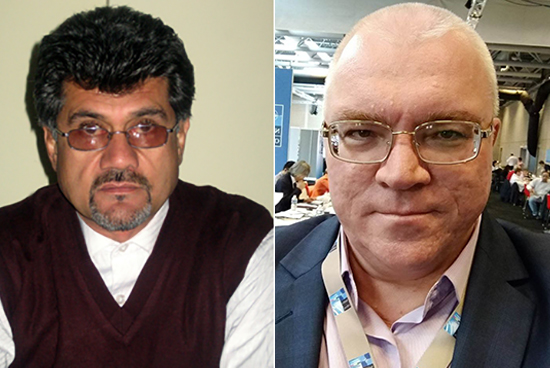
Exclusive interview of a well-known journalist, and member of the "Sangar" Advisory Board Razzaq Mamoon with a prominent Russian expert on Afghanistan Andrey Serenko.
Andrey Serenko was born in the village of Gorodishche, Volgograd Region. Graduated from the Faculty of History of the Volgograd State Pedagogical Institute. Director of the Analytical Center of the Russian Society of Political Scientists. Columnist for the Nezavisimaya Gazeta. Head of the Center for the Study of Afghan Policy.
Among the experts of Russia and, perhaps, the modern world, he is the only one who tirelessly supports and participates in the promotion of the National Resistance Front of Afghanistan (NRFA) with his professional opinions and analysis. The first question was about his interest in the affairs of the NRFA.
- I have been interested in Afghan politics in general since 2005 or 2006 when I wrote and published my first note on the "Afghan" topic. It seems that it was dedicated to the possibility of increasing the number of NATO contingent in Afghanistan ... So my passion for Afghan politics has been for more than 15 years. Quite a long time, you see. But that doesn't make it any less interesting. Rather, on the contrary.
In my opinion, Afghan politics is not only incredibly interesting in itself, but it also trains the brain well. I would recommend that a course on Afghan politics and its analysis be included in the curricula of political science departments at universities in Russia. Because if young political analysts learn to understand Afghan politics with all its intricacies, undercover intrigues, and interests, then they will easily understand the political process of any other country.
As for the National Resistance Front of Afghanistan, my interest in it is connected, first of all, to the uniqueness of this project. The NRFA is a small group of real and very brave men who today defend the honor of all of Afghanistan. These are people who did not give up and did not betray their ideals, which is already a rarity. They are ready alone, with weapons in their hands, to resist the Evil of Terror, with which the rest of the world seems to have come to terms. This cannot but arouse respect and, of course, interest.
 Today, the NRFA, in my opinion, is not only a military-political project but also a new religious movement that opposes the world Evil, which has found yet another embodiment in the terrorist dictatorship of the Taliban, in the anti-human projects of Al-Qaeda and ISIS. The heroes of the NRFA are real Mujahideen, whom I would put on a par with the companions of the Prophet Muhammad: they all wage a jihad of Light against the forces of Evil and Darkness in the name of Allah, the Motherland, the triumph of justice and the values of true Islam. I am sure that we will still be proud that we were contemporaries of the heroes of the Afghan Resistance.
I can hardly be called a person "promoting" the NRFA. This is too high an estimate of my modest activity. But I am very interested in the people who gather under the banner of the Afghan Resistance. And I believe that citizens of Russia and other post-Soviet states, where they have not yet forgotten how to understand the Russian language, should know about them. Because the NRFA fighters are fighting today with the very evil that threatens us here in Russia. And if the Resistance Front, God forbid, is defeated, then this evil will pour out of Afghanistan, like from a broken jug, and flood neighboring countries and cities. I wouldn't like that very much.
- Who is supervising Russia's policy towards Afghanistan: the army or the Federal Security Service (FSB)?
- Sometimes it seems to me that no one - so Russian policy towards Afghanistan is ineffective and lacks initiative. For too long Moscow has trailed behind other people's, as a rule, American initiatives. Today, Russia's position in Afghanistan is weaker than ever. I hope that the Kremlin understands this and will try to change the situation, taking into account the general reorientation of Russian policy towards the East.
Yes, while the acute phase of the armed conflict in Ukraine is going on, Moscow's hands will be tied by the Ukrainian theater of military operations. But once, and inevitably, the acute phase of the war ends, Russia will immediately increase its attention to Afghanistan and the region surrounding it. This will also, I hope, lead to changes in the development of political decisions for Afghanistan.
Until now, the group of Russian special representative Zamir Kabulov in the Foreign Ministry has been the center for creating and implementing Moscow's Afghan strategy. She was supported by some influential officials in the FSB, the Foreign Intelligence Service, and the presidential administration of the Russian Federation. However, Mr. Kabulov's recipes were not very successful, and today there is reason to talk about the beginning of a revision by Moscow of the Russian strategy regarding Afghanistan.
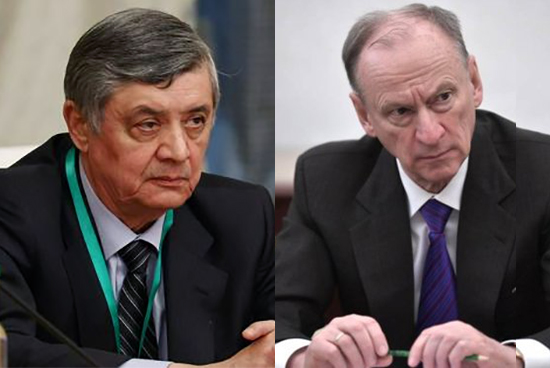 I do not rule out that in connection with this, the center for developing a new Afghan policy for the Kremlin will move from the Foreign Ministry to the Security Council, which is headed by FSB General Nikolai Patrushev. However, this process is not fast, in Russia almost everything is done slowly. Surely the group of Zamir Kabulov will try to pull the blanket over themselves. But all the same, the process of revising and adjusting Moscow's Afghan strategy is inevitable.
As for the role of the Ministry of Defense in Afghan affairs, as far as I can judge, it is rather limited. The Russian military, of course, collects information about terrorist groups in Afghanistan and possible threats from them, but the influence of the army on the development of the Kremlin's political strategy does not seem to be the most serious.
By the way, I won’t be surprised if, after some time, Russian private military companies, for example, the Wagner PMC, begin to show interest in Afghanistan. However, their interest will rather be purely commercial, related to the development of the market for security services and mining. The owners of PMCs will certainly try to influence Moscow's political line toward Afghanistan. Perhaps in this, they will be more successful than the officials of the Ministry of Defense.
- What is Russia's policy towards Tajiks in Afghanistan?
- The same as in relation to Afghanistan as a whole - observation without active intervention. Russian representatives, as far as I know, periodically and unofficially meet with some leaders of the Afghan Tajiks, collect information, listen carefully, and... do nothing. In my opinion, this is due to the continued dominance of Afghan affairs in Moscow by Zamir Kabulov's group, who has always relied on flirting with the Taliban. Accordingly, Mr. Kabulov blocked any attempts at those initiatives that the Taliban might not like. It is obvious that Moscow's official contacts with the Afghan Tajiks will definitely not arouse enthusiasm among the leaders of the Taliban.
When Russia begins to change its Afghan strategy, which, ideally, should lead to the resignation of Zamir Kabulov from the post of special envoy of the Russian president for Afghanistan, only then can we expect changes in Moscow's relations with the Tajiks of Afghanistan. Until then, Russians will behave the way they have in recent years: meet, listen carefully to their interlocutors, collect information, and do nothing. But let's be patient a little more.
- Why didn't Russia openly support and help the NRFA?
- I have, in fact, already answered this question above. I repeat: Moscow's policy towards Afghanistan is still being shaped by Zamir Kabulov and his group, who rely on flirting and cooperating with the Taliban. Therefore, everything that could interfere with this course was blocked. Of course, the "Kabulov Doctrine" rules out Moscow's cooperation with the NRFA.
However, the last year and a half have shown that Zamir Kabulov's strategy has failed, it has turned out to be unsuccessful for the Kremlin. This strategy has turned Russia into a hostage to foreign initiatives in the Afghan direction. Perhaps this suited the Kremlin before the start of the military operation in Ukraine, but today it cannot suit it anymore.
Yes, Moscow does not want the appearance of a second, "southern front" in Central Asia and therefore continues to adhere to the "Kabulov line" to appease the Taliban regime. But when things change in Ukraine, and the acute phase of the war inevitably ends, then we can expect changes in Moscow's policy in Afghanistan, including in relations with the NRFA.
- How is the war between the NRFA and the Taliban interpreted in Russia?
- Officially - as a purely intra-Afghan conflict. But, in fact, very little is known to the Russian audience about this NRFA war with the Taliban. Obviously, this is also part of the strategy of Zamir Kabulov's group, who do not want to upset the Taliban regime and, I assume, are making efforts to block information about the activities of the NRFA.
It must be admitted that the leaders of the NRFA themselves, as well as the media activists of the Front, pay very little attention to the information coverage of their mission and everyday struggle in Russian-language information resources. The NRFA speakers still mostly speak English… If they want to be heard in Moscow and the capitals of other post-Soviet states, then they need to master the Russian language and increase interaction with Russian journalists, politicians, experts, and Russian public opinion in general. Today, the NRFA is absent from the Russian information and political agenda.
- Do you think Russia and Iran want to put the NRFA and the Taliban at the negotiating table, as they did with Iran and Saudi Arabia in China?
 - I have heard of such ideas. I do not rule out that appropriate attempts can be made. By the way, this does not mean that they will be harmful. So far, it seems to me, the Taliban will categorically not agree to such negotiations - they still do not intend to share their power with anyone.
For such a negotiation scenario to be possible, two main conditions must be met. The first is to have a coup within the Taliban dictatorship so that real power is in the hands of those Taliban groups that are ready to engage in dialogue. Secondly, the NRFA must demonstrate its ability to win and expand its influence in the country and show its strength, in other words. Without this, no negotiations will be possible. After all, negotiations are conducted only with the strong, the weak are simply destroyed.
- If riots start in the region, where do you think they will start - from the territory of Tajikistan, Kyrgyzstan, Uzbekistan, or Kazakhstan?
- All these republics are vulnerable in their own way. And, as far as I know, there are terrorist groups on the territory of Afghanistan today, planning to transfer "jihad" to each of these states. My sources warn, for example, that the first troubles may begin in Tajikistan next summer, where terrorist groups are already trying, and, as they say, not without success, to send suicide bombers. Not everything is calm both in the Uzbek direction and in Kazakhstan. Which one will end up being the weak link? Only practice will show this. In principle, they can all be in this status. I think if the NRFA project, God forbid, fails, then the threat of a catastrophe will become more urgent for Tajikistan. Without the NRFA, the Central Asian regimes will be defenseless against internal and external jihadist communities.
- In 2001, America was able to rent several military bases in the countries of Central Asia. Why do you think they failed to do so this time?
- It's very simple. In 2001, Russia was on the side of the United States in the fight against al-Qaeda and the Taliban. As you remember, President Putin was the first world leader to call President Bush with words of support after the 9/11 attacks. Therefore, Moscow did not interfere with the creation of Western military bases in the Central Asian republics. Then the situation changed. Relations between Moscow and Washington deteriorated. Now Russia is against the United States and it does not allow the appearance of American bases in the Central Asian region. So far, Moscow has enough strength and influence to ensure this position. Let's see how the situation develops further.
- Where exactly on Russia's southern borders do you think the threat looms?
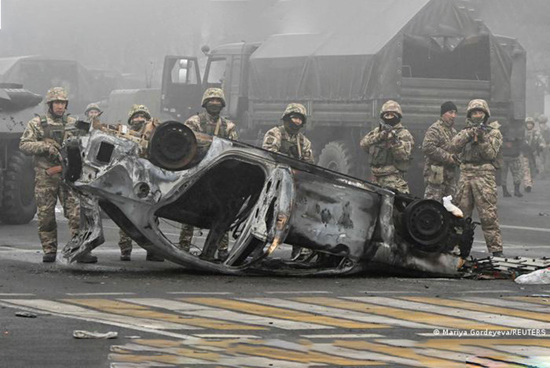 - The Caucasus and Central Asia are traditionally vulnerable places in Russian geopolitics. Today they remain the same problem areas. Compared to previous decades, one can speak of a weakening of Kazakhstan’s potential for stability: in January 2022, the largest unrest in the history of this republic took place in Kazakhstan. President Tokayev, of course, is taking active measures to stabilize the political system, which is also in the interests of Moscow. However, so far it is hardly possible to state with full confidence that a repetition of the events of January last year is impossible in Kazakhstan. And this forces Russia to follow the processes in Kazakhstan more closely. I guess there are still surprises here.
- If a jihadist campaign starts in the countries of Central Asia, what will Russia do?
- Of course, Russia will actively intervene and oppose this campaign. If necessary, then by military force. If jihadists win in the any republic of Central Asia, this will be the end of Russian influence in the region and the beginning of a big jihadist war against Russia itself.
- If ISIS becomes a real threat to the northern provinces of Afghanistan, what will Russia do? Will she intervene in hostilities herself or will she sponsor the NRFA?
 - This a very interesting question. I think we will see then a set of efforts - from the appearance in Northern Afghanistan of Wagner PMC fighters (possibly of Afghan origin) to direct support of the NRFA. And, of course, Russian combat aircraft will appear in the Afghan sky. Most likely, in this case, the situation will resemble the one that was in Syria in 2015-2018, when Russian special forces, PMC fighters, and military aircraft fought against ISIS terrorists with the support of Iranian proxies. By the way, it is possible that in northern Afghanistan, in the fight against ISIS, Russia, and Iran can repeat the positive experience of military cooperation achieved earlier in Syria. And in the ranks of this anti-terrorist Russian-Iranian coalition, of course, the NRFA fighters will be very welcome.
- The failure of the Special military operation (SMO) in Ukraine is presented in the Western media as a reality. If Russia does not plan to lose, how does it see the limits of its achievements?
- The armed conflict between Russia and Ukraine is far from over. It is possible that the SMO is not going as it was originally planned in Moscow, but this certainly does not mean the failure of the operation and, moreover, the defeat of Russia. All the fun is just beginning. There are many different nuances, interests, and players in the conflict in Ukraine. And there will be many more surprises.
I think the main task for Moscow is not to seize and hold new territories or increase the number of American tanks knocked out on the battlefield. The main thing is the interception and preservation of Moscow and, apparently, Beijing, the strategic initiative in the hybrid confrontation with the United States, which is being implemented today through the scenery of the Ukrainian conflict. The scenery can change, what remains important is control over the initiative, which will allow realizing the strategic interests of Russia and China after the acute phase of open armed confrontation is over. If Moscow and Beijing succeed, then this will be the main achievement of the SMO.
What is important is not the war, but the peace that comes after the war. Today, the main task for all participants and players in the conflict in Ukraine is to win the future world and to secure stronger positions for themselves in it a new big strategic game.
- If Russia weakens, what will happen?
- Retreat, take a step back to gather new strength. This has happened more than once in Russian history. But in the end, Moscow will restore and strengthen its dominant status in Eurasia and eastern Europe. In addition, failures make you think better. The development of this skill will benefit the Russian political elite. In any case, Russia will not disappear from the map of history, it will remain a major player that will always be reckoned with.
- Is Russia confident that Western superpowers will tolerate a multipolar world?
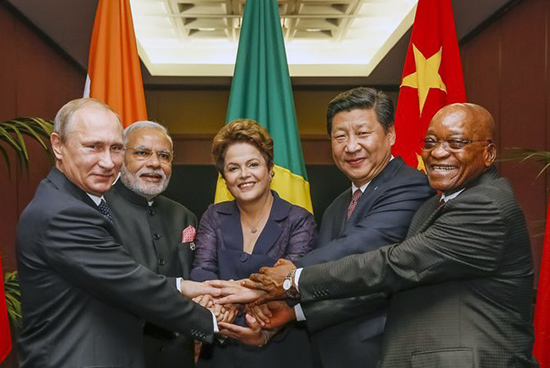 - Of course, they won't. They will actively resist. But the matter has gone too far, and it is no longer only in the position of Russia. In any case, the world will no longer be the same, but how exactly it will turn out, how multipolar, multi-fragmented, manageable - this is an open question.
Moscow, Beijing, Iran, and many other players are making it clear to Washington that it is no longer possible to restore the world's unipolarity by force. But it is possible to stop the escalation of multipolarity through a "great new dialogue." The United States avoids such a dialogue, for the time being, they want to try to restore the unipolar order by force, publicly punishing the disobedient Russians, and presenting them to the world as an exemplary victim of the Big West. The project is bold, but by no means easy. For various reasons, today many players do not want Russia's defeat, among them, there are even formal members of the Western coalition. That is why this game is so dramatic and acute. And it's definitely far from over.
- If America backs Pakistan, will the threat of transferring the war from the territory of northern Afghanistan to the countries of Central Asia not become a reality?
- There is such a threat. That is why it is so important for Russia to start actively adjusting its Afghan strategy as soon as possible. It should be based on the allocation of Northern Afghanistan to the zone of priority interests and special attention of Moscow. And it is in Northern Afghanistan that Russia needs a new political infrastructure to implement and protect its interests in the region. I am sure that a strategic partnership with the NRFA and the leaders of the ethnic groups of Northern Afghanistan should become part of this infrastructure.
By the way, I would not refuse to look for effective tools to influence the situation in Pakistan itself, primarily in Pashtunistan and Balochistan. If Islamabad makes the final choice and joins the anti-Russian coalition, then Moscow does not need to limit itself in the search for partners, allies, and fellow travelers to protect its interests. Moreover, there are opportunities. In Balochistan, for example, the national liberation movement against the dictates of Punjab is intensifying. Pashtuns in Pakistan are talking more and more openly about the creation of an independent Pashtunistan. By the way, you know that the Tehrik-e-Taliban Pakistan (TTP) movement is still not officially banned in Russia, unlike, for example, the Afghan Taliban, Al-Qaeda, and ISIS. It seems to me that this is an interesting nuance that opens up a fairly wide scope for perspective interpretations.
- What is Imran Khan's relationship with Russia and Asian powers?
- For the time being, it is rather an accidental political companion of Moscow. Perhaps he will turn into a more serious ally. But on condition that the Russian side is convinced of its reliability. And this is a very difficult question. As, however, is the question of Imran Khan's physical survival in the waves of that deepest systemic crisis that has swept over the Pakistani state. I am afraid that if Imran Khan decides to become a reliable ally of Moscow, then he will not live even three days after that. The unreliable Imran Khan can be useful to Moscow only to create situational tension in the zone of American and British interests in the region. No less, but no more.

