


Speaking privately at a conference in Alma-Ata, the then-Kazakhstan Mufti expressed concern over the unprecedented growth of the Salafists in the country, added, that they are patronized by one of the President Nazarbayev's influential nephews named Gairat, who himself also became a Salafi. He said that the Muftiat (Сouncil of Ulema) and security structures of the government cannot carry out serious work to prevent the spread of Salafism
Author: "Sangar"
The events in Kazakhstan seem to confirm the suspicion that the establishment of the "Taliban" regime in Afghanistan has revived the Islamic radicals of neighboring countries, and in these political developments, the world powers are counting their gains and losses in a New Great Game. What was the message of the events in Kazakhstan and what will be the future of Central Asia?
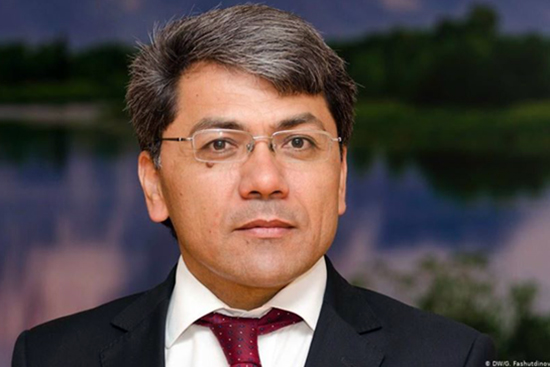
To these and other questions, answered Abdullah Rahnama, a senior expert on regional and religious issues in Tajikistan and the region.
- Were the events in Kazakhstan "the echo of “Taliban”* coming to power in Afghanistan?" In general, when there were a lot of talks about "Afghan trace" in these incidents, how do you see it?
- Of course, in the events of Kazakhstan, there is no talk of the direct involvement of the "Taliban" and the immediate emergence of the "Afghan factor". But at the same time, there is no doubt that the victory of the “Taliban” extremist group in Afghanistan has fueled extremist circles throughout the region. In addition, regional governments, including the government of Kazakhstan, practically received the victory of the "Taliban" and high-level meetings with them further raised the hopes and morale of religious extremist circles all over Central Asia. This is a very serious effect, which is felt on the whole region. That is, in the current situation in Kazakhstan, the latent extremist cells were suddenly activated.
Taking advantage of this opportunity, they came out of the trenches with the emir and his congregation and carried out armed, horrific and violent acts in the familiar style of "DAISH", occupying government offices, airports, communications centers, military units and attempting to take over the spontaneous public administration of the protest showing professional and coordinated moves.
- How did such groups emerge on such a large scale in Kazakhstan with high security and stability and it is a secular-advanced state? Is it not suspicious?
- Of course, this group and the cells did not come into existence in one day or year. Liberal policies and very free conditions for the growth of non-traditional religious practices, including Salafism, “Muslim Brotherhood”, Jamaat Tabligh and Da’va, Shiite ideology, etc. in Kazakhstan have led to the formation of explicit and covert networks of religious extremism in recent years.
Especially some of these extremist religious groups found their followers and patrons at the highest levels of government and security forces, even among members of the Kazakh president's family and his close associates. That is why security officials couldn’t take serious actions to prevent their spreading.
These officials not only neglected the huge contributions made by some Middle Eastern ideological countries to Kazakhstan's religious circles but also shared in their profiteering and corruption practices. As a result, large circles of young people in the city and villages of Kazakhstan became more and more inclined to these harsh and non-traditional religious movements. This phenomenon, especially in the south of the country, was very strong, and it reached a dangerous level and was known by most of the experts in the field until the beginning of the crisis.
For example, in 2016, while I was traveling to India on the Almaty-Delhi flight, I met about 100 people in sweatshirts and long white Pakistani clothes. They had dry bread and fruit in their pans and did not generally eat aircraft food during the flight. Talking to two of them, who were sitting next to me, it became clear that they were members of the Jamaat Tablighi Islami and were going to Deoband schools in India to take three-month religious propaganda courses. They forbade the bread and food of the shops and kitchens, they only ate their bread. It turned out that this reactionary propaganda movement had spread so widely in the southern regions of Kazakhstan that its members had been conducting propaganda patrols freely for a long time. They said that this group had practically ruled in some villages like an informal government...
Or at another conference in Almaty, the then-Kazakhstan Mufti expressed concern over the unprecedented growth of the Salafists in the country, added, that they are patronized by one of President Nazarbayev's influential nephews named Gairat, who himself also became a Salafi. He said that the Muftiat (Council of Ulema) and security structures of the government cannot carry out serious work to prevent the spread of Salafism.
In short, the information about the rise of extremist circles in southern Kazakhstan has not been unfounded, now perhaps more serious aspects of it are unfolding ...
- Does the "Black Revolutions", i.e. the rise and influence of religious extremists, threaten the countries of Central Asia?
- Yes, in today's situation this threat is real. The reason for calling the "Black Revolution" of this possibility is that the new or ISIL generation of religious extremists is at a high level of extremism and opposed with all kinds of national and world values, human rights and freedoms, achievements of culture and civilization, coexistence and diversity, education, national government, etc. These examples are seen in the two-year rule of the “Daesh” and now the “Taliban”. Hence, they come to the scene not as opponents of the government, but as opponents of the state, nation, all values, and freedoms. That is like their dark force, it is the "Black Revolution".
But the experience of bringing the Taliban to power in Afghanistan has shown that many factors can now contribute to the rise of extremism in the region. In addition to internal factors such as the complex social situation, the lack of internal unity, and the weak ideological apparatus of governments, etc. Today, the geopolitical factor has also increased this threat. That is, some foreign powers use religious extremists as agents of influence and can support them for their interests against each other. This could make Central Asia their battleground. We have to be vigilant from this side as well.
- So, can these hypotheses be true, that the events in Kazakhstan were part of the Western governments' attempt to form a "destabilization belt" around Russia?
- Such hypothesis is never out of the probability. Because what is happening these days around Ukraine issue shows that the rivalry between Russia and the West, including the United States, has reached a high point. They are putting pressure on each other on various fronts. Destabilizing Kazakhstan or any other Central Asian country and creating a new front for Russia is one of the many acknowledged plans of its geopolitical rivals. Therefore, we know that the formation of popular protests, the "color revolutions" and now the "black revolutions" is one of the many tried and tested tools of these rivals.
- Do you think the Kazakh and Central Asian governments need to get lessons from these incidents?
- They take already. Demonstrating the electrifying power of religious extremists during this crisis is causing both Kazakhstan and other countries in the region to take much more seriously their policy and engagement with this factor. Unfortunately, in this process, some of the public freedoms of ordinary religious people will be also harmed, but these restrictions are also a "blessing" of extremists in most Muslim societies. But the countries of the region have no choice but to seriously prevent extremism to ensure the security and salvation of their government in this way.
As a result of this precedent, it is predicted that the soft attitude of the Kazakh authorities, including the Salafists, Jama'at Tabligh, and some other foreign religious organizations and foundations inside the country, will be seriously changed, their indifference to the "danger of extremism" and their optimistic attitude to an extremist group of "Taliban" in Afghanistan will be reconsidered definitely.
They will eventually realize that one of the unprecedented motivations for the extremist elements in recent events has been their falling under the influence of the Taliban's victory. This reality should change the attitude of not only Kazakhstan but also Russia, China and other countries towards the “Taliban”.
- To what extent is Russia able to maintain its interests in the region?
- Russia is a military superpower and has the widest and most advanced military capabilities. Hence, rationally and psychologically, most of the world's political circles do not want to face Russia on the battlefield. Even extremist and terrorist groups do not want to face Russia after the fate of "Daesh" in Syria. At the same time, Russia has a vulnerable economic power, which has a very negative effect on the protection of its interests. One of the weaknesses and even big mistakes of Russia was and now is that it did not make serious investments in the economies of its strategic partners in Central Asia during last years and did not make enough efforts to improve its allies' social situation. As a result, Russia's regional partners in Central Asia are also in a socially vulnerable position.
But in such a case, the only way to preserve the interests of these countries and maintain their stability and security is joint action. The experience of CSTO (Collective Security Treaty Organization) in resolving the crisis in Kazakhstan has shown that such an instrument exists. But given the limited possibilities and the larger scale of the threats, the regional military coalition should be much wider than the CSTO. For example, if this military alliance is reached at the level of the Shanghai Cooperation Organization and includes the military capabilities of the member countries in general, the security of the countries in the region, including Central Asia, will be much more stable and strong against external threats.

