


Without resistance, our human identity will lose its meaning, and we will all become subservient and obedient creatures of Amir al-Mu'minin and the Taliban.
Author: Yaqub Yasna, writer, and analyst, member of the Sangar Advisory Board.
Source: Kilkin
Let's assume that there is practically no movement or front acting against the Taliban. While the National Resistance Front and other opposition groups are practically fighting against the Taliban. Even if these fronts were not active, there would still be a need for resistance for six reasons: respect for human rights, religious and political rights, women's rights, civil rights, elective political system, intrusion into the territory of Tajiks, Hazaras and Uzbeks, abuse of Islam and unquestioning obedience to some person named "Amir al-Mu'minin". To make these six reasons and needs clear, I will explain each of them clearly:
1 - WOMEN'S RIGHTS
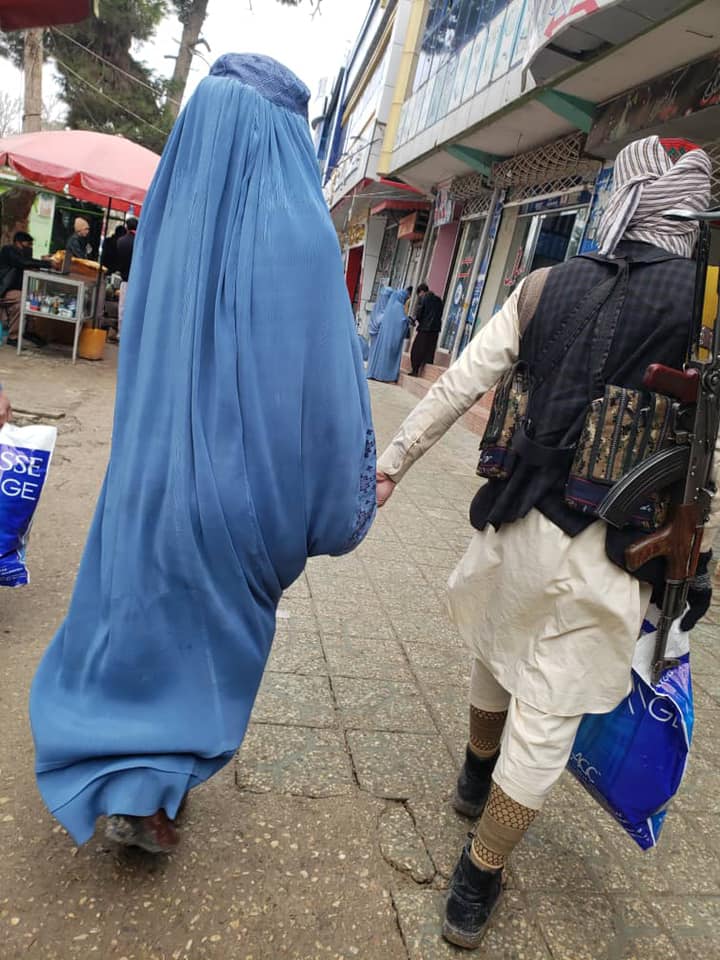
The Taliban does not recognize women's right to education and employment and has banned them. He does not accept the presence of women in social, cultural, and political relations. A woman, from the point of view of the Taliban, is a sex doll and a child-bearing machine. The Talib wants to strip women of their human identity. Recently, the Taliban in Kandahar posted slogans all over the city with the message that a woman is an animal unless she wears a full hijab.
This inhuman, primitive, and terrifying treatment of the Taliban is the reason for the struggle and resistance against them. The fight for women's rights is not only the responsibility of the people of Afghanistan but also the responsibility of the people of the world. Because the Taliban deprived women of the right to education and work. A woman is a person. Depriving women of their rights just because they are women effectively deprives them of their human rights.
 2 - CIVIL RIGHTS
Women's rights and freedoms include civil rights, but in addition to women's rights, men's rights are also included in civil rights. The Taliban also do not recognize the individual, social, cultural, and political rights of men. The Taliban look at the individual, social, cultural, and political rights of people from an ethnic and religious perspective, do not recognize any individual or civil liberties, and treat people according to their ethnic and religious taste. This repressive and primitive approach to the civil rights of individuals caused resistance to form and continue.
3 - ELECTION POLITICAL SYSTEM
The Talib, as a primitive, savage, and extremist group of social, cultural, religious, and political relations, feels only gender and ethnicity, and no longer understands and does not feel human relations. He sees human functions, objects, and the world only from a sexual and ethnic point of view. It does not recognize a political system elected on the basis of citizens' votes. As if Talib was thrown into the modern world from distant ages, that says: we seized your lands by force and have the right to your life and death.
The right of citizens to vote is the source of national statehood in the modern world. The national government and elective political system are formed on the basis of the vote of the people. But the Taliban do not recognize the right of the people to vote for the formation of a nation-state and an elective political system. The people are finally forced to fight for their right to self-determination.
4 - INTERVENTION IN THE PRIVATE LIFE OF PEOPLE
The Taliban does not recognize the place of residence of ethnic groups, the home or private sphere of life of people and gives itself the right to invade the lands of the Tajik, Hazara, and Uzbek peoples and occupy or occupy their lands or, in the opinion of the Taliban themselves, conquer them. The Panjshir war is for the occupation of its land. Because the Taliban want to occupy the lands of these people and take away from the locals the right of any power over their land. The inhabitants of this province lived in their homes and did not fight the Taliban. But the Taliban launched an ethnic campaign to occupy the Panjshir lands.
A person considers his land, territory, and home as an honor. Therefore, the protection of the land, territory, and home is exclusively mandatory for believers and non-believers. The Taliban's relentless incursion into Tajik, Hazara, and Uzbek territories and individual homes has made resistance a common necessity.
 5 - ABUSE OF ISLAM
The Talib chant religious slogans but act ethnically. Tajik, Hazara, and Uzbek Taliban were deceived by the religious slogan of the Taliban. After they came to power, they found out that the slogan of the Taliban leadership is a form of abuse and wanted to realize their ethnic and tribal plans with the help of these religious slogans, and the main Taliban is the Pashtun Taliban.
The non-Pashtun Taliban were important and used as a tool of war. The territories occupied by the non-Pashtun Taliban under the previous government were taken over by the Pashtun Taliban, and even the non-Pashtun Taliban were deprived of the right to rule over their territories. The non-Pashtun Taliban understood what was going on. But they had no choice, they were deceived. Recently, Ayubi, one of the Uzbeks, and Mahdi, one of the Hazara commanders of the Taliban, realized that they were victims of the Islamic slogans of the Taliban, and the reality of the Taliban leadership is ethnic, not Islamic and religious.
For the leadership of the Taliban, Islam and religion are important as long as they are used for the benefit of the Pashtun tribe and people. Worse than the political abuse of religion, the Taliban also abuse it to the detriment of women's rights and individual rights. None of the modern readings and narratives of Islam in Islamic countries states that the hijab includes covering the entire face and body of women, depriving women of education, jobs, and rights. But the Taliban leadership abuses the religion of Islam to deprive them of education, jobs, and human rights, and interferes with people's private lives, including dressing and beards of men.
This abuse of Islam to deprive people of their human and Islamic rights is a betrayal of religion, human rights to life, and Islamic rights. Therefore, resistance is necessary to uphold the principle of religion and religiosity, as well as human and Islamic rights.
6 - SUBMISSION TO “THE EMIR OF THE FAITHFUL”
These days, the legitimacy of the nation-state and government is evident, which comes from the popular vote. But the Talib says that no matter what our “amir al-muminin” (“emir of the faithful”) says, no one can object. Now in any Islamic country, there is no person named "amir al-muminin", who has absolute power. This method of leadership and absolute submission exists in terrorist movements such as ISIS, Al-Qaeda, and others. On this basis, it turns out that the Taliban is still an extremist and terrorist group, that does not intend to join the UN and international relations as a government, but wants to impose its power by force as a terrorist group. If the Taliban want to be a government, they must gain national legitimacy through elections, respect the separation of powers in government, and then seek international legitimacy.
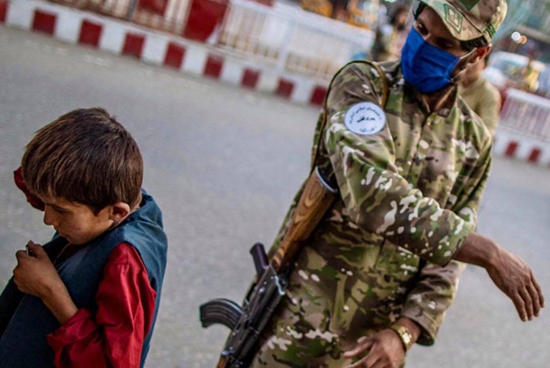 The main question is: who is the “amir al-muminin” of the Taliban and how did he become him? At the beginning of Islam, when four caliphs came to the caliphate after the Prophet, they were known in the Islamic society of that time and enjoyed the support of the people. They were always present among the people and their authority was obvious. Hazrat Omar said to the people: "If you see that I have behaved badly, correct me with a sword." In a letter to Malik Ashtar, Imam Ali speaks of the right of the people over the ruler and emphasizes that he must respect the rights of the people.
On the one hand, the Taliban “amir al-muminin” is absent, and on the other hand, the Taliban say that everyone should obey him completely. The "Amir al-Mu'minin" of the Taliban in this case must be God. Even the Prophet (s) does not have such a decree that people obey him implicitly. There is a hadith that the Prophet of Islam (s) told a peasant not to cut palm branches on both sides of the road so that they would cast a shadow on the road. The peasant did not cut branches. But the palm trees did not bear fruit. The peasant turned to the Prophet (s) that palm trees do not bear fruit. The Prophet (s) said that the peasants, shepherds, and others know their business well. Do the same with palm trees as you see fit.
I believe that the use of a person named "amir al-mu'minin" and unquestioning obedience to him is the greatest betrayal of the religious teachings and position of God. Perhaps the "amir al-mu'minin" of the Taliban imagines himself to be God, or the Taliban exalt him as God. Otherwise, they would not have said to obey "amir al-muminin unquestioningly". In this case, individuals do not have the right to life, or the right to determine their social and political destiny. Because people have no duty and responsibility for their lives and the right to determine their social and political destiny. The duty and responsibility of the people are to unquestioningly obey the order of the "Commander of the Faithful." In this case, society has to fight and resist for the right to life, for the right to determine its social and political destiny.
For these six reasons, I find it necessary to fight and resist the Taliban, and I believe that fight and resistance will soon become widespread. Because the Taliban have questioned our humanity and human identity. Suppose there is no struggle and resistance against the Taliban. In that case, our human identity will lose its meaning in the individual and collective arena, and we will all become subordinate and obedient creatures of Amir al-Mu'minin and the Taliban.


