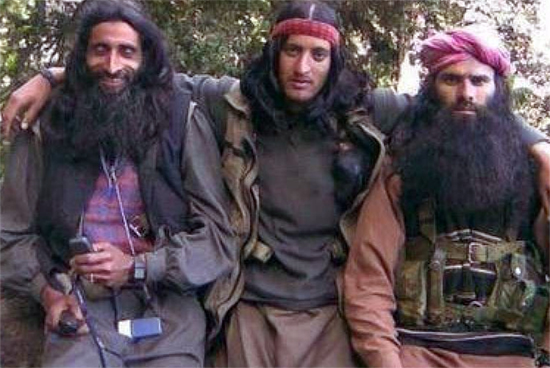
In the minds of Pashtun politicians, the place of political parties is occupied by tribes and ethnic groups. Where there is a tribe, the party is not considered a necessity.
Author: Nurulla Valizade, writer and political commentator, especially for Sangar
ANALYSIS OF THE MOTIVES AND CAUSES OF THE WAR WITH THE TALIBAN
First part:
SOCIAL AND ETHNIC MOTIVES AND REASONS
The last war of non-Pashtuns, or why did the Tajik become enemy No. 1 of the Pashtuns?
In the first part, we examined the socio-ethnic motives and causes of the war with the Taliban, and now we will explore the political motives and causes of the war with the Taliban.
The gist of our previous discussion was that the Taliban are an ethnic Pashtun group working on a Pashtun/fascism agenda. The plan has been put forward by Mahmud Tarzi since the time of Shah Amanullah, and since then Pashtun rulers and governments have pledged to implement it. According to the program, non-Pashtun ethnic groups, especially Tajiks, Hazaras and Uzbeks (the three main non-Pashtun ethnic groups), who make up about 70 percent of the country's population, are considered outsiders and an obstacle to Pashtunism. The Tajiks are considered the main enemy because they took political power from the Pashtuns in the last century. This, in fact, is the main reason for what is called the "unfinished war of Afghanistan."
Second part:
ANALYSIS OF THE POLITICAL MOTIVATIONS AND CAUSES OF THE WAR WITH THE TALIBAN
Politically, the Taliban are a heterogeneous, indefinable and ambiguous group. This group does not have a clear and systematic political strategy and program on the basis of which it could act in accordance with the political classification of this group. The Taliban does not belong to any of the well-known Islamist political parties, movements, groups and organizations, and also does not have any innovative Islamic initiatives and programs by which one could judge the political nature of this group.
When the Taliban announced a few months ago that they would not allow girls older than sixth grade to go to school, Pakistanis, Qataris and Emiratis, as the main supporters of the Taliban and as countries with quasi-Taliban Islamic governments, were surprised by the Taliban's decision. They said that the Taliban example does not exist in other Islamic countries. They meant that the Taliban could not be attributed to any Islamic political group.
Although nearly three decades had passed since the emergence of the Taliban, when the group regained power again, they had neither political plans nor a management strategy, and yet, almost a year after their rule, there were large legal gaps in it. It is not clear what the actions and judgments of the Taliban are based on. To fill in the legal loophole, the group announced that it would apply the Zahirshah-era constitution, with some modifications of course, but did not specify which parts of the basic law would form the basis of the Taliban's actions.
The constitution of the Zahirshah period is a secular law in which the king is above the law. Perhaps the attraction of the Zahirshah law for the Taliban is due to the fact that the person in power is above the law. That is, the Taliban want to see the number one face of the group as a shah who will not report to any other authority. In addition, since Zahir Shah's constitution is saturated with the spirit of Pashtunwali, this may be one of the reasons for the Taliban's interest in it.
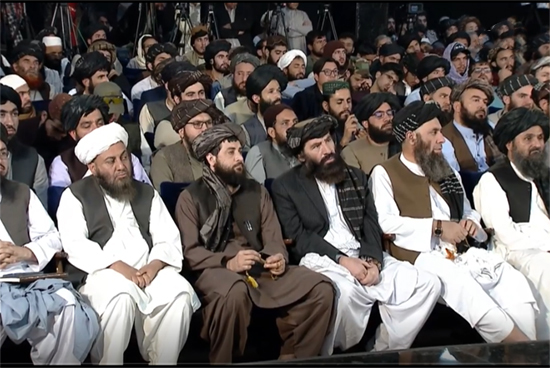 With the exception of the al-Qaeda terrorist network, which is said to be politically more similar to and an ally of the Taliban, ISIS is also considered similar and has relatively similar goals and programs to the Taliban. The Taliban are different from other Islamic political parties and organizations in Afghanistan and the region, so it is difficult to say which Islamic political and intellectual group they belong to.
The well-known and influential political parties in Afghanistan can be divided into three categories in terms of political typology: communist, Islamic and democratic. Or, in fact, we can talk about the division into two parts: religious and secular. The Taliban are not only incompatible with any of these three currents, they even reject all political parties.
All major Islamic parties in Afghanistan (Jamiati Islami, Hizbi Islami, Wahdati Islami, Junbishi Islami, Harakati Islami, Ittihodi Islami, etc.) have experience of armed confrontation with the Taliban, and now most of these parties oppose them.
Gulbuddin Hekmatyar's only radical Pashtun Islamist party, Hizbi Islami, interacts with the group in one way or another on ethnic grounds and continues to operate in Kabul. Although many believe that Hezbi Islami's relationship with the Taliban is not very friendly, but due to ethnic considerations, as well as old differences that Hezbi Islami has with other Islamic parties, it distances itself from them and manifests itself as an ally of the Taliban.
So far, there have been no official statements from the Taliban coalition or their alliance with Hezbi Islami. Of course, Hizbi Islami expects the Taliban to give her a stake in the government, but so far nothing has been seen. However, the Taliban have reportedly made recent attempts to get closer to Hizbi Islami, the details of which are unknown.
As already mentioned, the rest of the Islamic parties are either actually fighting against the Taliban, or joining the military front against the Taliban, or have not yet decided and have not announced their relationship with the Taliban for their own reasons.
The main reason for the hostility of the Taliban's relationship with other Islamic parties is that the Taliban are an understandable and unreliable group. As already mentioned, this group does not have a written political program, and its leaders are not well-known and trustworthy individuals on which to build relationships with allied parties.
It is important to reiterate here that the Taliban are an intelligence group and that the ISI does not allow the Taliban to define their program and have well-known and consistent figures at the helm. If this happens, it will be difficult for the ISI to control the Taliban. ISI has bad experience in this area and does not want to repeat it.
The bad experience actually goes back to the connection between jihadist parties and Pakistan. Afghan jihadist parties were organized during the war with the Soviets in Pakistan, and until the victory of the jihad, almost most of the jihadist parties were under the strict control of the ISI. But when these parties came to power and were led by well-known and popular personalities, their control became difficult for the ISI. Therefore, in desperation, the ISI created the Taliban to crush all jihadist parties. Now the ISI does not want this failed experiment to be repeated. In order not to repeat this experience, it is necessary that the Taliban and their leaders always remain anonymous and mysterious, so that the ISI can easily lead and control them.
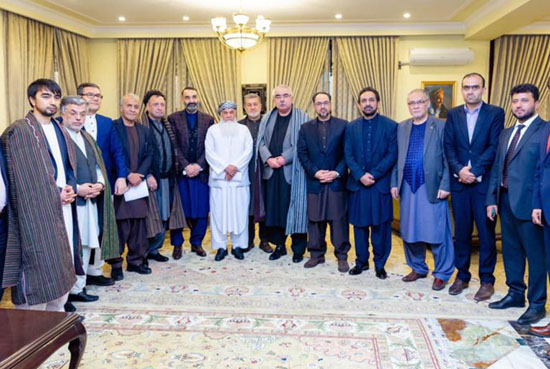 We said that the Taliban are incompatible even with established Islamic parties and movements in Afghanistan and the region, and that all Islamic parties are against the Taliban. Now we want to conclude from this statement that the Taliban is completely incompatible with other political parties. Therefore, all political parties in Afghanistan are against the Taliban. When an Islamic group seems unable to negotiate with Islamic parties, how can it negotiate with, for example, communist and democratic parties that are secular?
In response to the above question, some argue that the Taliban can reach an agreement with the communists and secularists, citing the presence of some communist elements among them and cooperation with groups attributed to democratic and secular political currents. This argument is incorrect. Some communist and secular elements in the ranks of the group called the Taliban exist mainly on the basis of ethnic (Pashtun) affiliation and personal ties to the group and play no role in determining the goals and programs of the Taliban. These are people who, by joining the Taliban, have betrayed the ideals of their own parties and political movements, do not play any role in attracting more powerful people to the Taliban. Meanwhile, Pakistan does not allow political parties with a popular base in Afghanistan to play a prominent role in the ranks of the Taliban.
The Taliban's lack of a clear political program and goals has led to the fact that the group has retained its position as a strong tool and play on the battlefield of heterogeneous political forces that have unevenly formed the group. In fact, since the Taliban themselves do not have specific political goals, various political forces, both within the group and outside it, are trying to attract it to their goals and aspirations.
The ethnocentrists, known as the main and strongest political force of the Taliban, want to put the Taliban at the service of realizing ethnic plans. The rest of the Pashtun ethnocentrists, who are not structurally and organizationally part of the Taliban, are also trying to draw up a plan to use the Taliban to achieve their goals, relying on ethnocentric forces within the group.
Islamist extremists, especially the non-Pashtun Taliban, attempt to use the Taliban's religious identity to advance their religious aspirations and goals. The efforts of this group often diverge from those of the ethnocentrists, and in most cases it is clear that in this conflict the ethnocentrists defeated the Islamists and pursued their own ethnic goals.
But foreign intelligence, on the other hand, is trying to use the Taliban for their own purposes. He uses the confrontation between the two currents of the Taliban (ethnocentrists and Islamists) to maintain his control and influence among them. The Pakistanis know how to do it. Sometimes they support the forces of the Islamist Taliban, and sometimes the nationalists. This maintains an invisible confrontation between the Taliban, which is what the ISI needs to control the Taliban.
In fact, the Taliban constantly clashed between the three forces. In other words, Pashtunism/fascism, Islamism and imperialism (imperialism here means the expansionist goals of the countries of the region and the powerful countries of the world, who through intelligence networks want to make the Taliban a means to achieve their expansionist goals) are the three institutions/forces that want the Taliban to serve in achieving their goals. This means that the Taliban will never be able to resolve their internal differences and enter the political arena as an authoritative political group with clearly articulated goals and plans.
In many cases there is a contradiction between Pashtunism and Islamism. For example, when the Taliban impose restrictions on the education of women and girls, they are actually trying to appease the extremist Islamist forces, but this discourages the Pashtunists.
The Pashtunists do not want the Taliban's actions to increase public dissatisfaction with the group and make it difficult for it to achieve ethnic goals. They are largely secular and only support the Taliban because they can turn them into a vehicle for ethnic ends. In fact, in such cases, the conflict between the two forces of the Taliban, namely the Pashtuns and the Islamists, shows its face.
Pashtunists argue that if non-Pashtun political forces give them a chance, they can lead the country on the path of progress and development. In fact, the only thing they can count on to enlist the support of the people and justify their presence in the political arena and at the helm of power is their claims to the progress of the country. They demand unconditional solidarity from people and claim that the reward for this support and solidarity is the well-being, comfort and security that they can provide people. Banning girls from going to school proves the falsity of this assertion. If the Pashtuns are really for the development of the country, then how can they support a backward religious group like the Taliban? This is a question that the Pashtuns have no answer to. The lack of response to this response is, in fact, a stalemate due to internal conflict between the Taliban forces.
 An example of a conflict of interest between Pashtuns and Pakistanis as their patrons is their territorial and border dispute with Pakistan. They say that if they manage to form a strong government in Kabul, they will destroy the Durand line and annex most of the Pakistani Pashtun territory to Afghanistan. This struggle is in fact a direct threat to the territorial integrity of Pakistan, and for the last fifty years the Pakistanis have been trying to weaken these claimants. On the other hand, Pashtunists often need Pakistani support to carry out their ethnic agenda. In fact, this is yet another contradiction between Pashtunism and Pakistani imperialism. As you can see, the Pakistanis were able to win the fight against the Pashtunists in Afghanistan.
The Taliban is a group completely dependent on Pakistan. The group even remains modestly silent in the face of direct bombing of Afghan territory by the Pakistani military, in stark contrast to the fact that many of them regard Dawood Khan as a national pride, and Pashtuns are most proud of him as "the mastermind of Pashtun national pride in the confrontation with Pakistan".
Sardar Mohammad Dawood, the first President of Afghanistan (early 1970s), was the one who publicly called for an attack on Pakistan, claiming that he would take over disputed territories with Pakistan within 24 hours. Many in Afghanistan call Dawood Khan an indispensable hero when it comes to feuding with Pakistan. But now those who (Taliban) consider themselves descendants of Dawood Khan and call him a popular and patriotic leader have lost their pride in Pakistan so much that they do not even dare to speak the name of Pakistan. This can indeed be considered a strategic victory for Pakistan over the Pashtunists.
Simply put, over the past fifty years, the Pashtuns of Afghanistan have faced two internal and external enemies because of their claims to totalitarianism. On the one hand, they considered all non-Pashtun peoples, especially Tajiks, as their enemies in the struggle for power and opened several fronts of war against them (military, political, cultural, administrative and economic), on the other hand, by raising the issue of Pashtunistan, they turned Pakistan to their enemy number one.
But when the Pashtunists found themselves at a crossroads before choosing between two internal and external enemies, they preferred to suppress the internal enemy with the support of the external enemy. There is a popular category in Afghanistan that can be an objective example of this Pashtun approach. This category looks like this: "the lion is at home, and the fox is outside." Pashtunists prefer to be "lions" for non-Pashtuns and "foxes" for Pakistan! This policy continues and is clearly manifested in the face of the Taliban. This group is silent before Pakistani air strikes on the country, but uses maximum force against the internal armed opposition!
In view of the foregoing, all political forces (both Islamic and secular) are considered the target of the program to eliminate and suppress the Taliban. With the strengthen of the Taliban's power, no other party or political organization will have the opportunity for political activity. As already explained, the Taliban are not compatible with any political party or organization and have no plans to become a political party with a program.
The Taliban model of government (although codified and undeclared) is a society without political organizations, in which the inhabitants, like a herd, obey the orders of the self-proclaimed and hidden leader of the Taliban. It is actually similar to the absolute royal model. Of course, the Taliban could not directly raise the question of the revival of the monarchy because of religious considerations. In practice, however, he follows an undeclared royal law, and the so-called leader of this group now holds the position of a medieval king.
Of course, apart from the specific definition of the Taliban as an "apolitical" group, meaning incompatibility with political parties and unwillingness to form a political party, they are also not seen as an elitist and cohesive political circle capable of forming an effective and progressive government. so that other political forces give way to her and she can lead the country to development and progress.
Thus, the political parties and movements in Afghanistan have no choice but two paths: fight the Taliban again so that they can again operate in their country, or permanently abolish their political organization and party and engage in non-political activities. For many political parties and movements that do not have a history of political work and public influence among the people, the second option may be acceptable, but for many other political parties and movements, this means putting their heads on cutting off the Taliban and signing their so-called political death penalty.
Afghanistan's political parties (particularly strong political parties with a long history of confrontation with the Taliban) faced a sudden coup d'état on August 15, 2021. As a result of a secret deal, Ghani ceded power to the Taliban and took everyone by surprise. Currently, the anti-Taliban political parties are trying to regroup their political and military forces in order to regain their lost ability to fight the Taliban.
In fact, over the past twenty years, Afghanistan has turned from a closed political society into an open one. During this time, more than 100 political parties were officially created in Afghanistan. Although most of the newly created parties failed to significantly expand in society and establish formal offices, the general character of Afghan political society has changed. The Taliban may close the offices of these parties, but the political thought and actions of the parties will not disappear when the office is closed. It is impossible to imagine an Afghan political society without political parties.
Some countries in the region, whose interests require them to establish relations with the Taliban and, so to speak, dialogue and understanding with the group, are trying, through their long-standing ties with the anti-Taliban, to keep those under the influence of this country in a state of waiting until they can reach a compromise between them and the Taliban. This is one of the reasons why all the anti-Taliban political forces did not unite and take to the battlefield together against this group. But such a policy of the countries of the region, if there are no other hidden problems behind it, according to analysts of the internal affairs of Afghanistan, is due to their insufficient awareness of the Taliban and the complex problems of Afghanistan.
The countries of the region still believe that the Taliban has changed or can change in order to work towards a common mechanism with anti-Taliban parties and movements. It's a delusion. Some countries in the region know that this is a delusion, but because they have established relations with the Taliban and do not yet have an alternative plan, they are trying to buy time to change policies. Some other countries in the region are trying to prevent the formation of a powerful coalition of anti-Taliban forces, fearing the strengthening of the Tajiks on the axis of resistance. But these policies do not seem to be sustainable. The same countries that made many Afghan politicians wait for a compromise between them and the Taliban have not yet recognized the Taliban. This is more evidence of the contradictions that the regional policy of different countries of the region faces, and it takes time to resolve these contradictions.
 The above is actually the political reasons and motives behind the war against the Taliban. The Taliban do not have the ability to destroy the political motives for war. As already mentioned, this group wants a society without political parties and organizations, and this is impossible. At the same time, as already mentioned, the Taliban themselves are not recognized as a political group in order to fill the political vacuum of modern political organizations. It also depends to some extent on the factor of ethnicity. The political currents of the Pashtun community have failed to form modern political parties. In fact, the tribal structure of Pashtun society denies the existence of them. In the minds of Pashtun politicians, the place of political parties is occupied by tribes and ethnic groups. Where there is a tribe, the party is not considered a necessity.
During his thirteen years in office, Karzai has consistently sought to weaken political parties. One of the reasons Karzai opposed them was that he knew that no political party would be created in Pashtun society and that it would be better to prevent the creation and strengthening of non-Pashtun political parties. Ghani has also followed Karzai in this regard. All of Ghani's efforts were aimed at creating divisions among political parties. The only known Pashtun party, Afghanmillat, has failed to function as a modern political organization and to transcend the ethnic discourse that has dominated Pashtun thought through decades of political activity. The Islamic Party of Gulbuddin Hekmatyar also organizes most of its party activities in Kabul, northern and northeastern (Tajik) provinces and does not conduct political activity in the modern sense in the Pashtun areas.