


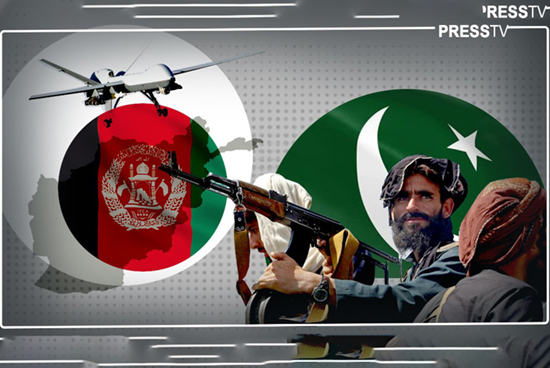
Afghanistan's trouble is that it disappeared as a "buffer zone" - a territory that was supposed to exist without outside interference and acted as a wall between two rivals
Author: Farid Younes
Because of the jihad of the Afghan people against the Soviet Union, millions of Afghans fled their homes. The two countries to which Afghanistan was directly or indirectly hostile, Iran and Pakistan, received the largest number of refugees. Arab countries have accepted in lower numbers. Thousands more refugees sought asylum in Europe, the US, Canada, and Australia.
However, this did not mean that the Afghans did not seek asylum in other countries. Today we can say that Afghans have become refugees in most countries that are more prosperous in financial and labor terms.
As I previously wrote in one post, Pakistan has entered into military agreements with the West, which strengthened its position at the international level.
The Afghan Jihad has brought the Great Game into a new phase. The position of Afghanistan as a Buffer Zone disappeared because Afghanistan was occupied. This is where Pakistan played an extremely important role in US interests. At that time, in order to achieve US goals against Soviet Russia, Pakistan took the role of not only an intermediary but also a donor of money in addition to military funding.
In this regard, another US ally, namely Saudi Arabia, cooperated to block the path of communism in the region. Therefore, the triangle was formed - the United States, Pakistan, and Saudi Arabia. The money for the jihad was financed by Saudi Arabia, the military equipment was provided by the United States, and Pakistan led the international and regional forces in the jihad against Soviet Russia.
This triangle, which I, as a student of Afghan history, call the "triangle of sin", had both positive and negative consequences.
The defeat of Soviet Russia was positive. The Russians left Afghanistan after ten years of war under the flag of jihad. But this Russian defeat would not have been possible without American weapons and Saudi money.
The three sides of the triangle worked not to save Afghanistan, but to achieve their own interests, because of which Afghanistan had to make heavy sacrifices.
The American war was to crush its Cold War rival, Soviet Russia. The goal of the Saudis was to spread Wahhabism in Afghanistan, to discredit the Hanafi trend, and not only to prevent the development of communism in the region but to prevent the development of the revolutionary and ideological influence of Iran in the region. And Pakistan has taken advantage of the multi-billion dollar deal for its own economic benefit, as well as influencing the course of the jihadist struggle and the game among the jihadist leaders. This has had a devastating effect on Afghanistan since the end of the war and continues to this day.
Although the buffer zone passed to the United States for twenty years, the consequences of Pakistan's role after the strategic defeat of the United States are more obvious.


