


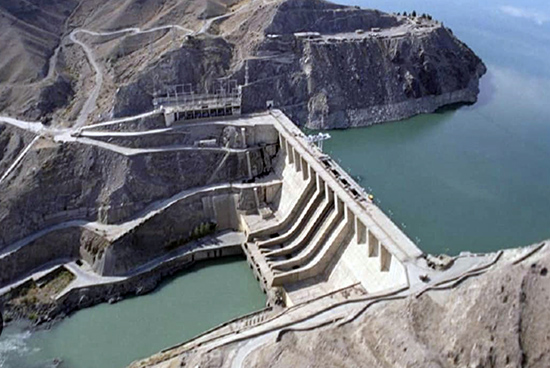
The United States wants to continue its presence in the region by taking control of the water resources.
Author: Nail Herati (pseudonym), especially for "Sangar"
The conflict between the Taliban and Iran over the water of the Hirmand River has revealed one truth: the US is using all sorts of tricks to maintain its presence in Central and South Asia.
Interestingly, these big conspiracies can no longer be hidden from anyone. Everyone knows them. No expert in Iran or Afghanistan or anywhere in the world believed that the two sides actually clashed over water. Everyone said that the conflict is not related to the division of water because the Girmand water problem did not arise today, but has its roots in the last few decades, and it cannot be solved by war.
However, the American military delegation was able to reach Kabul and Kandahar at the beginning of the war of words between the Taliban and Iran and send the forces of Mawlavi Yaqub to the borders of Iran. At the beginning of the conflict, one might say, the hidden threat of China and Russia forced the son of Mullah Omar and the rest of the "American Taliban" to come to their senses, and the crisis subsided.
According to the Daudkhan era agreement, Afghanistan has no right to close the water to Iran. Apparently, according to the news, the Taliban finally understood and sent water to Iran, and the conflict ended.
The water problem in Hirmand is not the only "water bomb" placed under regional security. Nowadays, a big scandal is unfolding around the Qushteppa canal, primarily due to the fact that the Taliban want to resettle members of the terrorist organization Tehreek-e-Taliban Pakistan along its banks. The Afghan public is only beginning to understand why the Taliban immediately jumped at the construction of this canal when they came to power. According to some reports, the construction of the canal is funded by the United States. At the moment, the first part of the project is almost completed, and full completion is expected in a year.
This canal could be the beginning of another dispute between Afghanistan and other neighbors - Uzbekistan and Turkmenistan, since through it it will be able to control the water of the two neighboring countries from the Amu Darya River. In a word, how much water the neighbors will get will depend on Afghanistan.
Let's leave this question for another time, what troubles await the region when Tehreek-e-Taliban Pakistan settles on the banks of the Qushteppa Canal and there it will be engaged in the cultivation of drugs?
Afghanistan has the right to water from the Amu Darya, but the Taliban have never consulted with their neighbors on this issue and they are not interested in what their neighbors think about the canal.
What does a terrorist group that has taken a poor and vulnerable country hostage (and does not know how long it will last in power) believe and rely on when it challenges its neighbors? The answer lies in one word: USA.
The United States has sought for years to control the water resources of Central Asia in order to impose its own rules of the game on the countries of the region. The American plan "Greater Central Asia" allegedly focuses on the political and economic integration of the Central Asian republics with Afghanistan and Pakistan by squeezing Russia and China out of the region and is supported and implemented by Washington.
One gets the impression that after the shameful withdrawal from Afghanistan, the White House considers control over the water resources of Central Asia the main, almost the only lever of its presence in the region. In the implementation of his plans, he relies on the Taliban, a terrorist group that not only does not respect the interests of its neighbors but also harms them. It is the US-backed Taliban who is turning this channel of hope and progress for poor Afghans into a problem for them and their neighbors.
In the northern part of the Amu Darya, the United States is also working hard to implement the Greater Central Asia project. In mid-2021, the US Embassy in Tajikistan announced the launch of a five-year project to manage transboundary water resources in the Syr Darya and Amu Darya river basins. This project is supported by the United States Agency for International Development (USAID) and has a budget of $24 million. All countries of Central Asia and Afghanistan participate in this project. Despite the ongoing shortage of fresh water in the Central Asian republics themselves, the Americans are seeking to redirect the region's water resources to Afghanistan in order to restore their influence in the country, clearly shaken after the hasty withdrawal of NATO in August 2021.
A striking example of this approach was the introduction by the Americans of the Smart Water system, which allows you to track the quantity and quality of water used in the countries of Central Asia. We are talking about the installation of water meters, the information from which is sent to the data center. The installation of American meters on all the rivers of the region allows the Americans to fully control the water resources of Central Asia.
In addition, this project is designed to control the process of economic cooperation between Central Asia and Afghanistan. As a result, the lack of water resources in none of the five Central Asian republics will be solved, and water will flow to Afghanistan, which will allow the Americans to restore their influence over Kabul, as well as improve relations between the Central Asian countries and the Taliban government.
It is possible that Uzbekistan and Turkmenistan will be among the first countries to recognize the Taliban government in order to achieve control over the distribution of water in the Kushtepp Canal and the fair distribution of the water of the Amu Darya. If they don't, how can they make a pact with an unrecognized government of a terrorist group?
But the question is, to what extent will other powers in the region allow the US to achieve its goal? The answer to this question will soon be found.


