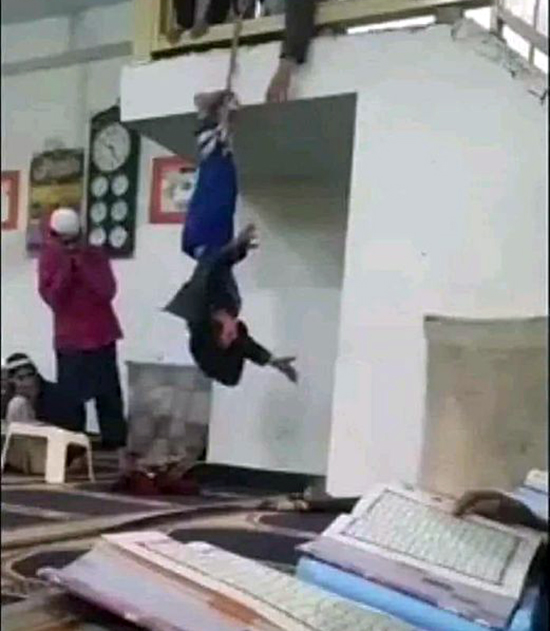
What are our children learning under Taliban rule?
Author: Yaqub Yasna, former professor at Al-Biruni University of Afghanistan, member of the Sangar Advisory Council
Have we ever thought about why we send our children to school 6 days a week for 9 months and 12 years and what we want our children to learn? In the current situation, families and the international community have two concerns about the children of Afghanistan: the first concern is that the Taliban has banned girls' education, and the second concern is about the school itself and the teaching method that is followed in schools under Taliban rule.
The question is, what are the Taliban teaching boys? Does what is taught in schools under Taliban rule meet the principles and standards of modern science education? Or is it that children are brainwashed in schools under its rule and are indoctrinated and taught radical ideologies? If extremist ideologies are indoctrinated and taught to children, what will be the future of these children?
Modern education has four basic principles that should be considered when designing an educational program: critical thinking, dialogue, cooperation, and creativity.
A person’s worldview is formed in childhood. Naturally, the formation of our psyche is primarily influenced by family, society, and especially the way of learning at school. Education should be organized in such a way as to provide the child with the opportunity for logical and critical thinking, so that the child does not perceive events, questions, and topics without reasons and explanations, and has the opportunity to ask questions and criticize. If education makes a child submissive, he will be intellectually enslaved. Unfortunately, the Taliban wants children to become serfs and slaves in schools. According to this group's educational ideology, questioning and criticism are a sin.
People build democratic, pluralistic, and tolerant societies through dialogue. If members of a society do not know how to engage in dialogue, that society will face violence and war because it is through dialogue that understanding occurs between members of a society. We must learn dialogue from childhood through school education. Therefore, the child's education must provide this intellectual and cognitive opportunity so that the child becomes a conversationalist and not a person of dominance, power, or intellectual and behavioral obedience and slavery.
Have you ever wondered why humans are successful in solving problems in their lives compared to animals? Each of us may have different opinions, but what makes a person successful in life and able to solve problems, form, and lead large communities is based on cooperation. The cooperation that man has been able to create in a very broad sense has not been achieved by any animal. Thus, people solve human problems through cooperation. The fact that humans are superior to animals in the world is the result of a culture of human cooperation on a large scale. Education should enhance the cooperative aspect of a child's thinking so that the child can cooperate with others and invite others to cooperate with him. But the Taliban education program classifies people as infidels, Muslims, enemies, etc. It presents dozens of negative interpretations of gender, culture, beliefs, religion, etc. about people. Instead of promoting a culture of cooperation, it promotes hatred, prejudice, hatred of another person, and enmity.
Creativity is based on differences in thoughts and perspectives. Respecting differences and supporting differences in thoughts and perspectives is a principle of creativity. If you don't support differences in thoughts and attitudes, there will be no creativity, because if there is no difference, everyone becomes the same. The Taliban have removed intellectual differences from the educational curriculum and want to raise children in such a way that they all do not have their own opinions and intellectual differences, but have the same ideology and beliefs, and even look the same in appearance.
Therefore, the Taliban's educational program produces a herd, identical, and submissive individuals. If we look closely, scientific inventions and discoveries, as well as various rational and philosophical views on understanding cultural and social pluralism, are the result of human creativity, exploration, and curiosity. Education should support intellectual differences and strengthen a child's creativity so that the child becomes inquisitive and seeking. If people in a society do not have creative potential in their lifestyle, in their social behavior, in their work and career, in their family and social relationships, or in their specialization, it means that there are problems in the country's education.
These four principles should be taken into account in accordance with the age and intellectual level of the child when drawing up an educational program. Our educational program has not previously discussed these four principles in detail, but an attempt has been made to institutionalize them in the educational program. Unfortunately, when the Taliban came to power, these four educational principles were removed from the educational curriculum and the Taliban introduced a curriculum that is fundamentally contrary to these four educational principles. So we should be concerned and attentive to what our children are learning under the Taliban?!