In Asia, America has no other foothold to maintain its global role.
Author: Nurullah Walizadeh, analyst, specially for “Sangаr”
Once, when Trump himself spoke about withdrawing his troops from Afghanistan, our analysts advised not to take his words seriously. They said that America did not come just to leave. The governments of Karzai and Ghani also held the same view — that America would not leave. But we saw that the United States did indeed exit Afghanistan.
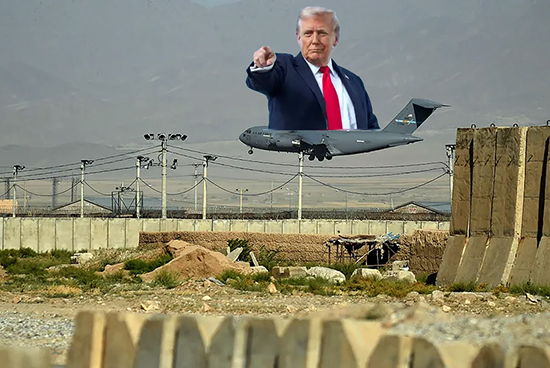
Now, when Trump talks about returning to take Bagram, many of our analysts again, with a knowing air, say: “Don’t take it seriously, Trump is joking.”
The reality is that the behavior of great powers like the United States is far more complex and difficult to analyze. Especially if the analyst is Afghan, with limited access to many sources and information necessary for a full analysis, and who may not even bother reviewing them.
Anyone who has carefully read the Doha Agreement between the U.S. and the Taliban will see that it is structured to allow the U.S. to maintain a military presence in Afghanistan at any time and to leave whenever it wants, handing the “keys” of the country to one of the groups. If a group like the Taliban is hungry for power and clings to this “stewardship” with all its might — all the better for Washington.
When the Doha Agreement was announced, I wrote in the newspaper Arman-e Melli that this agreement turned Afghanistan into a harem for America.
The U.S. exit from Afghanistan allowed the country to regroup. Regional and international developments also require a renewed substantial U.S. military presence in Afghanistan. Competition with China, preventing the formation of an anti-American alliance that China, Russia, Iran, and some other countries are trying to establish, demonstrating power to rivals, and restoring the weakened authority of the United States among its allies — these are political reasons driving Trump to return to Afghanistan.
Many domestic and foreign analysts in recent years have confidently spoken about the decline of U.S. power. I, however, believe that even if the hypothesis of America’s decline is correct, the U.S. must renew its presence in the region to avoid falling even deeper into decline and humiliation.
Interestingly, the Taliban say that Trump is seeking a deal. But they do not clarify what deal! Did the Taliban not try to negotiate with Trump? They did. What does the Taliban want from Trump? And what, besides Bagram, does Trump want from the Taliban?
From the current situation, it appears that Trump first tries to gain Bagram through a deal with the Taliban, but if the Taliban show ambition and speak from the position of the victor, Washington will decide to take Bagram by force. Taliban leaders have seen American power and are sufficiently frightened, but to demonstrate their own strength, they pretend not to take this seriously.
Over the past more than four years, the Taliban have failed to gain national and international legitimacy, and instead of creating the improvements expected by the global community, they have focused more on restrictions, repression, and closures. This has prepared public opinion to accept the overthrow of the Taliban regime.