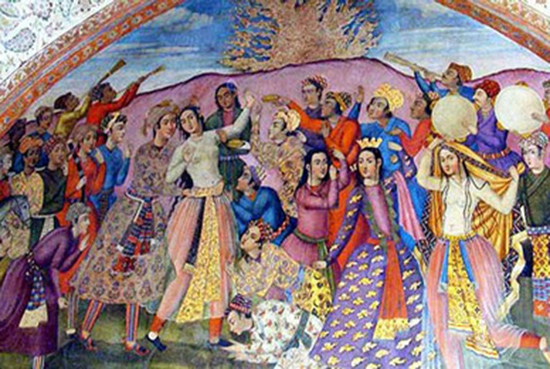
The celebration of Navruz in the Ottoman Caliphate and the fatwa "Sheikh al-Islam" of the Islamic world: "Navruz is not a Majus, but a Sultan's holiday!"
Author: Zabiulla Sai
The Ottoman caliphate, which at one time was considered a symbol of power and the center of the Islamic world and officially bore the name "Caliphate", which meant the "religiosity" of this government, celebrated Nowruz in all its glory.
This day was celebrated both at the court of the caliph and by people in their homes and surroundings as a symbol of the evolution of nature. On this day, the court sages prepared sweets called “Novruziya” for the Sultan, his family, and courtiers. Various historical sources report the participation of the Ottoman caliphs in the celebration of Novruz and the acceptance of Novruz's congratulations and gifts by them. Thanks to this, Novruz was mentioned and celebrated in the Ottoman Caliphate under the name "Sultan Navruz".
Poets of the Ottoman period caroled Nowruz in Persian and Ottoman in various formats, especially ode poems, and presented them to the caliph/sultan, receiving appropriate rewards in return. These verses, which were called "Novruzia", have many examples today, especially in the Ottoman language. During this period, Nowruz also entered the music, and a musical composition called "Novruz composition" was formed.
In addition to the promulgation of the new calendar of the solar year, which was officially held at the court, on this day the caliph, especially the chancellor, was presented with precious gifts, which were called “novruziya peshkashi” (Novruz gifts).
In honor of Navruz and its consistency with Islam in the Ottoman period, several fatwas were issued by "Sheikh al-Islam", which was considered the highest religious authority and source of fatwas in the Islamic Caliphate, one of which is a fatwa from the most famous Sheikh al-Islam of the Ottoman period Abu Al Saud Effendi. Abu as-Saud Efendi was Sheikh al-Islam during the reigns of Sultan Salim I, Sultan Suleiman Qanuni, and Sultan Salim II and issued his fatwa as follows:
"... Navruz mazhusi dekoldor, Navruz Soltani der ...".
This means: "... Novruz is not Majus (majus is a fire-worshipper, i.e. does not contradict Islam), Novruz is royal (belongs to the Ottoman monarchy/state and is a custom or tradition)".